 Jess Johnson
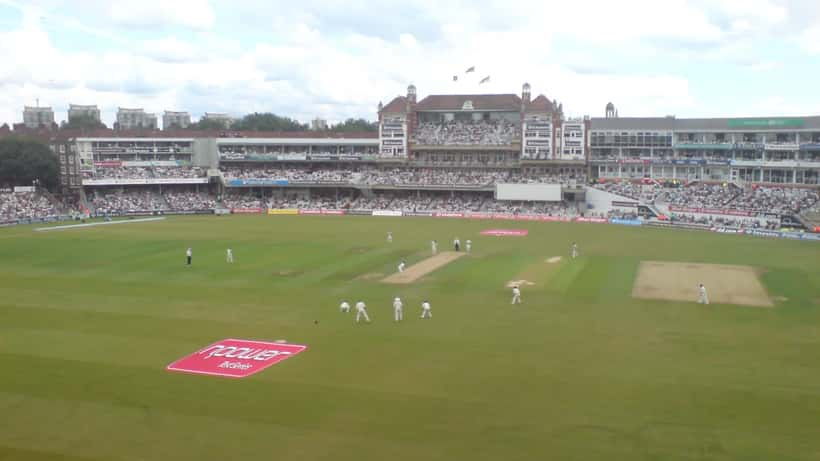
The third and final Test between England and Pakistan began at Edgbaston on 9 September 2026, with the hosts already holding an unassailable 2-0 series lead. Pakistan's selectors responded to their worst Test run in years by handing debut caps to three players — Azan Awais, Mohammad Imran Randhawa and Razaullah — in a gamble that underlines just how far the touring side has fallen this summer. For Australian cricket fans watching the chaos unfold, there is a less-discussed dimension to high-stakes series like this one: the ICC Anti-Corruption Code, and the sweeping obligations it places not just on elite players, but on every registered cricketer across the globe — including club players on Brisbane ovals and country grounds in Victoria.
Legal disclaimer: This article contains general information about cricket integrity laws and regulations. It does not constitute legal advice. If you are under investigation or have received a corrupt approach, consult a qualified sports lawyer immediately.
A Series in Crisis — and What It Signals Off the Pitch
England's 194-run victory at Lord's from 27 to 30 August 2026 cemented their dominance. Three debutants in a Test match is rare — it signals either bold ambition or managerial desperation, and most analysts are leaning toward the latter.
But series like this, where a team is under enormous pressure and fielding inexperienced players, are precisely when governing bodies report spikes in corrupt approaches. The ICC's Anti-Corruption Unit (ACU), which has operated since 2000, has documented in annual reports that betting networks often intensify their activity during lopsided series. Debutants, in particular, represent a vulnerability: they are less familiar with reporting protocols and more susceptible to seemingly casual overtures from strangers.
The pattern typically begins not with a blatant bribe, but with a friendly message from someone claiming to follow the player's career — before escalating to requests for information about team selection, injury status, or pitch conditions.
What the ICC Anti-Corruption Code Actually Says
The ICC Anti-Corruption Code applies to "participants" — a definition far broader than most cricketers realise. Any cricketer registered with a Full Member board, Associate Member board, or participating in any ICC-sanctioned tournament can be investigated and sanctioned. Cricket Australia, through its own Integrity Unit, operates an extended version of the Code that applies to all state competitions, the Big Bash League, and Sheffield Shield fixtures.
The core obligations are:
Report corrupt approaches within 24 hours. If anyone — including friends, family, or social media contacts — offers money, gifts, or favours in exchange for information about a match, players are required to report it immediately. Failure to report is itself a Level 4 offence — the most serious category — carrying a minimum five-year ban from all cricket.
No betting on cricket, ever. This prohibition is absolute and applies to any cricket match anywhere in the world, not just matches in which the player participates. An Australian grade cricketer cannot legally place a bet on the ENG vs PAK Test series while registered with their state association.
No sharing inside information. Passing details about pitch conditions, player injuries, or the playing XI to anyone outside the team environment — where it could influence betting — is a corruption offence, even without accepting payment.
According to Cricket Australia's Integrity Rules and Regulations, the ACU has powers to compel cooperation, and refusing to assist an investigation is itself a separate punishable offence carrying bans of up to two years.
An Australian Player Angle on an English Pitch
The Pakistan tour of England illustrates something every Australian cricketer should internalise: anti-corruption obligations travel with a player regardless of which country's match they are watching or discussing.
When a Big Bash League player tunes into the Edgbaston Test on 9 September 2026 and receives a message from an unknown number asking for thoughts on Pakistan's batting order — framed as "just your cricket opinion" — that interaction may trigger real reporting obligations.
Experienced sports lawyers in Australia note that most players investigated for integrity breaches did not intend to break any rules. The most common trajectory is gradual grooming: a contact starts with friendly cricket discussion, moves to seemingly harmless questions, and only later reveals they have been supplying information to a betting syndicate. By that point, the player may have already committed a reportable offence without realising it.
Related: if you've wondered about other ways cricket creates unexpected legal exposure, see our article on cricket ball injuries and legal claims in Australia for another illustration of how the sport intersects with the law.
When Silence Costs More Than Speaking Up: A Realistic Scenario
Picture a club cricketer from Melbourne — registered with his state association and active in the Victorian Premier Cricket competition. He tweets his reaction to Pakistan's team announcement on 9 September 2026, praising one of the debutants he watched play district cricket during a development program.
Within hours, he receives a DM from an account claiming to be a freelance cricket journalist, offering $200 in gift cards for his "expert analysis" on Pakistan's tactical decisions. He declines the payment but — not wanting to seem rude — answers three questions about the Pakistani debutants' readiness for Test conditions.
Under the ICC Anti-Corruption Code, this exchange carries serious risk. If the "journalist" is connected to a betting network and the player's opinion is being used to calibrate odds — even from a domestic player whose credibility carries a reputational signal — Cricket Australia's Integrity Unit may require him to explain the contact. His failure to report a potential corrupt approach within 24 hours is itself a Level 2 offence, which carries a minimum 12-month ban regardless of whether he accepted money.
The if/then logic is stark: if a registered cricketer receives a communication that could reasonably be interpreted as a corrupt approach and does not report it within 24 hours, they face a minimum 12 months' suspension — even if the original approach was declined and no information was wilfully supplied.
Had he sought legal advice immediately, the correct steps are clear:
- Do not respond further to the contact
- Screenshot and preserve all communications with timestamps
- Report to Cricket Australia's Integrity Unit at integrity@cricket.com.au within 24 hours
- Do not discuss the approach with teammates or coaches before the formal report is lodged
A sports lawyer engaged from the outset of an investigation typically costs between $2,000 and $8,000 in fees. By contrast, a 12-month Level 2 suspension can cost a semi-professional cricketer more than $30,000 in lost match fees, coaching income, and sponsorship agreements — plus a permanent public sanction on their playing record. The financial case for early legal advice is not even close.
How Australian Law Adds Another Layer
Beyond the ICC and Cricket Australia codes, the Sports Integrity Australia Act 2020 gives the Commonwealth government's integrity body powers to investigate match-manipulation that can extend to criminal referrals. State gambling legislation in Victoria, NSW, Queensland, and Western Australia each prohibits registered athletes from betting on their own sport — with varying penalties across jurisdictions.
This overlapping framework means a player facing an ICC investigation could simultaneously be exposed to state gambling regulators and, in extreme cases, federal criminal charges. Navigating three levels of regulatory authority — international, national, and state — without specialist advice is one of the clearest ways a cricket career ends prematurely.
What to Do If You Are Approached
Whether you are a professional watching the ENG vs PAK Test from a hotel room or a club player following the series on your phone, the steps are identical:
- Do not engage further. Any additional response — even a polite refusal — creates a communication record that needs to be carefully managed.
- Preserve all evidence. Screenshot messages, log phone calls with dates and times, save emails in a separate folder.
- Report within 24 hours to Cricket Australia's Integrity Unit or the ICC ACU directly.
- Seek legal advice before cooperating with any formal investigation, interview, or request to surrender your phone or devices.
A sports lawyer can review existing contracts and communications, assess whether historical interactions create any residual exposure, and represent the player's interests throughout what can be a lengthy investigative process.
As England prepares to seal a 3-0 series whitewash and Pakistan begins a painful rebuild with three players making their Test debuts today, the real lesson for Australian cricket is simpler than any scorecard: the integrity obligations that govern elite Test cricket apply to every registered cricketer in this country, on every ground, for every match they watch — not just the ones they play in.
