 Fred Rivers
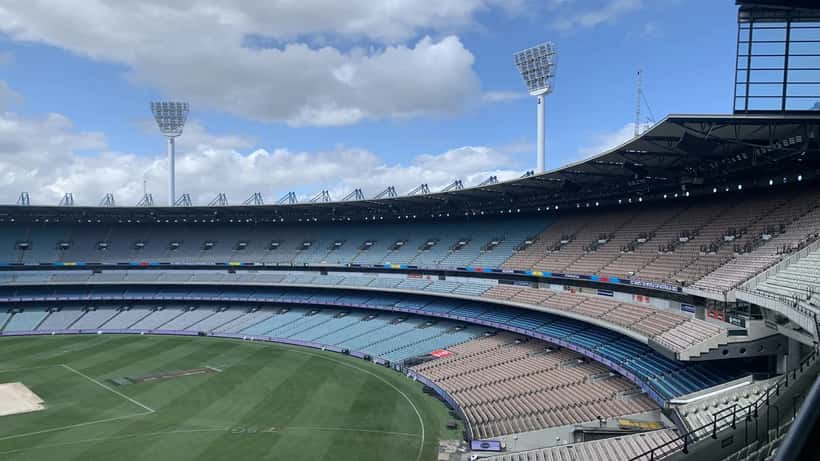
Tens of thousands of Australians are streaming into Mackay's Great Barrier Reef Arena this week for something the Queensland city has never hosted before: a full Test match. Australia vs Bangladesh, 22–26 August 2026, marks Mackay as the country's 12th Test venue. As Bangladesh arrive riding the wave of their historic nine-wicket victory in Darwin just days ago, crowd numbers are surging. But between the excitement of watching a six sail into the stands, there is a question almost no spectator thinks to ask before sitting down: if that ball hits you, what are your legal rights?
The Question You Don't Think to Ask Until It's Too Late
Cricket balls are not soft. They weigh between 155.9 and 163 grams and can leave the bat at speeds exceeding 120 km/h when a top-order batsman middle a drive. Once airborne, the ball can deflect off the rope, the turf, or another spectator before striking someone who had no chance to react. At newly minted Test venues like Harrup Park in Mackay — built for club and domestic cricket before this week's international debut — the protective infrastructure may not match what a ground hosting its first global fixture actually requires.
Under Australia's civil liability regime, sports venues and event organisers owe spectators a legal duty of care. Each state and territory has its own legislation — including the Civil Liability Act 2003 in Queensland, where the current Test is being played. That Act requires organisers to take reasonable steps to prevent foreseeable harm. A cricket ball flying into an unnetted seating zone at a ground that is hosting international cricket for the first time is, by any legal measure, foreseeable.
What the Law Actually Says
Voluntary assumption of risk — volenti non fit injuria — is the defence venues almost always reach for first. The argument runs like this: you bought a ticket knowing cricket balls leave the field of play, therefore you accepted that risk. And to a degree, courts agree. The back of every cricket ticket in Australia carries a risk warning that acknowledges this.
But voluntary assumption of risk is not a blank shield. It does not protect venues that fail to install protective netting in areas where comparable venues at the same level of cricket routinely provide it. It does not protect organisers who file a risk assessment plan with Cricket Australia's event-staging requirements and then fail to implement it on the day. And it does not protect a ground whose netting has a documented gap that staff knew about and did not repair.
In Woods v Multi-Sport Holdings Pty Ltd [2002] HCA 9, the High Court of Australia considered the liability of a sporting organisation when a participant was struck in the eye by a cricket ball in an indoor venue. The court's divided analysis established that sporting bodies face substantive scrutiny when their safety measures are found inadequate — and that the presence of risk warnings does not automatically discharge a duty of care.
Legal analysis by Norton Rose Fulbright, published in July 2025, confirmed that Australian courts continue to assess each case individually: the fact that attending a sporting event is inherently risky does not mean that any injury sustained at that event is automatically the spectator's problem.
Importantly, if you were sitting in an area of the ground that lacked protective netting while a section of similar exposure at another Test venue does have netting, that disparity becomes material evidence. Your lawyer uses it to argue the risk was not merely inherent to cricket — it was created, or exacerbated, by the venue's specific infrastructure choices.
The Concrete Scenario: What Sarah's Claim Looks Like
Take Sarah, a 42-year-old nurse from Mackay who buys a general admission ticket to Day 3 of the current Test, 24 August 2026. She sits in the eastern viewing area, roughly 22 metres from the boundary rope, in a section where no protective netting has been installed above head height. Australia are batting. A Mohammed Shami delivery is cracked square off the leg side, the ball reaches the rope and deflects upward at an unexpected angle, striking Sarah across the left cheekbone. She suffers a fractured zygomatic bone requiring surgery under general anaesthetic.
Scenario A — the claim does not proceed: If the Mackay Cricket Association can show that Sarah's section carried clearly visible warning signs, that equivalent venues at the same tier of cricket do not provide overhead netting in that zone, and that the ball's trajectory was entirely unforeseeable, Sarah's claim faces significant headwinds. Her out-of-pocket costs — approximately $6,400 in surgical fees under her gap-cover health insurance plus $3,800 in lost wages over four weeks — may not be recoverable. Total exposure: $10,200 absorbed personally.
Scenario B — the claim succeeds: If Sarah documents at the time of the incident that (a) no netting exists above her section, (b) a near-miss incident in the same section was reported to venue staff during Day 1, and (c) Cricket Australia's event staging checklist for new Test venues specifies netting requirements that were not met — the voluntary assumption of risk defence collapses. The venue's breach of duty becomes the proximate cause of her injury. In similar Queensland public liability cases involving facial fractures at sporting events, general damages for pain and suffering have settled in the range of $35,000–$65,000, on top of full recovery of economic loss.
The if/then rule: if you are struck by a ball in a section of the ground that lacks protective netting, and you can prove that either (a) other Test venues provide netting in equivalent positions, or (b) the venue was aware of a prior near-miss in that section, your claim is viable. The financial difference between Scenario A and Scenario B is $35,000–$75,000 — the amount a specialist public liability lawyer can recover where the venue's duty of care has been breached.
For more on how Australian courts treat sports injury claims, see our guide at Expert Zoom's sporting injury legal resources.
What You Should Do If a Cricket Ball Injures You at a Ground
Document the scene before you leave. Photograph your seating position, the presence or absence of protective netting overhead, the location of any warning signs, and the boundary rope configuration nearest to where you sat. Do this immediately, even if you have already been attended to by first-aid staff.
File a written incident report with venue staff. Ask for a report number. This creates an official timestamped record, which becomes critical if the venue later denies that any incident was reported.
Seek medical treatment the same day and keep all invoices. A gap between the injury and your first medical consultation weakens the causal chain in your claim. An emergency department visit immediately after the match creates a clear contemporaneous record.
Preserve your ticket. The risk warning printed on it — or linked via QR code in the case of digital tickets — is what the venue will rely on in their defence. Your lawyer needs to read exactly what it says.
Contact a public liability lawyer within the limitation period. In Queensland, the Limitation of Actions Act 1974 sets a general personal injury limitation period of three years from the date of the incident. Earlier action preserves better evidence and gives your lawyer time to obtain venue inspection records before they are routinely destroyed.
Why New Venues Carry a Specific Risk
Mackay's Test debut is the third new Test venue to be activated in Australia in 2026 alone. Each new venue creates the same question: has the ground's safety infrastructure been upgraded to match the speeds, distances, and crowd configurations that international cricket produces, rather than the more modest demands of club or domestic fixtures? Cricket Australia's event-staging conditions do require host associations to submit risk assessments. Whether those plans are independently verified — and whether gaps between the plan and the physical ground are closed before Day 1 — varies.
With Bangladesh leading the series 1-0 and crowd demand at regional venues running exceptionally high, the coming days in Mackay will draw spectators who may never have attended a Test match before. Most will leave safely. For the small number who do not, understanding that a public liability claim exists — and exactly what evidence makes it viable — is the difference between absorbing a significant injury cost alone and recovering it from the entity legally responsible for the event.
This article provides general legal information only and does not constitute legal advice. If you have been injured at a sporting event, consult a qualified Australian public liability lawyer for advice specific to your circumstances.
