 Isabelle Torres
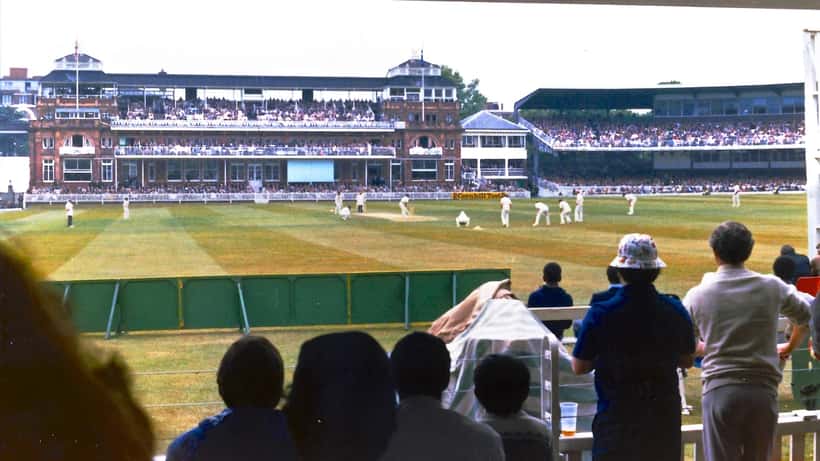
Emilio Gay opened the batting for England against New Zealand at Lord's on 4 June 2026, completing one of the most unusual nationality transitions in modern cricket. The 25-year-old Durham left-hander made his T20 international debut for Italy in July 2025, scoring a half-century against Scotland — yet less than a year later, he stepped onto Test cricket's most famous ground wearing England whites. For Australian dual-national athletes weighing their own international options, Gay's path is a working example of how nationality rules actually function in elite sport.
The eligibility loophole that opened the door
Gay holds three potential national qualifications. He is eligible for England by birth, for the West Indies through his father's family in Grenada, and for Italy through his maternal grandfather. He chose Italy first, debuting in 2025 and helping them reach the Men's T20 World Cup Europe Regional Final.
The reason that path did not block his England ambitions comes down to a single line in the ICC Player Eligibility Regulations: players who appear for an Associate Member country can still cross over to a Full Member country, because Associate appearances do not lock in a final allegiance. Italy is an ICC Associate Member. England is a Full Member. The legal gate stayed open.
It also helped that Gay snubbed an earlier West Indies approach. Each international call-up he turned down preserved an option he later used. Selectors notice that kind of paperwork discipline.
What the rules actually say
The ICC framework rests on three pillars. A player must hold qualifying nationality through birth, parentage, grandparentage or long-term residency. They must have lived in the country for a set period — currently three consecutive years for Full Member representation. And once they appear for a Full Member at senior level, the door to other Full Members closes for a defined cooling-off period.
For Australian cricketers with dual heritage, the practical implication is straightforward. Playing for an Associate side as a young adult is not a one-way decision. Representing Australia, England, India or any other Full Member at senior level is.
Sports nationality switching is not just a cricket issue. World Rugby applies a similar five-year residency rule. FIFA tightened its eligibility code in 2020 to allow a one-time switch back to a country of heritage in specific cases. Each governing body sets its own clock, and athletes who get the timing wrong can find themselves stranded for years.
Why Australian dual-nationals should care
Australia produces a steady stream of athletes with heritage links to South Africa, England, New Zealand, the Pacific Islands and Italy. Cricket Australia has fielded several players in recent decades who could have represented other nations. The reverse is also true — Australian-raised athletes have built international careers wearing other badges.
The financial stakes are real. A central contract with Cricket Australia in 2025 ranged from A$278,000 at the entry tier to more than A$2 million for top-ranked players, with match fees and IPL clearances stacked on top. Equivalent contracts in England, India and Pakistan vary widely. The wrong eligibility decision can lock a player out of the lucrative end of their own career.
Beyond pay, there are tax residency questions, image-rights contracts, sponsorship territorial clauses and pension implications. None of these are governed by the ICC. All of them depend on the country an athlete chooses to represent and where they spend their tax year.
The legal advice gap
Most young athletes do not get specialist legal advice before signing their first international form. Player associations help with standard playing contracts, but eligibility strategy — including the order in which heritage rights are exercised — sits in a thinner part of the market.
A sports lawyer can map out an athlete's qualifying routes, audit the cooling-off periods that apply in each sport, and flag the contractual triggers that come with each national team. They can also coordinate with a tax adviser on residency thresholds and with an immigration specialist on passport timing. The decisions compound. Getting them in the right order matters more than getting any single one right.
For parents of junior athletes with dual heritage, the conversation should start before the first representative call-up. Once a player commits to a senior Full Member side, the easy options narrow quickly.
What to do if you face this decision
If you or a family member has dual or triple national eligibility in any sport, three steps are worth taking early.
First, request a written eligibility opinion from the relevant governing body. Most federations will confirm a player's status in writing on request. Keep that document.
Second, get an independent sports law review. A solicitor with experience in athlete representation can flag risks the federation will not raise — particularly around future code changes and bilateral residency rules.
Third, coordinate the legal advice with tax and financial planning. The country an athlete represents often shapes where they live, and where they live shapes the rest of their financial life. A consultation with an Australian sports lawyer early in a career can save costly reversals later. The athletes who navigate these decisions well are usually the ones who treated them as legal questions first, and emotional questions second.
Emilio Gay walked onto Lord's having banked every legitimate option along the way. He fell for eight runs in his first innings, caught behind off Kyle Jamieson, but the legal groundwork that put him there was its own kind of innings. Australian families with similar choices to make should take note.
