 Olivia Taylor
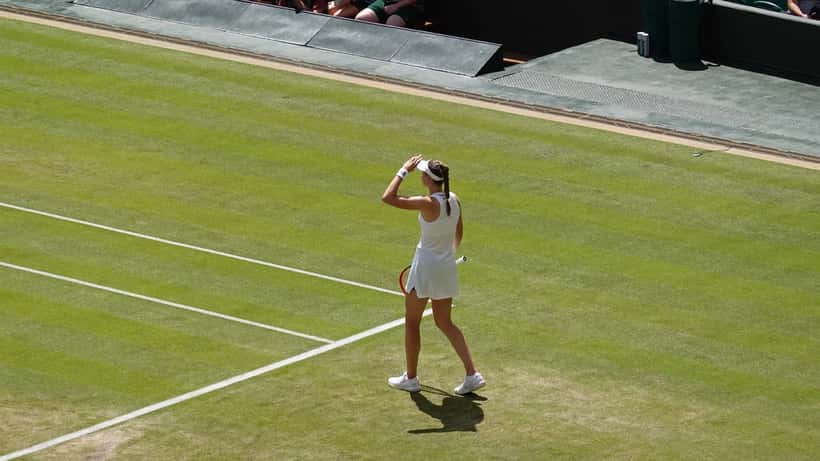
When Elena Rybakina crumpled to the court during her Cincinnati quarterfinal against Iga Swiatek in August 2026, the tennis world held its breath. The Wimbledon and Australian Open champion — ranked number two in the world — had twisted her left ankle after an awkward landing at the net. Within days, she told reporters she "couldn't even walk" without significant pain, and her participation in the US Open appeared genuinely in doubt.
Fast-forward to New York: Rybakina has already won two rounds at Flushing Meadows, moving through her matches with the same heavy groundstrokes and booming serve that earned her a Grand Slam title on Australian soil earlier this year. For the millions of recreational athletes across Australia who have rolled an ankle playing tennis, netball, trail running, or football, her comeback raises an urgent and deeply practical question: how do you know when it's safe to push through, and when does playing on risk turning a manageable injury into something far more serious?
The Science Behind Rybakina's Recovery
Ankle sprains are the most common musculoskeletal injury in sport, accounting for an estimated 40 per cent of all sporting injuries in Australia, according to figures from the Australian Institute of Health and Welfare. But not all ankle sprains are equal — and the grade of injury determines almost everything about what happens next.
Sports medicine clinicians classify ankle sprains into three grades. A Grade I sprain involves micro-tearing of the ligament fibres, mild swelling, and usually resolves within one to three weeks with the right management. A Grade II sprain — partial tearing of the ligament — produces noticeable swelling, bruising, and instability, and typically requires three to six weeks of structured rehabilitation before full return to competition. A Grade III sprain, the most severe, involves complete ligament rupture and can require surgical intervention, with recovery stretching to three to six months.
Rybakina's description of being unable to walk in the days following her Cincinnati retirement is consistent with a Grade II or borderline Grade III presentation. The fact that she recovered sufficiently to compete at Grand Slam level within roughly six weeks — with no visible discomfort during her first-round match — suggests a well-managed Grade II injury with intensive physiotherapy, strength rehabilitation, and medical monitoring. That kind of recovery is possible, but it requires expert guidance at every step.
The Expert Reaction: "Don't Let a Tennis Star's Comeback Set Your Expectations"
Sports health professionals are quick to caution against drawing direct parallels between elite athlete recoveries and what a recreational player should expect. Elite players like Rybakina have access to round-the-clock physiotherapy teams, diagnostic imaging (MRI and ultrasound within hours of an injury), proprioceptive rehabilitation programmes, and performance staff who monitor every session. That infrastructure is what made a six-week return possible — not simply willpower.
The danger for amateur athletes is what clinicians call "normalising severe symptoms." When someone watches Rybakina say she couldn't walk, then win two Grand Slam rounds a few weeks later, it can create a misleading mental benchmark. If a recreational player tells themselves "Rybakina pushed through, so can I," they may downplay symptoms that actually require urgent clinical evaluation.
The key principle used by sports health practitioners is the weight-bearing test. If you cannot place your foot flat on the ground and take full weight on it immediately after an ankle injury, that is a red flag requiring prompt assessment. Similarly, according to the Ottawa Ankle Rules — a clinical decision tool used in emergency departments worldwide and endorsed by Healthdirect Australia — imaging should be considered if there is bone tenderness along the posterior edge of either malleolus (the bony knobs on either side of the ankle) or an inability to weight-bear for four steps.
Ignoring these signs is how a Grade II sprain becomes a Grade III tear, or how a missed fracture causes long-term instability.
Concrete Case: The Saturday Tennis Player with a Swollen Ankle
Picture this scenario. Sam, a 36-year-old weekend tennis player in Melbourne, rolls their left ankle mid-match reaching for a wide ball. There is immediate pain and swelling, and Sam sits out for the remainder of the set but finishes the match, icing the ankle overnight. By the following morning, the ankle is significantly bruised and swollen, and putting weight on it is uncomfortable — but possible.
Sam figures it is "just a sprain" and returns to the court the following Saturday, taping it with a compression bandage.
Here is the if/then logic that makes this decision risky. If the injury is a Grade I sprain, Sam's approach may be fine: the ligament fibres are intact, swelling typically peaks at 24 hours, and structured rest for seven to ten days with gradual loading would lead to full recovery. However, if the injury is Grade II — partial ligament tearing — the swelling pattern Sam experienced (significant bruising at 12–24 hours, moderate instability during lateral movements) is a strong indicator of something more serious. In that case:
- Returning to play without clinical assessment increases the risk of re-injury by up to 70 per cent within the same season, according to sports medicine data cited in the Australian Journal of Sports Medicine.
- A Grade II left untreated commonly produces chronic ankle instability, where the joint gives way unpredictably during cutting movements — exactly the sort of motion involved in tennis and netball.
- Surgical intervention, when eventually required after repeated re-injury, carries an average rehabilitation period of four to six months and a significant cost — far greater than two to three sessions with a physiotherapist at the outset.
Sam's decision to tape and return — without a clinical diagnosis — is precisely the kind of call that looks reasonable in the short term and proves costly over one to two seasons. The right course of action: see a physiotherapist or sports medicine doctor within 48 hours of the initial injury, request imaging if the Ottawa Ankle Rules criteria are met, and follow a structured return-to-play protocol rather than a personal pain threshold.
Five Signs Your Ankle Injury Needs a Professional Assessment Now
Inspired by Rybakina's story, many people will be examining their own old or current ankle injuries and wondering whether they have managed them properly. Here are the clinical warning signs that distinguish a self-manageable sprain from something requiring prompt professional care:
1. You cannot walk normally within 24 hours. Full weight-bearing capacity — even if uncomfortable — should return relatively quickly with a Grade I injury. If you're still limping badly after a full day of rest, ice, and compression, get assessed.
2. Bruising appears rapidly and spreads beyond the ankle. Extensive bruising, particularly if it extends toward the heel or onto the top of the foot within 12 hours, suggests significant ligament or bony involvement.
3. The ankle feels "hollow" or gives way under load. This is a hallmark symptom of joint instability, indicating the stabilising ligaments are no longer providing adequate support.
4. Pain is localised over a specific bony point. Tenderness directly over the malleolar bones, rather than the soft tissue ligaments, may indicate a fracture that will not heal without immobilisation or surgical intervention.
5. Pain does not improve within 72 hours of rest and ice. Mild sprains typically show measurable improvement within two to three days. Persistent or worsening pain after conservative management is a sign the injury is more severe.
It is also worth noting that ankle injuries have a significant psychological component that is rarely discussed outside elite sporting circles. Research published in sports science literature cited through Jalen Brunson's NBA Finals comeback highlights a parallel finding: athletes who return to play too early after a significant lower limb injury often develop compensatory movement patterns — unconsciously protecting the injured side — which leads to overuse injuries elsewhere in the kinetic chain, particularly the knee and hip.
The YMYL Note: This Is Health Information, Not Medical Advice
The information in this article is general in nature and does not constitute medical advice. Every injury is different, and the appropriate management depends on individual factors that only a qualified health professional can assess. If you are experiencing ankle pain or suspect a significant injury, consult a physiotherapist, sports medicine physician, or general practitioner promptly.
What Rybakina's Story Should Inspire You to Do
Rybakina's comeback is remarkable — but it is the result of elite-level medical support, not simply toughness. The lesson for recreational athletes is not "push through the pain." It is: get the right diagnosis fast, follow a structured plan, and don't let one poorly managed sprain compound into years of instability.
Across Australia, sports physiotherapists and health specialists can assess ankle injuries within 24 to 48 hours, provide imaging referrals if needed, and design individualised return-to-play programmes that give you the best chance of getting back to what you love — on the court, the oval, or the trail — without sacrificing future seasons.
If your ankle is telling you something, it pays to find out what it's actually saying.
