 Emily Turner
Jalen Brunson Played 30 Points Through Knee and Ankle Injuries: When Is It Safe to Push On?
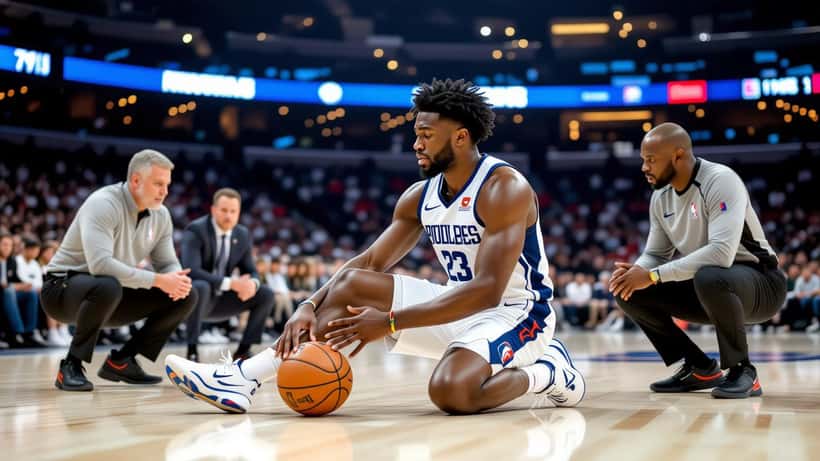
Jalen Brunson left the court in Game 1 of the 2026 NBA Finals clutching his right knee, limped to the locker room — and returned to score 30 points in a 105-95 New York Knicks victory over the San Antonio Spurs. By the end of the night, he had also tweaked his ankle. Both injuries were visible, both were painful, and the Knicks needed him. So he played on.
Brunson has since been cleared for Game 5, with the Knicks holding a commanding 3-1 series lead. But his decision to play through what appeared to be significant lower limb trauma has raised a question that applies equally to elite athletes and weekend warriors across Australia: when is it safe to push through pain, and when does "playing on" become dangerous?
What Actually Happened to Brunson's Knee
In the first quarter of Game 1, Spurs veteran Harrison Barnes was shoved by a Knicks player and fell directly into Brunson's right knee. The contact caused Brunson to immediately grab at the joint and limp heavily. He was escorted to the locker room, was assessed by the Knicks' medical team, and returned within minutes — still visibly favouring the leg.
By the second half, he was operating at something close to full capacity. His final stat line: 30 points, six assists, three rebounds.
Sports medicine professionals watching the incident noted that Brunson's ability to return quickly — while still limping initially — suggested a significant contusion rather than ligament damage. A torn ACL, MCL or meniscus typically produces immediate instability and severe swelling that makes return within the same game nearly impossible. The fact that he played through, and performed at that level, is consistent with deep tissue bruising and a moderate ankle sprain.
But "consistent with" is not the same as "proven safe."
The Problem With Playing Through Pain
Pain is the body's primary warning signal. Sports medicine research consistently shows that athletes who mask acute injury through adrenaline, analgesics or sheer willpower risk converting a short-term injury into a long-term structural problem.
For knee injuries specifically, the risks of premature return include:
- Compensation injuries: A player unconsciously protecting one joint redistributes load onto others — Brunson's contralateral hip, ankle and knee absorb stress the injured joint would normally handle.
- Delayed diagnosis: Pain-free movement (especially when adrenaline is elevated) can mask the severity of ligament or cartilage damage, delaying imaging that would catch the real extent of injury.
- Re-injury in a compromised state: Playing with reduced proprioception — the body's joint position sense — dramatically increases the risk of a more serious incident.
This applies to Australian amateur athletes as much as it does to Brunson. According to Sports Medicine Australia, acute knee and ankle injuries are among the most common presentations in sporting populations, and premature return to activity is a leading contributor to chronic instability and surgical outcomes that could have been avoided.
When to Push Through — and When You Shouldn't
There is no single threshold that applies to everyone. Factors that determine safe return after acute lower limb trauma include:
1. The mechanism of injury Direct contact to the knee (as in Brunson's case) is very different from a twisting or pivoting injury. Contact injuries often cause localised bruising without joint instability; twisting injuries are more likely to involve ligament damage.
2. Range of motion If full range of motion is preserved immediately after the incident, structural damage is less likely. Loss of extension or flexion suggests swelling inside the joint.
3. Weight-bearing ability Being able to bear weight through the injured limb — as Brunson could — is a positive prognostic indicator. Inability to weight-bear warrants immediate imaging.
4. Swelling timeline Immediate, rapid swelling (haemarthrosis) indicates internal bleeding in the joint, which is a red flag for serious ligament or bone injury. Delayed swelling (appearing hours after the injury) is more consistent with synovial inflammation — less serious, but still requiring rest and assessment.
5. Nerve symptoms Any numbness, tingling, or weakness radiating down the leg from a knee injury signals possible nerve or vascular involvement and requires emergency attention.
Brunson appears to have met the green-light criteria for an elite athlete in a high-stakes environment with immediate medical support on hand. Most Australians playing suburban sport on a Saturday morning do not have that infrastructure — and the calculus changes accordingly.
What a Sports Medicine Specialist Would Do
For the vast majority of Australians who sustain a knee or ankle injury playing recreational sport, the standard protocol remains RICE in the immediate term (Rest, Ice, Compression, Elevation) followed by a professional assessment.
A GP or sports medicine specialist will determine whether imaging is required. MRI scans are the gold standard for soft tissue evaluation and can identify ligament tears, cartilage damage and bone contusions that are invisible on X-ray. In Australia, referral for MRI through the public health system is available, though waiting times vary by state. Private referral through a GP or sports physician is typically faster.
Treatment options range from physiotherapy-led rehabilitation for grade 1-2 ligament sprains, to surgical reconstruction for grade 3 ACL tears. The critical point is early assessment: injuries assessed within 48 hours are significantly more likely to be managed conservatively than those left unexamined for days or weeks.
Brunson's Gamble and What It Means for You
Brunson made a high-stakes decision in a high-stakes environment with medical professionals present. The Knicks lead 3-1 and he has been cleared to play Game 5. For now, the gamble appears to have paid off — but the real test of that decision will come in the off-season, when the adrenaline clears and the imaging tells the full story.
If you have recently sustained a knee or ankle injury — playing sport, at work, or in daily life — a health practitioner on Expert Zoom can help you understand whether your injury warrants immediate attention, how to manage it safely in the short term, and what your rehabilitation timeline looks like.
This article is for general informational purposes only and does not constitute medical advice. Consult a registered healthcare professional before making any decisions about an injury or returning to physical activity.
