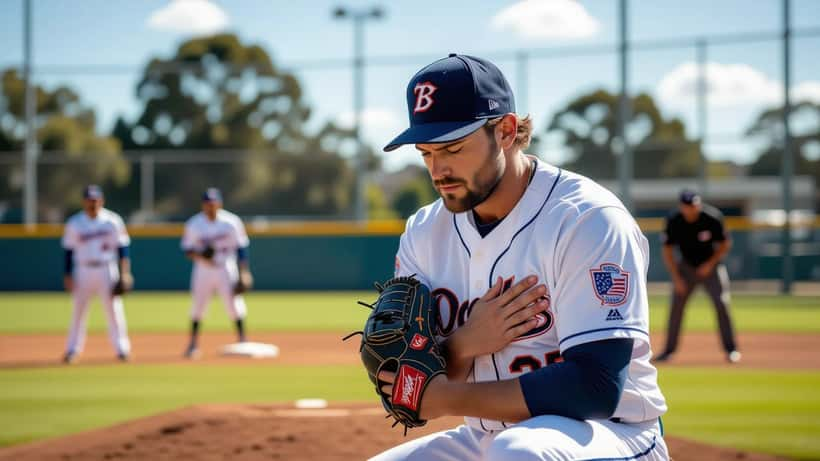
 Olivia Taylor
The Los Angeles Dodgers improved to 5-0 in extra innings after Tommy Edman stroked a walk-off RBI single to left field in the 10th inning, edging the Pittsburgh Pirates 5-4 on Friday, August 21, 2026 at Dodger Stadium. The tension on the mound that night carried a familiar edge — the same week, Minnesota Twins ace Pablo López was confirmed to have "significant tearing" in the ulnar collateral ligament of his right elbow, with Tommy John surgery now the likely outcome for one of baseball's most coveted starters.
López is far from alone. According to the American Sports Medicine Institute, approximately 40% of all Major League Baseball injuries involve the shoulder or elbow — a figure that has remained stubbornly consistent across two decades of data. The 2026 season has followed that pattern precisely, with a wave of pitching staff absences reshaping playoff races in both leagues.
For Australian baseball fans watching the Dodgers and Pirates play out another late-inning thriller across the Pacific, these numbers can feel remote. But Australia's recreational and semi-professional baseball community is growing fast — Baseball Australia reported record membership registrations in both 2024 and 2025, driven in part by the sport's rising television profile — and the same elbow injuries derailing MLB careers are quietly threatening weekend warriors on diamonds from Perth to Brisbane.
Why MLB's Elbow Crisis Matters for Australian Players
What happened to Pablo López — and what routinely sidelines elite pitchers — is not an injury exclusive to professionals throwing at 160 km/h. The ulnar collateral ligament (UCL) sits on the inside of the elbow, holding the joint stable through the extreme rotational forces generated by every overhand throw. Pitchers bear the heaviest load, but recreational catchers, hard-throwing infielders, and even cricket fast bowlers who pick up baseball in the Australian summer face genuine UCL stress.
The mechanism is insidious: UCL damage typically accumulates over months or years, not in a single event. A Grade I sprain involves micro-tears manageable with rest and physiotherapy. A Grade II partial tear introduces instability and pain that persists between training sessions. A Grade III complete tear — the kind Pablo López is now facing — requires surgical reconstruction: the procedure known colloquially as Tommy John surgery, first performed in 1974 by Los Angeles Dodgers team surgeon Dr. Frank Jobe on pitcher Tommy John himself.
Recovery from UCL reconstruction takes 12 to 18 months for recreational athletes. That is more than a full baseball season for anyone competing in Australian social or club competition.
The Expert Reaction: When Elbow Pain Stops Being "Just a Tweak"
Sports medicine specialists draw a critical distinction between general post-game soreness and the type of chronic inner-elbow discomfort that signals progressive UCL damage. Early assessment changes outcomes dramatically.
See a sports medicine doctor or physiotherapist within 1 to 2 weeks if:
- Pain on the inside of the elbow worsens during or after throwing — not just during the initial warm-up
- You notice a gradual drop in throwing velocity without a clear cause
- Tingling or numbness develops in the ring or little finger (a sign that the adjacent ulnar nerve is also under pressure)
- Rest and ice do not resolve the pain within five to seven days
Signs that require urgent assessment within 48 hours:
- A distinct "pop" during a throw followed by immediate inner elbow pain
- Significant swelling on the medial (inner) side of the elbow
- Inability to fully extend the arm to a straight position
According to healthdirect.gov.au, Australia's national health information service, most soft-tissue overuse injuries in throwing athletes respond well to conservative management — but the window for non-surgical intervention narrows sharply once tearing progresses beyond a Grade I sprain. Early imaging is decisive: an MRI of the elbow can confirm the grade of injury within days and unlock the appropriate treatment path before the situation escalates.
Sports medicine physicians can also identify whether the shoulder is compensating for an elbow issue — a pattern common in baseball players who unconsciously modify their throwing mechanics once elbow pain sets in, creating a secondary injury cascade. The related risk of shoulder overuse in this context is explored in depth in our article on Mazraoui's shoulder subluxation at the 2026 World Cup, which outlines how elite athletes manage complex upper-body injury chains.
Concrete Case: Matt's Double-Header Decision
Matt is a 34-year-old recreational baseball player in suburban Melbourne who has pitched for a social competition team for four seasons. After a double-header in early August 2026 — two consecutive starts with only 48 hours between them — he notices a persistent ache on the inside of his right elbow that doesn't clear after his usual three-day recovery window.
If Matt treats this as normal post-game soreness and continues pitching for another four weeks:
His most likely presentation at this point — a Grade I UCL sprain involving micro-tears — risks progressing to a Grade II partial tear under continued throwing load. Conservative management for a Grade I injury typically costs $600 to $1,200 over six to eight weeks of physiotherapy in Melbourne, with return to play possible within four to six weeks depending on rehabilitation progress. Success rates for non-surgical management at Grade I are approximately 65 to 80 percent.
If that Grade II partial tear is left untreated and Matt plays through to a Grade III complete tear:
Tommy John surgery in Australia, performed as a day procedure under general anaesthetic, carries an out-of-pocket cost of $3,500 to $7,000 depending on the surgeon and hospital, with Medicare partially covering anaesthetic and theatre fees. Physiotherapy rehabilitation over the 12-to-18-month recovery window adds a further $1,500 to $2,500. Total cost exposure: approximately $5,000 to $9,500, plus more than a year out of competitive play — and no guarantee of returning to pre-injury throwing velocity.
The if/then logic is unambiguous: if Matt consults a sports medicine physician within two weeks of that double-header, the probability of avoiding surgery is high. If he waits three months and throws through a Grade II-to-III progression, that window closes permanently and surgical reconstruction becomes the only option.
Matt's situation is not hypothetical. Weekend pitchers in Australian social leagues frequently throw in back-to-back games during compressed summer schedules, without the pitch-count and rest-day protections mandated in junior baseball competitions and professional organisations.
What the Dodgers' Extra-Innings Mastery Tells Us About Arm Management
The Dodgers' perfect 5-0 extra-innings record in 2026 reflects more than clutch hitting — it reflects deliberate workload management across a pitching staff that has navigated arm health challenges all season. Manager Dave Roberts has been careful to distribute late-inning work across multiple arms, avoiding the back-to-back high-stress outings that accelerate UCL wear. Gregory Soto of the Pirates, by contrast, was working on short rest in a high-leverage situation when Tommy Edman's walk-off single deflated Pittsburgh's late-game lead.
Arm fatigue management is no longer a concept exclusive to elite franchises. In Australia, Baseball Australia and the Australian Sports Commission have both released guidance recommending pitch count limits for junior players and mandatory rest periods for club competition — but enforcement outside formal junior leagues remains inconsistent, and adult recreational players are largely left to self-regulate.
What Australian Baseball Players Should Do Before Next Season
Five practical steps worth implementing now:
- Count your throws per session. If you pitch, count pitches. If you play infield, estimate high-intensity throws per game. UCL fatigue accumulates across sessions, not just within them.
- Apply the 10 percent rule. Never increase throwing volume by more than 10 percent per week during any build-up or return from a break.
- Treat persistent inner elbow pain as a signal, not background noise. Pain that returns across two or more consecutive sessions is not normal soreness — it warrants professional assessment.
- Seek an early GP referral. In Australia, a referral to a sports medicine physician can be partially covered under Medicare or private health insurance, depending on your level of cover. An MRI of the elbow costs approximately $200 to $450 out-of-pocket in most capital cities — a fraction of the surgical alternative.
- Consult a health specialist through ExpertZoom. Australia's network of sports medicine professionals can assess your throwing arm health and provide a clear, personalised picture of your injury risk before your next season begins.
This article provides general health information and is not a substitute for professional medical advice. If you are experiencing elbow pain or any symptoms described above, consult a qualified healthcare professional.
