 Fred Rivers
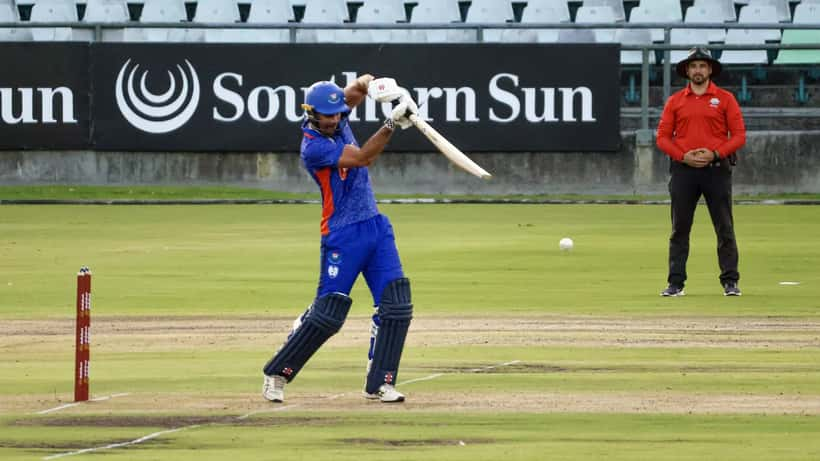
David Bedingham secured a record eighth consecutive season with Durham County Cricket Club on 7 September 2026 — but the announcement making waves among Australian expats isn't his brilliant 129-run knock for Western Province at Newlands. It's the South African batter's frank admission, first reported in 2024 and still unresolved in 2026, that he has spent years pursuing a UK ancestry visa: not to extend his cricket eligibility, but for "life after cricket." For the estimated 1.2 million Australians who could qualify for a similar route through a British-born grandparent, Bedingham's prolonged quest is both a roadmap and a cautionary tale about the legal complexity of ancestry immigration.
What Bedingham's Visa Journey Reveals
When Durham confirmed Bedingham's contract extension in September 2026, few observers focused on the immigration subtext: a 32-year-old professional athlete already engineering a post-sport residency strategy in the United Kingdom. Unlike South African cricketers who once used the Kolpak agreement to count as domestic players in England — that route closed with Brexit in 2021 — Bedingham has been working toward a UK Ancestry visa, a Commonwealth immigration pathway that grants unrestricted UK work rights to nationals whose grandparent was born in Britain.
The UK Ancestry visa is governed by Appendix Ancestry of the UK Immigration Rules. It grants five years of unrestricted work rights, with a path to Indefinite Leave to Remain (ILR) after five continuous years of UK residence. Once ILR is granted, British citizenship follows after a further twelve months. For Australian citizens — Australia is a full Commonwealth member — the route is open, provided the applicant can demonstrate that at least one grandparent was born in the UK, the Channel Islands, or the Isle of Man.
What Bedingham's candid interviews highlight is that even professionally resourced athletes with dedicated legal support find the documentary requirements demanding. For ordinary applicants, the documentation challenge is the single biggest cause of refusals and delays.
The Four Questions That Trip Up Australian Applicants
1. Does the British-born grandparent need to be alive?
No. The grandparent does not need to be living, and their citizenship at the time of your application is irrelevant. A grandfather born in Bradford in 1928 who later migrated to Australia and became an Australian citizen still qualifies you — provided you can prove the British birth with an original or certified document. Many Australians assume the grandparent's Australian naturalisation cancels the ancestry connection. It does not.
2. Can a step-grandparent or adoptive grandparent count?
The UK Home Office is explicit: only biological grandparents satisfy the requirement. Adoptive and step-grandparents do not qualify. This trips up a significant number of applicants who discover mid-process, after paying the filing fee, that the qualifying relative is legally a step-grandparent.
3. Does the ancestry visa affect my Australian citizenship or residence?
For Australian citizens, long-term residence abroad does not affect citizenship. However, for those who are permanent residents rather than citizens — a distinction that matters for roughly 900,000 people currently living in Australia — extended absence can jeopardise permanent residence conditions. An immigration lawyer can advise on whether naturalising as an Australian citizen before departure is the correct sequence of steps.
4. What is the actual total cost?
The UK government's filing fee for the ancestry visa (applied for from outside the UK) is £561 as of 2026, according to official gov.uk guidance. However, that is only the first cost. Applicants must also pay the Immigration Health Surcharge — currently £1,035 per year — meaning a five-year visa costs £5,175 in health surcharge alone before a single document is filed. Add certified document retrieval, any required translations, biometric appointment fees, and legal representation, and a well-prepared application typically costs between AU$10,000 and AU$18,000 all up. A refused application forfeits most of those costs and restarts the clock.
When Paperwork Meets Reality: James in Melbourne
Consider James, 34, a software developer from Melbourne whose maternal grandfather was born in Manchester in 1930. James has accepted a senior engineering role at a London fintech company and wants to relocate within four months of his planned start date.
Scenario A — with legal advice (AU$2,800 for a registered immigration solicitor):
James's solicitor reviews the file on day one and identifies three critical items. First, the grandfather's Australian naturalisation certificate lists his Manchester birthplace, but the Home Office requires the original British birth registration — not an Australian document that references the UK birth. Second, James's mother's birth certificate is needed to establish the generational link. Third, the grandfather's 1958 marriage certificate, required to prove the surname connection, is held by the NSW Registry of Births, Deaths and Marriages, which carries a six-to-eight-week processing time. The solicitor begins the registry request on day one. Documents arrive by week eight. Application submitted in week nine. Visa granted in week thirteen. James starts his London role on schedule.
Scenario B — without legal advice:
James submits the application himself, relying on the Australian naturalisation certificate that references Manchester. The Home Office refuses the application six weeks later: the original British birth registration is required, not a secondary document. James loses the £561 filing fee and the £5,175 Health Surcharge — a combined AU$9,700. He must restart from scratch. With a three-to-four-month processing window on the new application, he misses his London start date by at least four months, jeopardising the job offer entirely.
The if/then logic is direct: if you submit without confirming which specific UK documents the Home Office requires for your personal genealogical chain, then you face an almost certain refusal and the loss of AU$9,700 in fees — plus the salary foregone during the additional waiting period. The AU$2,800 legal fee in Scenario A is not overhead; it is risk mitigation with a measurable return.
This pattern is familiar territory in elite cricket. As analysed in our earlier piece on Emilio Gay's England debut and cricket eligibility rules, the intersection of international career transitions and immigration requirements consistently produces situations where specialist legal advice determines the outcome.
What the Ancestry Route Offers That Sponsored Visas Don't
Unlike the UK Skilled Worker visa, the ancestry route requires no job offer and no approved employer sponsor. There is no minimum salary threshold to meet — the Skilled Worker route currently requires a base salary of £38,700 for most occupations. The ancestry visa applicant simply needs to demonstrate eligibility and show intent to work.
For self-employed professionals, freelancers, and entrepreneurs — categories that the employer-sponsored system handles poorly — the ancestry route is often the most practical pathway to long-term UK residence. It can be renewed for a further two years, leads to ILR, and crucially allows the holder to change employers freely or operate a business without any further immigration approval.
Bedingham's seventh and now eighth season at Durham shows that the visa journey can be long even for those with dedicated support. His experience also illustrates that the endpoint is worth the effort: five years of unrestricted UK work rights, followed by a straightforward path to permanent residence and citizenship, is a generational opportunity that relatively few eligible Australians actually take up.
What to Do If You Think You Qualify
The first step is identifying whether you have a qualifying grandparent: a biological grandparent born anywhere in the United Kingdom, the Channel Islands, or the Isle of Man. For many Australian families, this is a question answered by a phone call to an elderly parent or a quick search of family documents. For others, genealogical research through the NSW, Victorian, or Queensland registries — or through UK General Register Office records — may be required.
The second step is a legal consultation before any documents are ordered or any fees paid. A registered immigration solicitor or Australian migration agent with UK visa experience can assess your specific documentary chain, identify gaps, and sequence the document gathering in a way that avoids the delays and refusals that Bedingham's own journey illustrates.
Expect a well-managed assisted application to cost between AU$1,500 and AU$3,500 in legal fees, depending on the complexity of the genealogical chain. For cases involving incomplete records, prior visa refusals, or non-obvious biological links, specialist advice moves from advisable to essential.
Bedingham's story makes the case simply: even a professional with resources, time, and international experience found the documentary demands of the ancestry visa genuinely challenging. The wicket may look friendly — but a careless approach will find the rough.
If you are considering a UK ancestry visa application, consult a registered legal professional to understand the documentation requirements specific to your situation before paying any government fees.
This article is for informational purposes only and does not constitute legal advice. Immigration rules change regularly. Consult a qualified legal professional before making immigration decisions.
