 Andrew Thompson
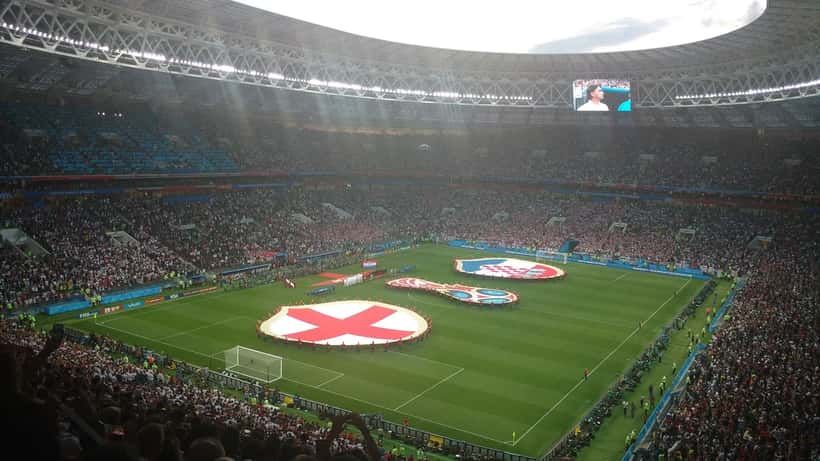
Croatia faces England in a UEFA Nations League Group A3 clash on October 3, 2026, at Stadion Rujevica in Rijeka — a fixture being played entirely behind closed doors following a UEFA disciplinary sanction against Croatia for crowd trouble in their previous campaign. For the hundreds of thousands of Australians who have placed bets on this high-profile rematch, that unusual detail raises an urgent legal question: if your bookmaker voids your wager, disputes the result, or delays your payout, what rights do you actually have?
What Is Happening — and Why It Affects Australian Punters
Croatia and England are meeting for the second time in 2026. Their first encounter, in the FIFA World Cup group stage on June 17, produced a dramatic 4-2 England victory at AT&T Stadium in Arlington. Harry Kane scored twice, with Jude Bellingham and Marcus Rashford adding further goals, while Martin Baturina and Petar Musa replied for Croatia. The result sent England through as Group L winners with maximum points.
Tonight's Nations League match carries different stakes. Group A3 also includes Spain and Czechia, and points here shape which nations avoid relegation and which earn a route back into the top tier for the next edition. England enter in strong recent form — four wins and one defeat in their last five outings, including that World Cup run that ended at the semi-final stage against Argentina. Croatia, meanwhile, have won three and lost two in the same period, still adjusting after a World Cup campaign cut short in the round of 16.
The behind-closed-doors ruling is the element that changes things for bettors. When UEFA issues a sanction requiring a match to be played without spectators, bookmakers across Australia and internationally must decide whether that constitutes a "material change" to the match conditions. According to the Australian Communications and Media Authority (ACMA), which regulates licensed online gambling in Australia, approximately 4.2 million Australians participate in sports betting each year. On a match of this profile, the number of active wagers can run into the hundreds of thousands — and when match conditions shift, dispute rates climb sharply.
The Question Australians Are Actually Asking
Can my bookmaker legally void my bet because the match is behind closed doors?
In short: it depends on when you placed your bet, what the terms said at that moment, and whether the voiding clause was clearly disclosed. Australian consumer law provides considerably stronger protection than most bettors realise.
Licensed Australian bookmakers include "match voiding" provisions in their standard terms and conditions. These clauses typically allow the operator to void bets when, in their judgement, "material changes" to a fixture occur — a broad term that can include venue changes, crowd restrictions, date shifts, or other environmental factors the bookmaker deems significant to their risk exposure.
However, legal experts specialising in Australian consumer rights consistently point out that these clauses are not a blank cheque. Under the Australian Consumer Law (ACL), a contractual term that allows one party to unilaterally alter the rules of a bet to their own advantage — without transparent, prior disclosure — can be challenged as an "unfair contract term." If you placed your wager before the closed-door sanction was announced, and the bookmaker's terms did not clearly state at the time of bet placement that closed-door sanctions would trigger a void, the operator may not have the legal right to cancel your bet.
What about delayed payouts or "under investigation" holds?
Bookmakers can suspend payouts while investigating a disputed result, but they cannot do so indefinitely or without transparent communication. Licensing conditions set by state and territory gambling regulators — including the Victorian Gambling and Casino Control Commission (VGCCC) and Liquor & Gaming NSW — require operators to handle disputes promptly and keep the bettor informed. An unexplained hold on a payout that extends beyond 30 days, with no written explanation, is likely a breach of those licensing conditions.
If Your $500 Bet Gets Voided: A Concrete Scenario
Here is a specific situation that mirrors what thousands of Australian bettors could face after tonight's match.
You placed a $500 bet on England to win the Croatia vs England Nations League match, at odds of 1.65, on October 1, 2026 — two days before kick-off. Your expected return was $825, representing a $325 profit. On the morning of October 3, your bookmaker sends a push notification stating your bet is being voided due to "unusual match conditions," citing the behind-closed-doors ruling. Your $500 stake is returned, but your potential $325 gain disappears.
What the law says in this scenario:
If the closed-door sanction was publicly announced before October 1 and your bookmaker's terms clearly referenced this type of condition: The void is likely enforceable. Your $500 is returned; the $325 profit was never a guaranteed entitlement.
If the closed-door ruling was issued after October 1 (or even after you placed your bet), and the terms you agreed to at time of placement did not specifically cover crowd restriction sanctions: You have grounds to dispute the void. The ACL's unfair contract terms provisions may apply, and the bookmaker's retrospective application of a voiding clause could be challenged.
If you accepted enhanced odds on this match specifically because of the unusual closed-door conditions (some bookmakers offer boosted odds to attract action on unusual fixtures): This strengthens your position — the bookmaker acknowledged and priced in the condition when they accepted your bet, making it harder to void it later on the same grounds.
The financial stakes are not trivial. On a $500 bet at 1.65 odds, the difference between a legitimate payout ($825) and a wrongful void ($500) is $325. Scale that across 10,000 Australian bettors on the same market and the aggregate disputed amount reaches $3.25 million nationally. Disputes of this kind are not hypothetical edge cases — they occur after every significant international match involving changed conditions.
The if/then framework to apply to your situation:
- If you bet before the closed-door announcement AND the voiding clause was not clearly disclosed in the original terms → then challenge the void: lodge a formal internal complaint, then escalate to AFCA or your state gambling regulator.
- If you bet after the announcement AND the terms clearly referenced crowd sanction scenarios → then the void is likely enforceable; accept the stake return and focus on future bets.
- If the bookmaker holds your payout for more than 30 days without written explanation → then contact your state gambling regulator immediately — this is a potential licensing breach regardless of the underlying dispute.
How to Act If Your Bet Is Disputed
Australian bettors have a clearly defined pathway for challenging wrongful voids or delayed payouts. Moving through this process promptly is important because evidence — bet slip screenshots, terms and conditions documents, and notification timestamps — becomes harder to gather as time passes.
Step 1: Preserve your documentation now. Screenshot your bet slip, the original odds at the moment of placement, any voiding notification received, and the terms and conditions page as it existed when you placed the bet. Use a screen recorder or timestamp tool if available. Do not rely on the bookmaker's portal staying accessible — operators have been known to update terms pages after disputes arise.
Step 2: File a formal internal complaint. All licensed Australian bookmakers are required to maintain an internal dispute resolution process. Submit a written complaint via their official complaints channel — email leaves a paper trail that live chat or phone calls do not. State your specific objection, reference the exact clause you are challenging, and request a written decision. They must respond within 15 business days under most state licensing frameworks.
Step 3: Escalate externally if the internal process fails. Two key external bodies handle gambling disputes involving Australian-licensed operators:
- The Australian Financial Complaints Authority (AFCA) accepts complaints about licensed financial services and gambling products.
- Your state gambling regulator — the VGCCC in Victoria, Liquor & Gaming NSW in New South Wales, the Racing and Gaming regulator in other jurisdictions — has direct power to investigate operator conduct.
Step 4: Consult a legal expert for high-value or complex disputes. For disputes involving significant sums — generally anything above $1,000 — or disputes involving allegations of unfair contract terms, professional legal advice typically pays for itself. A solicitor experienced in Australian Consumer Law and gambling regulation can assess whether the bookmaker's voiding clause is legally enforceable in your specific circumstances, draft a formal demand letter, and advise on whether a civil claim in the relevant state tribunal is warranted. An initial consultation via a platform like ExpertZoom can often establish within 30 to 45 minutes whether your dispute has merit.
Disclaimer: This article provides general information about legal rights in Australia and does not constitute legal advice. Individual circumstances vary. For advice specific to your situation, consult a qualified legal practitioner.
For context on England's performance leading into tonight's match, see the full analysis of Thomas Tuchel's England approach to the 2026 international season. Socceroos fans following the broader World Cup 2026 picture can revisit how Australia's group stage unfolded and what the bonus structures meant financially.
If your sports bet on Croatia vs England has been voided or held up in dispute, getting clear legal guidance before the complaints window closes is the most cost-effective step you can take. ExpertZoom connects Australian residents with vetted legal professionals who specialise in consumer rights and gambling law.
