 Liam Campbell
Thomas Tuchel as England Manager: Can He Deliver at the 2026 World Cup?
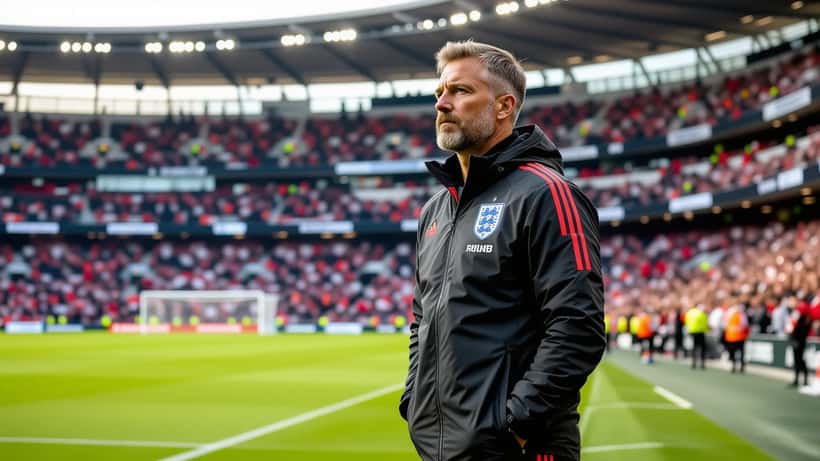
Thomas Tuchel’s appointment as England manager was one of the most talked-about decisions in modern English football history. A German coach taking charge of the national team that beat his country in a major semi-final was always going to divide opinion, but by 2026 the conversation has shifted from identity to outcomes. With the World Cup looming in North America, the question is no longer whether Tuchel belongs in the dugout, but whether his meticulous, emotionally intense style can finally turn England’s talent into a trophy.
The Tuchel Method
Tuchel’s coaching reputation was built at Mainz, Dortmund, Paris Saint-Germain, Chelsea and Bayern Munich. He is known for detailed tactical preparation, positional flexibility and a willingness to challenge players publicly and privately. His Chelsea side won the Champions League in 2021 by out-thinking Pep Guardiola’s Manchester City. His PSG team reached the final the year before. His Bayern tenure was more turbulent, but even there his tactical intelligence was rarely questioned.
What Tuchel brings to England is structure. Previous managers were sometimes accused of letting the squad’s individual quality mask a lack of coherent plan. Tuchel’s teams usually know exactly how to press, when to build and where to position themselves in transition. For a generation of English players raised in Premier League systems that demand high-intensity running and rapid decision-making, that clarity should be welcome.
The England Squad in 2026
By 2026, England’s player pool is in a fascinating phase. Some of the core figures from the 2018 World Cup and Euro 2020 campaigns are nearing the end of their international careers, while a new wave of younger talent is pushing through. Tuchel’s challenge is to manage that transition without creating dressing-room friction. He must decide whether to trust experience in a tournament environment or gamble on younger legs in the North American heat.
The tactical questions are equally delicate. England has an abundance of attacking midfielders and wide forwards but has historically struggled to control games against the very best opponents. Tuchel’s preference for a back three or a flexible back four could give England defensive solidity without sacrificing creativity, but it requires time on the training pitch and clear communication. In international football, time is the scarcest resource.
The Expert Angle: Leadership Under Pressure
Tuchel’s situation is a textbook example of high-stakes leadership. He has inherited a squad with enormous expectation, a media environment that can turn hostile overnight and a fanbase that has waited decades for a senior men’s trophy. The technical side of management matters, but so do emotional intelligence, communication skills and the ability to make unpopular decisions without losing the group.
This is where expert support becomes essential. Elite coaches rarely operate alone. They work with performance analysts, sports psychologists, fitness coaches, nutritionists, data scientists and leadership consultants. A coach in Tuchel’s position might consult a specialist in cross-cultural team dynamics, given his German background and the English media landscape. He might bring in a sports psychologist to help players handle penalty shootouts and knockout pressure. He might work with a communication adviser to manage press conferences that can shape public mood for weeks.
The principle extends beyond football. Any leader stepping into a high-expectation role — a CEO taking over a struggling company, a founder scaling into a new market, a partner joining a law firm — benefits from targeted expert input. The best leaders do not pretend to know everything; they build a network of specialists who can answer questions they have not yet thought to ask.
Why 2026 Matters So Much
The 2026 World Cup is a defining tournament for English football. It represents the best chance this generation has to win a major trophy while its core players are still at or near their peak. It is also Tuchel’s first major tournament in charge, meaning his reputation will be shaped heavily by what happens across those few weeks in June and July.
A deep run would validate the Football Association’s decision to look beyond English candidates. An early exit would reignite debates about identity, identity and whether a foreign coach can truly understand the English football psyche. The margins are tiny, and the scrutiny will be relentless.
What Success Would Look Like
For Tuchel, success does not necessarily mean winning the World Cup, though that is the stated ambition. It means producing a team that looks tactically coherent, handles pressure and leaves the tournament with its reputation enhanced. England fans have seen enough heroic failures to know that style and courage matter almost as much as the final result.
If Tuchel can get the best out of England’s creative players while eliminating the defensive lapses that have cost the team in previous tournaments, he will have done his job. If he can also instil a sense of calm authority in the camp, he will have gone a long way toward silencing the doubters.
The Australian Connection
For Australian readers, the Tuchel story is relevant on several levels. The Socceroos will compete at the same World Cup, and understanding how elite European teams prepare can inform expectations about Australia’s own tournament. More broadly, Australian sport is increasingly globalised, with coaches, players and analysts moving between leagues and codes. The challenges Tuchel faces — cultural adaptation, media management, squad transition — are the same challenges facing any Australian coach or executive operating on an international stage.
Conclusion
Thomas Tuchel’s England tenure reaches its first great test in 2026. The World Cup will reveal whether his tactical brilliance and emotional intensity can translate into international success, or whether the unique pressures of managing England will prove too complex even for one of Europe’s most respected coaches. Whatever happens, his journey is a reminder that elite performance is never the product of one person’s genius. It is the result of a team of experts, working together, under extraordinary pressure, toward a single goal.
