 Olivia Miller
On 13 October 2026, "connections" is trending across Australia. Millions of players have already opened their phones to attempt today's NYT Connections puzzle — and a significant number checked at midnight, when the daily puzzle reset. It feels like a harmless ritual. But a string of new Australian studies suggests the country's love affair with late-night word puzzles is quietly eating into sleep, and the consequences reach well beyond a groggy Tuesday morning.
What Is NYT Connections, and Why Does Midnight Matter?
NYT Connections is the New York Times' daily word-grouping puzzle in which players must find four groups of four hidden among sixteen words. Since launching in 2023, the game has become a genuine cultural phenomenon: the New York Times reported its games portfolio was played over 8 billion times in 2023, roughly double the previous year, according to data cited by Dazed Digital. Connections has emerged as a standout title, with players posting their colour-coded results on TikTok, Instagram, and X, where Connections-related videos routinely draw hundreds of thousands of views.
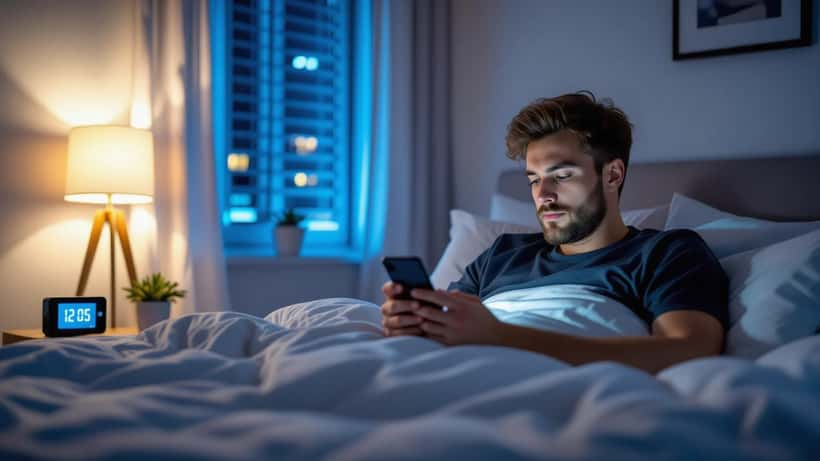
What makes Connections different from passive entertainment is its midnight reset: a brand-new puzzle unlocks at exactly 12:00 am local time, every single day. Dedicated players — and there are millions of them — often reach for their phones the moment the puzzle refreshes. In Sydney or Melbourne, that means a deliberate, stimulating interaction with a bright screen at the exact window when sleep onset should be deepest. The game's four-mistake limit adds cognitive pressure distinct from, say, watching a video: solving Connections requires active reasoning, not passive consumption.
Is Nightly Puzzle Play Affecting Your Sleep?
Q: Is a five-minute puzzle really enough to affect sleep?
Yes — not because five minutes is inherently long, but because of what those five minutes involve. Screen light in the blue wavelength range suppresses melatonin, the hormone that signals to the body that it is time to sleep. A brief but mentally demanding task — such as the category reasoning Connections requires — activates the prefrontal cortex and raises alertness, making the subsequent transition to deep sleep measurably slower.
A 2026 study by Flinders University and the Sleep Health Foundation, the Aussie Sleep Snapshot, found that nearly one in three Australian adults gets less than the recommended seven hours of sleep per night. Among 18-to-34-year-olds — the group most likely to be daily Connections players — more than a third report poor sleep is directly reducing their productivity. The study's lead author noted that inadequate sleep is not merely a personal inconvenience; it compounds across workplaces, health systems, and family wellbeing.
Q: Is there something in Connections specifically that makes it hard to put down?
Daily puzzle apps like Connections share design elements associated with habitual behaviour: a strict daily reset (which creates anticipation), a streak counter (which creates loss aversion), and social sharing (which provides variable reward). These mechanics are not accidental. As Dazed Digital reported, Connections videos on social media routinely attract hundreds of thousands of views, and players post results to preserve streaks and seek validation. This engagement loop frequently extends a "quick five-minute game" into twenty or thirty minutes of additional screen time — well into hours when sleep quality suffers most.
Q: What does Australian data say about bedtime phone use specifically?
A 2026 iSelect survey of over 1,000 Australians found that 48.6% scroll on their phones in bed before sleeping. The survey found nighttime phone use makes it harder to fall asleep, reduces total sleep time, and disrupts the body's natural circadian rhythm. Among younger Australians, the figures are starker: a 2026 Rest Report from Sheet Society found that 61% of 18-to-24-year-olds say screen time or doomscrolling disrupts their sleep, compared with 40% of Australians aged 55 and over. And the ripple effects are measurable: 58% of respondents said poor sleep makes them less patient, while 60% reported a direct hit to mood and concentration the following day.
What Official Australian Data Shows
In June 2026, the Australian Bureau of Statistics released updated data on screen habits, finding that only 27.8% of Australian children aged 5–17 meet the recommended two-hour sedentary screen time limit each day. The average child in that age group spends 2 hours and 51 minutes on sedentary screens daily; teenagers aged 15–17 average over four hours.
While these figures focus on children, they reflect the broader digital environment Australian families inhabit — and the pattern established in adolescence tends to persist into adulthood. Adults who grew up in the early smartphone era now form the core of the daily puzzle demographic, and their late-night habits are visible in population-level sleep data. The Sleep Health Foundation links sustained sleep deficits to reduced immune function, increased cardiovascular risk, and impaired emotional regulation.
The late-night health consequences of screen-based entertainment are not limited to puzzle apps. This earlier article on late-night event viewing and recovery covers how similar mechanisms affect Australians watching sporting events in the early hours.
A Real Scenario: What Tom's Week Actually Looks Like
Consider Tom, a 27-year-old teacher in Brisbane who plays Connections every night as a wind-down ritual. On Sunday night, the midnight reset goes live. He opens the app at 12:03 am, completes the puzzle in fourteen minutes, then checks his friends' results for another ten minutes before putting his phone down at 12:30 am. He falls asleep around 12:50 am. His alarm is at 6:15 am — giving him 5 hours and 25 minutes of sleep.
Across a five-day working week with this habit, Tom accumulates a sleep deficit of approximately 7.9 hours relative to the 7-hour nightly minimum recommended by the Sleep Health Foundation. By Wednesday afternoon, attention and emotional regulation are measurably impaired — not from any single night, but from the cumulative shortfall.
The if/then logic is straightforward: if Tom shifts Connections to a morning habit — ten minutes over breakfast — he loses no enjoyment and regains the full seven hours his body requires each night. If he cannot resist the midnight check, enabling Night Shift on his iPhone (which reduces blue-light emission) and setting a five-minute app timer reduces the neurological cost meaningfully. The ABS recommends adults avoid stimulating screens for at least 60 minutes before bed; a 12:00 am puzzle habit structurally violates this window every single night.
For parents of teenage Connections fans, the stakes are higher still: VicHealth research found Australian teens average 6.5 to 7.5 hours of sleep on school nights, below the 8-to-10 hours recommended for that age group. A midnight puzzle habit compresses that figure further. If you are concerned about how gaming habits are shaping your children's sleep and learning, this piece on games and children's educational wellbeing covers the family perspective in detail.
When It Is Time to Talk to a Doctor
For most Australians, the fix is practical: move puzzle time to the morning, set a device curfew from 10:00 pm, and keep phones out of the bedroom. These changes reliably improve sleep onset and depth within one to two weeks for people without underlying conditions.
A doctor or sleep specialist is worth consulting if you notice:
- Persistent trouble falling asleep — more than 30 minutes to sleep onset on three or more nights per week, for over three consecutive weeks, even after removing devices from the bedroom
- Frequent night waking — waking two or more times per night and struggling to return to sleep
- Measurable daytime impairment — mood dysregulation, difficulty concentrating, physical fatigue, or memory gaps that do not improve after a week of improved sleep habits
- Suspected underlying conditions — insomnia disorder, sleep apnoea, or delayed sleep phase syndrome, each of which screen habits can exacerbate but are distinct clinical conditions requiring professional assessment
Australia's GPs are increasingly familiar with digital sleep hygiene as a presenting concern. A telehealth appointment through a platform like Expert Zoom means you do not need to wait weeks for a clinic referral; you can speak to a qualified health professional the same day, describe your specific habits and symptoms, and receive a personalised sleep management plan tailored to your schedule.
Millions of Australians will solve today's Connections puzzle on 13 October 2026. Most will do so without a second thought. But if the midnight reset is the last thing you see before you close your eyes — and the Flinders data suggests that for hundreds of thousands of Australians it is — today might be the day to move the ritual to morning.
This article provides general health information only and is not a substitute for professional medical advice. If you are experiencing persistent sleep disruption or a suspected sleep disorder, please consult a qualified health professional.
