 Emily Turner
The 2026 China Open is making headlines not for brilliant tennis, but for the staggering number of players who never set foot on court. With over 20 women and several top men withdrawing due to injury before a ball was struck in Beijing this October, professional tennis is confronting an unprecedented injury crisis — one with lessons that reach far beyond the ATP and WTA tours.
A Tournament in Crisis: 20 Players Out Before Beijing Begins
When defending women's champion Amanda Anisimova announced she would not only skip the China Open but end her entire 2026 season due to a wrist injury, it underscored what many in the sport had feared: this year's injury toll has reached a breaking point.
The withdrawal list for the WTA Beijing event climbed to 20 players — a number that would be extraordinary at any single tournament. World No. 1 Jannik Sinner, the defending men's champion, also pulled out citing a knee injury that has kept him sidelined since his Wimbledon final victory in July 2026. Aryna Sabalenka, Jessica Pegula, and multiple other top-10 players followed suit, citing injuries ranging from wrist and knee problems to heel and back issues.
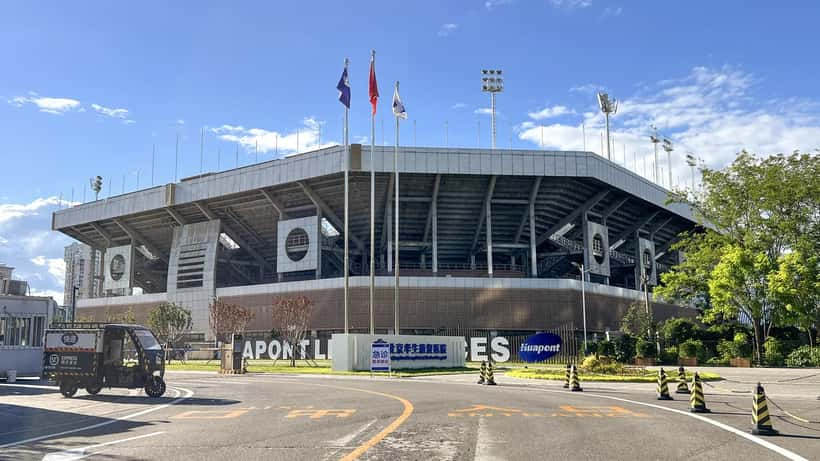
Injury retirements have also disrupted matches already in progress at the National Tennis Center in Beijing, with multiple players stopping mid-match — a visible sign that tournament week has arrived too soon for bodies not yet recovered.
Why Tennis Bodies Are Breaking Down in 2026
The scale of withdrawals is not coincidental. Industry data tells a stark story: upper-body injuries were up 42 per cent in the first quarter of 2026 compared with the same period in 2025, while arm injuries surged 112 per cent year-on-year, according to data cited by the Professional Tennis Players Association (PTPA).
"We're losing the battle overall despite the advances in sports medicine," said Neeru Jayanthi, director of the tennis medicine program at Emory Healthcare in Atlanta — a quote that landed with particular force as Beijing's withdrawal list grew across the week.
The PTPA has been vocal in attributing the crisis to a structural problem: the professional tennis calendar is simply too long, with expanded tournament formats leaving players less time to rest, train, and travel between events. Recovery time — the critical window when muscles, tendons, and joints repair themselves — has been progressively squeezed out of the schedule.
For elite players competing at the highest level, even small reductions in recovery time accumulate into serious injury risk over months. The repetitive nature of tennis strokes — each serve exerting forces equivalent to several times an athlete's bodyweight on the shoulder, elbow, and wrist — means that fatigue-driven biomechanical changes can transform a manageable twinge into a season-ending tear.
The Amateur Athlete's Parallel Problem
What's happening in Beijing is not just a story about professional sport. It mirrors a pattern seen every day in Australian sporting clubs, fitness centres, and local tennis courts — and increasingly in GP clinics and physiotherapy practices.
Amateur athletes, recreational players, and weekend warriors face the same fundamental risk: doing too much, too often, without sufficient recovery. The difference is that professional players have teams of physiotherapists, sports physicians, and performance scientists monitoring every session. Most Australians playing club sport or recreational tennis on the weekend have none of that support.
Sports Medicine Australia consistently identifies overuse as one of the leading causes of injury among recreational athletes. Unlike acute injuries — a twisted ankle, a collision — overuse injuries develop gradually. They send warning signals that are easy to dismiss until the damage is done.
The warning signs include: persistent soreness that doesn't clear within 48 hours of activity, a change in the quality of pain (from muscular aching to sharp or joint-specific pain), reduced range of motion in the days after sport, and pain that begins earlier in each session or at lower intensity than before.
For Australian recreational tennis players particularly, the rotator cuff, lateral elbow (tennis elbow), and lower back are the most common sites of overuse injury — the same regions appearing in Beijing withdrawal statements this week.
A Melbourne Club Player's Shoulder: The Cost of Waiting Too Long
Consider the case of a 42-year-old club tennis player in suburban Melbourne — typical of thousands of Australians who play two to three competitive sessions per week throughout the year with no structured off-season.
In early 2026, she notices a dull ache in her right shoulder after long serving sessions. She plays through it at Tuesday night competition, rests Wednesday, feels fine by Thursday. She repeats this pattern for six weeks.
By week seven, the pain starts during the warm-up — not after it. By week nine, it wakes her at night when she rolls onto her right side. She sees her GP, who refers her for an ultrasound. Result: a partial-thickness rotator cuff tear.
If she had sought a sports medicine assessment at week two or three — when the pain was present only after sport and resolved within 48 hours — the most likely intervention would have been a modified training load, targeted strengthening exercises, and recovery guidance. Cost: two to four physiotherapy appointments, typically $120–$180 AUD each, partially rebated under Medicare chronic disease management plans.
Instead, the partial tear now requires a minimum of 12 weeks of complete rest from overhead activity, a structured rehabilitation program, and potentially a corticosteroid injection or minor surgical intervention if conservative treatment fails. Total out-of-pocket cost can exceed $2,000 AUD; the human cost is a lost season and a heightened risk of re-injury for the rest of her playing career.
The threshold is clear: if pain scores 3 or above out of 10 during activity, if it changes your movement pattern, or if it persists beyond 72 hours after sport, that is the window for early intervention. Once a partial tear replaces tendinopathy on an ultrasound report, that window has closed.
The China Open Injury Wave as a Warning Signal for Australian Sport
The professional circuit has recognised this pattern: expanded schedules, compressed recovery, accumulated fatigue, and eventually a cascade of injuries that no amount of sports science can outrun. The China Open 2026 is a visible endpoint of that process for the world's best-supported athletes.
For Australian recreational athletes, the equivalent pressures are different but real. Club competitions run year-round. Social sport has no official off-season. Fitness apps celebrate daily activity streaks. The cultural pressure to "not let down the team" routinely overrides the body's signals.
Sinner's knee injury — which has kept the world No. 1 out since his Wimbledon final win in July — illustrates a key principle that applies at every level of sport: joint injuries often present first as vague discomfort or tightness rather than sharp pain, and the absence of severe pain is not a reliable indicator that a structure is undamaged.
Our previous coverage of how Karolína Muchová used her Australian Open 2026 comeback to demonstrate structured injury rehabilitation offers a practical template for anyone managing a return to sport after a similar setback.
When to Stop Playing Through It
For Australian amateur and recreational athletes, the following situations warrant a consultation with a sports physician, physiotherapist, or GP with sports medicine training — and they warrant it this week, not next month:
- Pain that is present at the start of activity and does not improve once warmed up
- Any swelling, instability, or clicking in a joint
- Pain that wakes you from sleep
- Symptoms present for more than two weeks without clear improvement
- Any change in how you move that you are unconsciously making to protect a painful area
- A second occurrence of the same injury within 12 months
Early assessment costs a fraction of delayed treatment — financially and in terms of time away from sport. The China Open 2026 is a high-profile illustration of what happens when that logic is ignored, even with the best medical infrastructure in the world available at courtside.
You don't need a Wimbledon title on the line to justify taking your body seriously. Book the appointment before week nine.
This article is for informational purposes only and does not constitute medical advice. If you are experiencing pain or injury symptoms, consult a registered healthcare professional before continuing physical activity.
