 Chloe Wilson
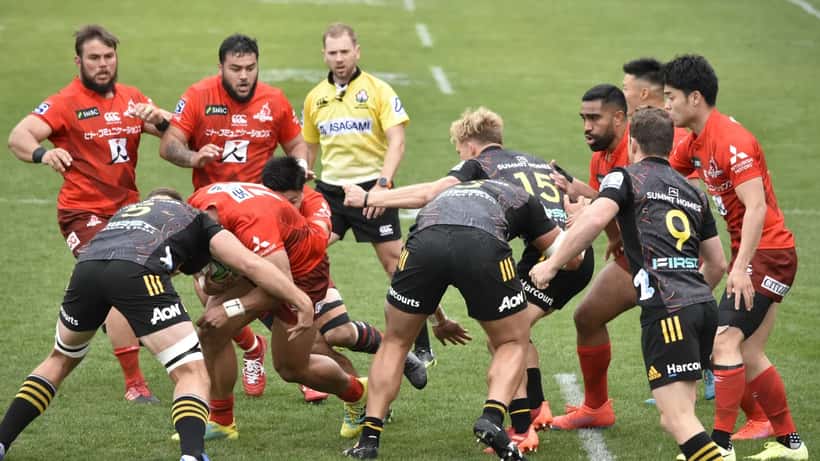
The Chiefs demolished the Crusaders 49–12 in the Super Rugby Pacific semi-final at FMG Stadium Waikato in Hamilton on 12 June 2026 — one of the most dominant results in the competition's history. Behind the scoreline, both squads were decimated by injuries: more than 15 players unavailable between the two sides before a ball was kicked.
The Injury Toll That Reshaped Both Squads
The Chiefs entered the match without a string of regular starters. Wallace Sititi, one of the most influential No.8 options in the competition, is flagged as a concussion protocol and faces a potential absence from the final. Centre Kyle Brown is confirmed out of the final after sustaining a concussion during the semi. Tyrone Thompson is a third concussion case in the Chiefs squad across recent matches.
Damian McKenzie celebrated his 150th Super Rugby appearance by converting all seven of the Chiefs' tries. The milestone underlines how long-running, experienced players can remain available while teams around them experience attrition — a function of careful load management over a full season.
On the Crusaders' side, the injury toll was even more severe. Captain Scott Barrett has not played since March with a season-ending back injury. Will Jordan — one of the competition's premier attacking backs — is out with a season-ending calf problem. In total, eight Crusaders are listed with season-ending diagnoses: shoulder reconstructions, a neck injury, a discitis (spinal) diagnosis, and multiple calf tears. The squad received a partial boost when prop Fletcher Newell returned from an MCL injury to start, and Braydon Ennor returned to full fitness in the centres. It wasn't enough on the night.
Concussion in Rugby: The Medical Line That Can't Be Crossed
Three Chiefs players entering concussion protocols from this match or recent fixtures reflects one of contact sport's most serious clinical concerns. According to Sports Medicine Australia, the principle is clear: any player suspected of concussion must be immediately removed from play under the "if in doubt, sit it out" protocol.
A concussion does not require loss of consciousness to be clinically significant. Any of the following symptoms after a head knock warrants immediate removal:
- Headache or pressure in the head that persists or worsens
- Slowed thinking, difficulty concentrating, or confusion
- Dizziness or balance problems when walking
- Nausea or vomiting after the incident
- Visual disturbances, including double or blurry vision
Players should not return to training until all symptoms have fully resolved and they have been assessed by a qualified medical professional. The graduated return-to-play protocol takes a minimum of seven days and requires step-by-step progression — rest, light aerobic exercise, sport-specific training, non-contact drills, full-contact practice, and then match day. Kyle Brown's confirmed absence from the final reflects exactly this process playing out at elite level.
For community rugby players in Australia, the threshold for seeking medical review is lower than most people realise. A headache that persists 48 hours after a knock, or a sense of mental fog at training the following week, is enough reason to see a doctor before returning to contact.
Season-Ending Injuries: The Silent Cost of a Super Rugby Season
The volume of season-ending injuries visible in this semi-final should concern any community rugby player who regularly "plays through" something. Among the Crusaders' absentees: shoulder reconstructions, a neck injury, a discitis diagnosis affecting the spine, and multiple calf tears. These are not mild inconveniences — they are surgeries, months of rehabilitation, and career interruptions.
At the community level, these injuries almost always begin as something manageable: a shoulder that "pops in and out," a calf that tightens after long runs, a neck that stiffens after matches. The decision about when to see a specialist — rather than continuing to rest and hope — is where community players consistently get it wrong.
Two to three weeks is a reasonable window for soft-tissue soreness to resolve. Beyond that, an injury that persists, recurs, or limits your range of motion warrants a formal assessment, not a longer rest period. For rugby-specific concerns, a sports medicine specialist offers something a GP may not: imaging review, load management planning, and a return-to-sport protocol calibrated to contact activity specifically.
The Hong Kong Sevens 2026 injury review highlighted a similar pattern in high-contact rugby tournaments — injuries that appear manageable in the short term compound across a season into something far more serious.
Recovery Science at Elite Level — and What It Means for Club Players
The Chiefs' preparation for the final will draw on the full toolkit of modern sports science. Super Rugby franchises now use GPS load monitoring across every training session, sleep tracking with targeted 8–9 hour recovery windows after contact matches, cold-water immersion in the 60 minutes post-game, and high-protein nutrition within 30 minutes of the final whistle.
These tools are not exclusively available to professional athletes. Many sports medicine clinics in Australia now offer similar services to community players:
- Pre-season screening: Identify biomechanical risk factors before the competition season begins — hip and shoulder assessments are particularly relevant for front-rowers and backs
- Load monitoring: Track weekly training volume to identify when players are at elevated soft-tissue injury risk
- Return-to-sport protocols: Structured plans for coming back from shoulder, calf, and knee injuries that match the demands of contact rugby
- Concussion assessment: Baseline cognitive testing before the season makes post-injury comparison far more reliable
Samisoni Taukei'aho, who scored tries in both the regular season clash against the Crusaders on 22 May and in Saturday's semi, is a direct example of what sustained availability looks like at elite level — a product of careful workload management over many months.
When to See a Sports Medicine Specialist
The Chiefs may have won 49–12, but the injury count visible across both squads is a useful reminder of what consistent exposure to contact sport demands from the body. Here are the clearest signs that specialist assessment is warranted for community rugby players:
- Any concussion, even mild: More than one concussion in a single season requires neuropsychological assessment before returning to contact. Do not rely on a self-assessment.
- Soft-tissue injuries that recur: A hamstring, calf, or shoulder injury that keeps coming back within the same season needs imaging and a structured rehabilitation plan — not just rest between rounds.
- Pain during or after sport that doesn't resolve within two to three weeks: Persistent pain is a physiological signal, not bad luck.
- Old injuries heading into pre-season: Ligament tears, fractures, and joint instability that were never formally assessed are worth reviewing before another season of contact begins.
Find a sports health specialist through ExpertZoom and get a professional assessment before your next training block.
Health Disclaimer: This article provides general sports medicine information only. If you have sustained a head injury or are experiencing symptoms of concussion, seek immediate medical attention. Do not return to play without clearance from a registered healthcare professional.
