 Chloe Wilson
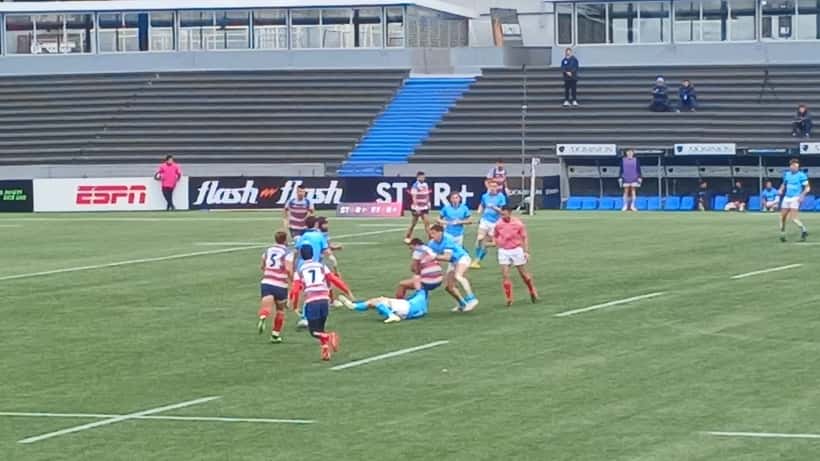
The Cathay/HSBC Hong Kong Sevens concluded on 19 April 2026 at Kai Tak Stadium, marking the opening round of the HSBC SVNS World Championship and reminding rugby fans worldwide why the short-form game produces some of the most explosive — and injurious — moments in sport. For Australian players from elite level down to suburban fields, the tournament is also a timely reminder of what happens to bodies put under sevens-specific stress, and when those bodies need specialist care.
Why Rugby Sevens Is Uniquely Brutal
Rugby Sevens looks lighter than its 15-a-side counterpart: fewer players, smaller lines, less pack collisions. But sports medicine specialists know the physiological reality is far more demanding per minute of play.
A sevens player runs approximately 1,200 to 1,400 metres in a standard 14-minute match — roughly the same total distance as many 80-minute union players — compressed into a fraction of the time. Average sprint speed is higher, recovery time between contacts is shorter, and the intensity of each defensive effort is amplified.
The result, according to research published by World Rugby's medical commission, is an injury incidence rate in sevens tournaments that can rival or exceed the 15-player code. The most common injuries at tournament level are:
- Hamstring strains — from explosive acceleration and deceleration
- Ankle ligament sprains — often from uneven landing or awkward changes of direction
- Shoulder injuries — including AC joint disruptions from high-speed tackles
- Concussion — at an incidence that the World Rugby concussion protocols now specifically address for the sevens format
- Knee ligament injuries — including ACL tears, which can end seasons
At the Hong Kong Sevens, played over three days at pace on a hard synthetic surface, the physical demands on players are compressed further than a domestic season — meaning injuries that might emerge after weeks of club rugby can occur within hours at elite tournament level.
The Weekend Warrior Problem
For the thousands of Australians who play social or club sevens — through Rugby Australia's network of domestic competitions, school programs, and beach/touch variants — the Hong Kong Sevens is aspirational viewing. But it also models risky behaviours.
"Recreational players tend to underestimate sevens injuries because the game looks faster and more fun," says the reasoning behind specialist referral guidelines. "But the injury mechanisms are identical — hamstrings, ankles, shoulders, knees — and untreated, they have the same long-term consequences as any sport."
The most dangerous pattern seen in sports medicine practices around Australia is the "push through" instinct: a weekend player takes a knock in a sevens tournament on Saturday, plays again on Sunday because teams are short-handed, and presents to a GP two weeks later when the swelling hasn't resolved. By that point, a minor ligament sprain may have become a partial tear, and a partial tear may have become a full rupture requiring surgery.
When to See a Sports Medicine Specialist
The following presentations after rugby (sevens or union) warrant specialist assessment — not just a GP visit:
Ankle injuries
If you cannot bear full weight within 24 hours of an ankle injury, or if swelling does not reduce significantly within 48 hours with RICE protocol, you need imaging to rule out a fracture or grade-3 ligament tear. An MRI (not just X-ray) is often needed to properly characterise ligament damage.
Shoulder injuries
Any shoulder that drops or cannot be raised above horizontal after a tackle warrants urgent assessment. AC joint injuries in rugby are classified by grade, and higher-grade separations may require surgical intervention. Delaying assessment significantly worsens surgical outcomes.
Concussion
The World Rugby and Rugby Australia protocols are clear: any player who shows concussion symptoms must be removed from play and must NOT return on the same day under any circumstances. A graduated return-to-play (GRTP) protocol over a minimum of 21 days is mandatory for adults. Premature return increases the risk of second-impact syndrome — a rare but potentially fatal condition.
In practice, Australian sports medicine physicians report that many club players self-manage concussion without professional assessment. This is dangerous. A sports medicine specialist can conduct a full concussion workup including ImPACT or similar cognitive testing and guide you safely through the GRTP protocol.
Hamstring and knee injuries
Grade-2 and grade-3 hamstring tears, and any knee injury involving significant swelling, locking, or giving way, should be assessed via ultrasound or MRI. Rest alone does not repair structural damage. Without proper rehabilitation designed by a sports physiotherapist or sports medicine physician, re-injury rates are very high.
What Specialist Care Looks Like in Practice
A sports medicine specialist is a doctor with post-graduate qualifications in sports and exercise medicine. They are distinct from physiotherapists (who provide hands-on rehabilitation) and general practitioners (who can manage most injuries but may not have imaging access or specialist rehabilitation protocols for high-demand athletes).
For serious rugby injuries, the typical pathway in Australia is:
- GP referral to sports medicine physician or orthopaedic surgeon
- Imaging (X-ray, ultrasound, MRI as appropriate)
- Specialist diagnosis and rehabilitation plan
- Physiotherapy-guided recovery with progress benchmarks
- Clearance for return to sport based on functional testing, not just time
This process takes weeks to months for significant injuries. The sooner it starts, the better the outcome.
Expert Zoom connects Australians with sports medicine specialists, GPs with sports medicine training, and health professionals across every state and territory. If you or a teammate took a hit at the sevens this weekend, don't wait for it to become a chronic problem. You can also read more about what NRL-level sports injuries mean for everyday players and when professional assessment is essential.
