 Mia Jones
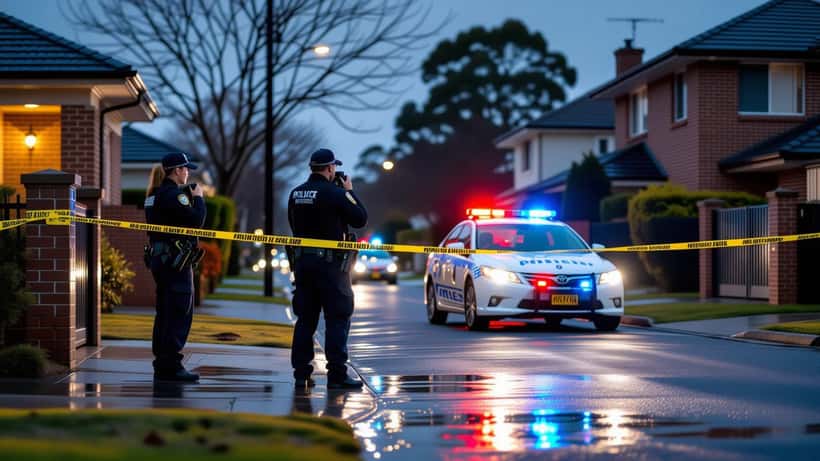
A man died and four others were left in serious condition after a shooting at a home on Arbutus Street, Canley Heights, on the evening of 19 May 2026. The 28-year-old victim presented to Liverpool Hospital with a gunshot injury and could not be saved. Police have established a crime scene with Fairfield City Police Area Command and the NSW Homicide Squad leading the investigation. For the families of all five victims, the question of what happens next — legally and financially — is now urgent.
What Happened at Canley Heights
According to NSW Police, victims presented to multiple hospitals across the Fairfield and Liverpool areas over a short period on Tuesday evening, suggesting a coordinated incident rather than a random encounter. A 32-year-old man with a neck injury remains in serious but stable condition, while a 23-year-old and 22-year-old were both admitted to Fairfield Hospital with gunshot and shoulder injuries respectively. A 19-year-old was treated at Liverpool Hospital for arm injuries.
The investigation remains active. No charges have been announced publicly. For the families of victims, the criminal justice process and any civil or financial remedies available under NSW law will be running on a separate, parallel timeline.
What Is the NSW Victims Support Scheme?
NSW has one of Australia's most comprehensive legal frameworks for assisting victims of violent crime. The Victims Rights and Support Act 2013 establishes both rights and financial assistance mechanisms for eligible victims through the NSW Victims Support Scheme administered by Victims Services, a part of the NSW Department of Communities and Justice.
Under this scheme, eligible victims of violent crime — including shooting, assault and robbery — can apply for:
- Recognition payments: A lump sum acknowledging the physical and psychological harm suffered
- Counselling support: Funded sessions with psychologists and other mental health professionals
- Compensable injuries payments: Additional payments where the victim sustains a recognised physical injury under the schedule
Recognition payments scale with the severity of harm. A primary victim who suffered a gunshot wound would fall into the serious physical injury category, attracting the higher payment tiers. Immediate family members of a homicide victim — including parents, partners and children — are also eligible as "family victims" under the scheme, entitling them to their own recognition payment and counselling support.
The official information portal for the NSW Victims Support Scheme is managed by the NSW Government's Victims Services division. Families can read the eligibility criteria and application process at the NSW Victims Support Scheme's recognition payment page.
Time Limits: When to Act
One of the most consequential pieces of information for victims of violent crime in NSW is the three-year time limit on applications to the Victims Support Scheme. The clock starts from the date of the act of violence — in this case, 19 May 2026. While three years may seem ample, applications that are delayed are harder to document, memories become less precise, and medical evidence more difficult to compile.
For the family of the deceased, applications should be filed promptly and supported by the police event report number, coroner information (once issued) and medical records from Liverpool Hospital. Legal Aid NSW provides free advice to victims navigating these applications.
Importantly, the Victims Support Scheme operates independently of any criminal prosecution. An application can be filed even before police have charged anyone with an offence. Victims do not need to wait for a conviction — or even a charge — to begin the financial assistance process.
What About Civil Claims?
In addition to the Victims Support Scheme, seriously injured victims may have grounds for a civil compensation claim depending on the circumstances. If negligence by a third party — such as a property owner, an employer or an event organiser — contributed to the situation that enabled the violence, civil liability principles under NSW tort law could apply.
In shooting cases that occur at a private premises, questions of occupier's liability are sometimes relevant: was the property maintained in a way that made the incident foreseeable? Did the occupier take reasonable precautions? These are questions for a personal injury or criminal law solicitor to assess based on the specific facts of the case.
For the families of victims who have been killed or seriously injured in a violent crime, the combination of Victims Support payments and any available civil remedies represents a legally distinct path from the police investigation — and one that can be pursued simultaneously.
Why Legal Advice Matters Immediately
The days following a violent incident are often the worst time to be navigating legal paperwork, but they are also the most important. A solicitor experienced in victims of crime law can:
- File a protective application to the Victims Support Scheme to preserve the time limit while evidence is gathered
- Obtain the police event report number and request medical records while they are current
- Advise family members on their individual eligibility as primary, secondary or family victims
- Assess whether any civil claim exists against a third party
This is separate from, and does not interfere with, the criminal investigation being conducted by the Homicide Squad.
The Eaton Mall stabbing case demonstrated that victims of public violence who receive early legal guidance navigate the Victims Support process significantly more smoothly than those who wait.
If you or a family member has been affected by the Canley Heights incident, ExpertZoom can connect you with a NSW legal specialist in victims of crime compensation — a service that is available from the first day following any act of violence.
Disclaimer: This article provides general legal information only. It is not legal advice for any specific individual or situation. For personalised guidance, consult a qualified NSW solicitor who specialises in victims of crime law.
