 Chloe Anderson
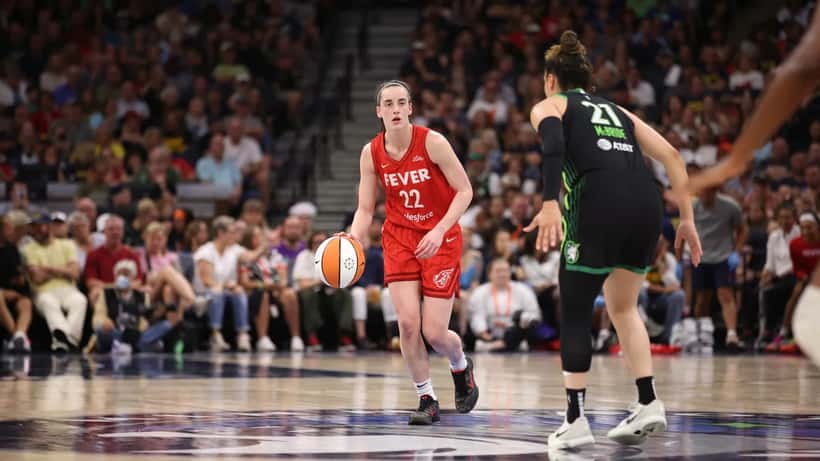
Indiana Fever star Caitlin Clark is listed as probable for tonight's WNBA game against the Golden State Valkyries at Gainbridge Fieldhouse (tipoff 7:30 AM AEST Saturday 23 May), returning after missing the Fever's last game with a back issue. Clark is averaging 20-plus points per game alongside teammate Kelsey Mitchell — the only duo averaging that figure in the WNBA this season. The Fever are 3-2. The Valkyries are 3-1 with the best defensive record in the league. It is a marquee matchup. But for Australians watching, the story behind the story is Clark's back — and what it reveals about a type of injury that ends more careers than almost any other.
The Back Injury Every Athlete Ignores Until It's Too Late
Back injuries are the second most common cause of medical visits in Australia, and among athletes they account for a disproportionate share of time lost from competition. According to Healthdirect Australia, most back pain resolves within a few weeks. The problem is that athletes routinely play through early warning signs — mild stiffness, occasional sharp pain, discomfort that "isn't that bad" — until the underlying issue becomes structural.
Clark missed a game. She returns tonight listed as "probable," not "confirmed." That single word — probable — tells you something. She is managed, not fully resolved. In a professional sporting context with medical staff monitoring her daily, that measured language reflects genuine clinical caution.
For recreational athletes and those in physically demanding jobs — tradies, nurses, warehouse workers, personal trainers — that caution rarely exists. Pain disappears temporarily when adrenaline or determination overrides it, so people keep going. The consequences arrive months or years later.
4 Back Warning Signs Athletes Commonly Ignore
Sports medicine doctors across Australia identify four specific signals that warrant immediate clinical assessment rather than self-management:
1. Pain that radiates below the knee. Lower back pain that travels down the buttock and into the leg — especially past the knee toward the calf or foot — may indicate compression of the sciatic nerve or a disc protrusion pressing on a nerve root. This is not ordinary muscle soreness. It is a structural signal. Continuing to train through it can convert a manageable disc issue into a surgical one.
2. Pain that wakes you at night. Musculoskeletal pain generally eases with rest. Pain that wakes you from sleep, or that is consistently worse at night, is a red flag that warrants investigation to rule out inflammatory conditions or, in rare cases, more serious pathology.
3. Pain after a specific incident, not gradual onset. Sudden onset back pain following a specific movement — a landing, a twist, a tackle, a heavy lift — is more likely to involve structural injury than gradual-onset soreness. Immediate assessment rather than "wait and see" is appropriate.
4. Weakness or numbness in the legs. Any neurological symptom — tingling, numbness, or weakness in the lower limbs associated with back pain — warrants same-day medical assessment. These symptoms suggest nerve involvement and should not be managed with rest and over-the-counter anti-inflammatories alone.
Why Basketball Players Are Particularly Vulnerable
In basketball, the lumbar spine absorbs repeated loading forces from jumping, landing, and rapid directional changes. WNBA players jump between 50 and 100 times per game. Each landing generates ground reaction forces of three to five times body weight, transmitted up through the legs and concentrated in the lower back if landing mechanics are suboptimal.
Clark plays an average of 35-plus minutes per game. She generates points through constant movement — curl cuts, pull-up jumpers, drives to the basket — each requiring explosive acceleration and deceleration. That cumulative load on the lumbar spine over the course of a season is substantial.
As noted in our coverage of Ausar Thompson's playoff return from injury this season, elite athletes often return from injury earlier than ideal because competitive calendars and playoff seeding create strong incentives to play. Clark's "probable" status suggests the Fever's medical staff are managing her carefully — but the external pressure to play in a tight game against a 3-1 opponent is real.
The Broader WNBA Australia Connection
Australian fans have followed the WNBA closely since the league expanded and Australian players began featuring prominently. Ezi Magbegor's contract extension and subsequent injury earlier this season highlighted how Australian WNBA players navigate health and contractual rights in a US sporting context.
Clark specifically has driven a surge in Australian WNBA interest. Her combination of elite three-point shooting, court vision, and playmaking has made the Fever must-watch television. Tonight's matchup against the Valkyries — who swept the Fever 3-0 in the 2025 season series — carries genuine playoff seeding implications even this early in the season.
But beyond the basketball, Clark's managed return from a back injury is a useful lens for any Australian who plays sport, trains regularly, or has a physically demanding job. The question of when to push through and when to stop is never purely psychological. It is physiological, and getting it wrong has costs that extend well beyond a single game.
Getting Assessment Right
For Australians experiencing back pain during sport or exercise, the pathway is straightforward: see a general practitioner or sports medicine doctor for initial assessment. For acute structural injuries, imaging (MRI) provides the clearest picture of what is actually happening in the lumbar spine. Physiotherapy is the first-line treatment for most back conditions, with specific exercise prescription outperforming generic rest.
The athletes who manage long careers — Clark is only 24 and has potentially 15 or more playing years ahead of her — are not those who train hardest through every injury. They are the ones who get the right diagnosis early, follow evidence-based management plans, and understand when a single game is not worth the cumulative risk.
If you have been ignoring back pain during training, or "working through" discomfort that has persisted for more than six weeks, a consultation with a sports medicine doctor is overdue. Clark will have had hers. You should too.
