 David Kelly
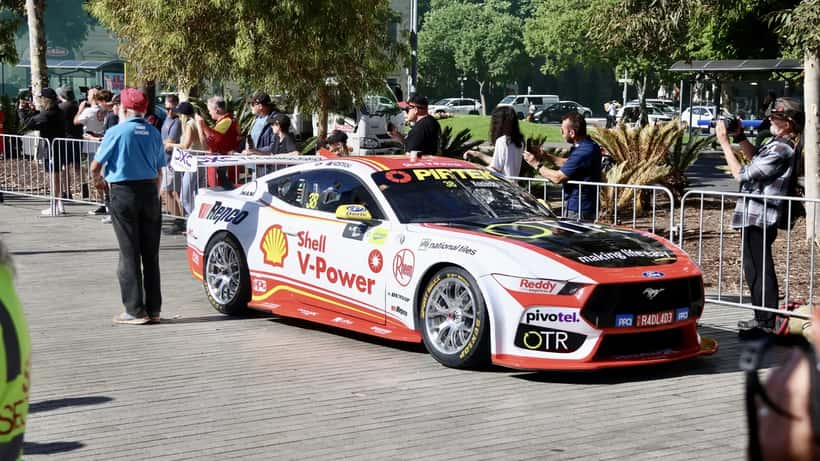
When Brodie Kostecki climbed into Dick Johnson Racing's iconic #17 Shell V-Power Ford Mustang at the start of the 2026 Repco Supercars Championship, that car had already undergone hundreds of hours of mechanical preparation. By mid-season, Kostecki had declared his Mustang "the class of the field" — and the results backed it up, with multiple race victories from Queensland Raceway to Taupō. But behind every fast Supercars car is a team of engineers and mechanics who obsess over details most Australian road drivers never consider. Their discipline holds practical lessons for every driver who relies on a car daily.
Kostecki, DJR, and the 2026 Season That Has Rivals Worried
Brodie Kostecki enters 2026 as the 2023 Repco Supercars Champion, and the 27-year-old Western Australian wasted no time proving his title was no fluke. After four competitive seasons at Erebus Motorsport, Kostecki made the high-profile switch to Dick Johnson Racing — Ford's factory-backed outfit and the team behind the legendary #17, a number carrying enormous weight in Australian motorsport history.
The pressure was real. DJR's Shell V-Power Racing Team operates to the highest engineering standards in the series, and Kostecki's pre-season began with a shakedown of a brand-new chassis under strict regulations: only 60 kilometres of running permitted before a competitive event. Every suspension component, braking system, and fluid line was checked, verified, and rechecked before a single competitive lap was turned.
That meticulous process paid off immediately. Kostecki opened his DJR account with a win at Queensland Raceway in Ipswich, and the victories kept coming across the first half of the year. A significant setback came at the Gold Coast 500, where Kostecki's Mustang suffered major chassis damage in a qualifying accident — requiring the team's full engineering resources to diagnose structural damage, assess what could be repaired versus replaced, and certify the car safe for competition overnight.
That kind of rapid, expert-led mechanical response has a direct parallel for everyday Australian motorists facing post-accident decisions about whether their car is genuinely roadworthy — or just looks okay on the surface.
The Professional Mechanics' Mindset That Most Drivers Never Apply
What separates Kostecki's Mustang from the one in a suburban driveway isn't just horsepower. It's the frequency and rigour of inspections — and the principle that problems are identified before they become failures.
Supercars regulations require comprehensive pre-event scrutineering before each race weekend. Mechanics measure brake pad depth and disc condition, check suspension geometry with precision equipment, inspect tyre wear profiles across the full contact patch, verify engine mount integrity, and assess cooling system performance — not because something has gone wrong, but because something might.
For everyday drivers, this translates into one core principle: don't wait for a warning light or an unusual noise. Professional mechanics who specialise in performance and road vehicles will tell you that the most expensive repairs almost always start as the cheapest problems. A worn brake pad caught early costs $150 to $200 to replace per axle. Let the same pad wear through to metal-on-rotor contact, and you're looking at $400 to $700 for rotors alone — before labour.
The F1 2026 hybrid regulations have brought renewed attention to how modern performance cars manage energy and heat — and the same cooling and electrical principles that matter in top-tier motorsport apply to the hybrid and high-output petrol engines in everyday Australian driveways.
When "She'll Be Right" Costs an Extra $4,700
Here's a realistic scenario that plays out in Australian mechanics' workshops every season.
A 34-year-old Sydney driver — call him Daniel — bought a 2022 Ford Mustang GT after watching Kostecki's 2023 championship run. Two years and 38,000 kilometres later, Daniel has followed his scheduled service intervals correctly. But for the past 18 months, he's been driving on the same set of rear tyres — approximately 26,000 kilometres of mixed highway and urban use.
The tyres look fine to Daniel. No visible punctures, no obvious bulges on the outer sidewall. He gives them a quick visual check before a planned drive from Sydney to Bathurst for the October round.
What a professional mechanic would immediately flag: the rear tyres show 2.2mm of tread depth on the inner edge — caused by a wheel alignment that shifted when Daniel hit a pothole on the M7 six months ago. On the outer edge, where a casual visual check naturally falls, tread depth still reads 4.5mm. The misalignment is invisible to an untrained eye.
If caught before the drive: A wheel alignment costs $90 to $130. Replacing both rear tyres on a Mustang GT — with fitting — runs $380 to $520 per tyre, so $760 to $1,040 total. Total intervention cost: approximately $850 to $1,170.
If the inner tread fails at highway speed on the Great Western Highway: Daniel faces a tow ($150 to $250), emergency replacement tyres with limited options in a regional area ($500 to $700 per tyre), potential rim damage ($350 to $600 per rim), and if the blowout causes a lane departure, bodywork or suspension damage starting at $3,500. Total exposure: $4,700 to $8,000 or more — plus the non-financial consequences.
The 2.3mm tread gap between inner and outer edge that Daniel cannot see from a walk-around is identified in under 30 minutes by a qualified mechanic with a tread depth gauge and a basic wheel alignment rack. According to the ACCC's guidance on new and second-hand cars, any repair or inspection service must be carried out with due care and skill — meaning that if a workshop misses a critical safety issue that a competent mechanic should catch, you have legal recourse under Australian Consumer Law.
Understanding when to push back on a mechanic's assessment — and whether a second opinion is warranted before authorising significant repair work — is exactly the kind of question where consulting a specialist can prevent both financial and safety outcomes.
Four Race-Prep Checks That Apply to Your Car
Inspired by what Kostecki's team inspects before every Supercars event, these four checks are the most commonly skipped by everyday Australian drivers — and the most frequently cited by mechanics as the source of avoidable expensive repairs:
1. Tyre tread depth across the full contact patch: Visual checks miss uneven wear caused by alignment problems. A full tyre inspection — measuring depth at multiple points, not just the centre — takes 20 minutes and costs nothing at most tyre shops. If you're planning a long-distance drive, such as the popular Bathurst event run in October where thousands of Australians drive mountain roads, having your car checked before departure is basic risk management.
2. Brake pad depth and rotor condition: Supercars mechanics measure brake pad thickness to fractions of a millimetre before every round. For road cars, brakes should be professionally inspected every 20,000 kilometres or annually, with immediate consultation if you notice vibration under braking, a pulling sensation, or a grinding sound at low speed.
3. Cooling system and drive belt condition: A snapped serpentine belt or a coolant leak left unaddressed can destroy an engine block — a repair starting at $3,500 on modern performance vehicles. Kostecki's team checks both before and after every race. For road cars, belts should be replaced every 90,000 to 100,000 kilometres, and coolant inspected for contamination or concentration at every service.
4. Wheel alignment geometry: As Daniel's scenario illustrates, alignment shifts happen gradually and invisibly — but their consequences on tyre life and handling safety are significant. An alignment check costs $90 to $130 and should follow any notable pothole impact, kerb strike, or after replacing tyres.
Getting a Professional Opinion Before It Gets Expensive
Brodie Kostecki's mechanics invest 200 or more hours preparing a car for a Supercars event. You don't need that level of preparation for an average commute. But a 45-minute professional inspection before any long drive — particularly into regional or mountain terrain — is an investment that consistently saves Australian drivers thousands of dollars.
If you're uncertain whether a noise, vibration, or dashboard warning on your car warrants urgent attention, consulting a qualified mechanic directly rather than waiting for a scheduled service is the fastest way to get an honest answer. The cost of getting it wrong — as both Kostecki's team after the Gold Coast crash and drivers like Daniel discover — is almost always higher than the cost of getting it checked.
This article provides general car maintenance guidance for information purposes. For safety-critical repairs and inspections, always engage a licensed, qualified mechanic. Do not rely on this article as a substitute for a professional vehicle assessment.
