 David Kelly
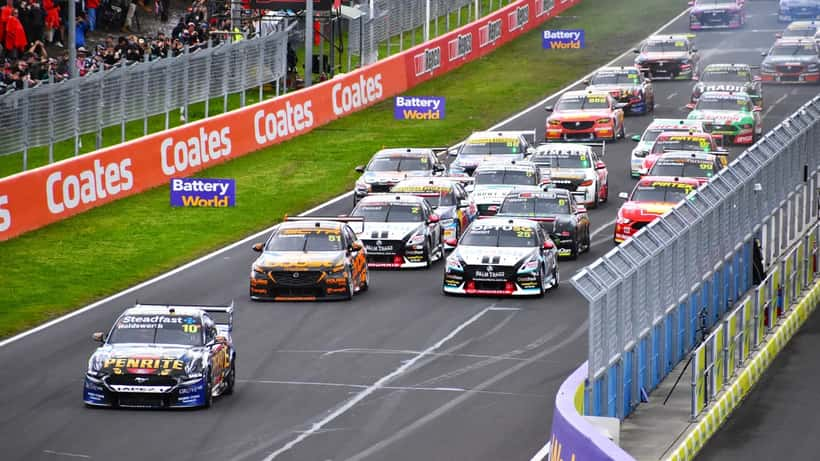
The 2026 Repco Bathurst 1000 gets underway this Thursday, 8 October, with the main event on Sunday 11 October at 11:30am AEDT. For the 66th time, 26 cars and 52 drivers will tackle the iconic 6.213-kilometre Mount Panorama circuit in Bathurst, New South Wales. But for the hundreds of thousands of fans heading to the mountain by road this weekend, the real mechanical challenge starts well before the first lap.
What's on at Mount Panorama: 8–11 October 2026
The 2026 event runs across four full days. Six practice sessions build toward the traditional Boost Mobile Qualifying on Friday, followed by the much-anticipated Top Ten Shootout on Saturday afternoon. A 20-minute warm-up session on Sunday morning precedes Race 30 of the Repco Supercars Championship — green flag at 11:30am AEDT.
For viewers at home, the race is broadcast live on Fox Sports and Kayo Sports, with free-to-air coverage on Channel 7. Start times vary by state: 10:30am AEST in Queensland, 11:00am ACDT in South Australia, and 8:30am AWST in Western Australia. New Zealand viewers can tune in at 1:30pm NZDT.
This year's race doubles as the final round of the Ryco Enduro Cup, meaning it carries championship weight beyond the 1000-kilometre spectacle. With the Repco Supercars Finals Series berths also on the line, expect an intense field. Organisers expect more than 100,000 spectators across the four days — a significant proportion of whom will drive to the mountain from Sydney, Melbourne, Brisbane, and beyond.
Why Your Car Deserves Pre-Race Scrutiny Too
Every Supercars entry at Bathurst undergoes rigorous scrutineering before it's permitted on-track. Engine, braking system, tyres, suspension geometry, and safety systems are all inspected in detail by qualified officials. It's a non-negotiable part of competing at the highest level of Australian motorsport.
What many fans don't do before their own drive to the mountain is anything similarly methodical — despite the fact that the journey to Bathurst places far more cumulative demand on a road car than a typical week of suburban commuting.
The distances involved are significant. From Melbourne it's roughly 900 kilometres each way, a nine-hour drive that crosses the Great Dividing Range. From Sydney the trip is a more manageable 250 kilometres, but the final leg via the Great Western Highway involves sustained hill climbing that loads braking systems, transmissions, and cooling components in ways city driving rarely does. From Brisbane, the return journey can exceed 2,200 kilometres.
According to qualified automotive technicians, three vehicle systems fail most commonly on long-distance Australian road trips: tyres (including spare condition), cooling systems, and brakes. A car that performs flawlessly on a 12-kilometre morning commute can expose an underlying fault within the first 400 kilometres of a loaded highway run in spring heat.
The Bathurst region also creates a particularly difficult recovery scenario when something does go wrong. Tow truck availability across the Bathurst corridor is constrained during race week, with wait times for roadside assistance commonly stretching to two to four hours during peak event periods. The combination of distance, terrain, elevated traffic, and limited service access makes pre-trip preparation significantly more important than it would be for a typical weekend run.
Five Systems That Fail on Long-Distance Drives
A qualified mechanic conducting a pre-road-trip inspection will typically assess five critical areas:
Tyres: Tread depth, sidewall condition, and air pressure appropriate for load. The legal minimum tread depth in Australia is 1.5mm, but anything below 3mm on a vehicle loaded with passengers and luggage at highway speeds is a meaningful safety concern. If you're towing a trailer or camper, tyre pressure requirements change substantially.
Brakes: Pad wear, disc surface condition, and brake fluid age. Brake fluid absorbs moisture over time and can boil under sustained pressure — exactly the type of load involved in descending from Lithgow into the Bathurst valley. A fluid change is inexpensive insurance against fade on a gradient road.
Cooling system: Coolant level and condition, hose integrity, and radiator cap function. A minor coolant leak that goes unnoticed during daily suburban driving can cause engine-damaging overheating within 90 minutes on an open highway in warm spring conditions.
Engine oil: Level and condition. Low or degraded oil under extended high-load driving accelerates internal engine wear in ways that may not manifest as a breakdown immediately but will shorten engine life significantly.
Belts and hoses: Cracked, glazed, or brittle components are classic failure modes that don't announce themselves until they strand you. A serpentine belt failure disables power steering, the alternator, and air conditioning simultaneously. At highway speed, that's an immediately dangerous situation.
A standard pre-trip inspection from a licensed mechanic typically costs between $80 and $150. Many tyre retailers and service centres across New South Wales also offer free tyre safety checks with no booking required.
From Parramatta to Stranded: What a Missed Inspection Actually Costs
Consider this scenario. Nathan, a 38-year-old electrician from Parramatta, is planning to drive his 2018 Ford Ranger to Bathurst on Saturday with three friends. The Ranger has 87,000 kilometres on the clock. Last full service: 14 months and roughly 18,000km ago. The front brake pads measure approximately 3mm — within legal limits, but marginal for a loaded vehicle on mountain terrain.
On the descent from Lithgow into the Bathurst valley on Saturday afternoon, the brakes encounter the kind of sustained gradient loading they almost never face in western Sydney. What Nathan doesn't know is that the disc surfaces have developed minor scoring — common at that mileage — which reduces effective heat dissipation and increases the risk of fade under prolonged pressure.
Without a pre-trip inspection ($120 at a local service centre):
- Risk of brake fade on a gradient highway section carrying four adults
- Potential breakdown requiring tow truck recovery: $450–$800 for the Bathurst corridor
- Roadside assistance callout fee: $350–$550 average (if not a current member)
- Lost race day attendance, accommodation already paid
- In a worst case, third-party property damage or personal injury liability
With a pre-trip inspection: A mechanic would likely flag the marginal front pads and scored discs, recommending a front brake service. Parts and labour: $400–$620 including pad replacement and disc machining or replacement. That's the full cost — paid once, with a known outcome.
The if/then logic is straightforward: if your vehicle hasn't been serviced in the past 12 months or 15,000 kilometres, and if your round trip will exceed 500 kilometres on variable terrain with a full passenger load, then a pre-trip mechanical inspection is not an optional extra. It's the same preparation logic the Supercars teams apply every time a car is wheeled into scrutineering — the difference is that for them it's compulsory, and for you it's a choice.
An additional consideration: if a fault on your vehicle causes or contributes to a collision on a public road, your insurer may scrutinise the vehicle's maintenance history. A vehicle operating with worn components that were not addressed despite being discoverable through reasonable inspection can affect the outcome of a claim.
Before the 11:30am Start: What to Book Now
The race starts Sunday. That means Thursday and Friday are the realistic windows for a pre-trip inspection, and many Sydney-area workshops are already operating at capacity with Bathurst preparation work. Book sooner rather than later.
Transport for NSW recommends vehicle checks before any long journey, particularly for vehicles carrying multiple passengers — a recommendation that applies directly to the Bathurst 1000 weekend. Their pre-trip checklist covers tyres, lights, oil, coolant, and brakes: the same five systems a qualified mechanic will prioritise.
If you've kept up with regular servicing and your vehicle is under five years old with fewer than 60,000 kilometres, a quick visual check and tyre pressure confirmation may be all you need. If you're driving an older vehicle, a high-mileage example, or a car that's overdue for service, a proper inspection by a qualified mechanic is worth every dollar.
The Supercars will be ready for Sunday. Make sure your car is too.
