 Olivia Taylor
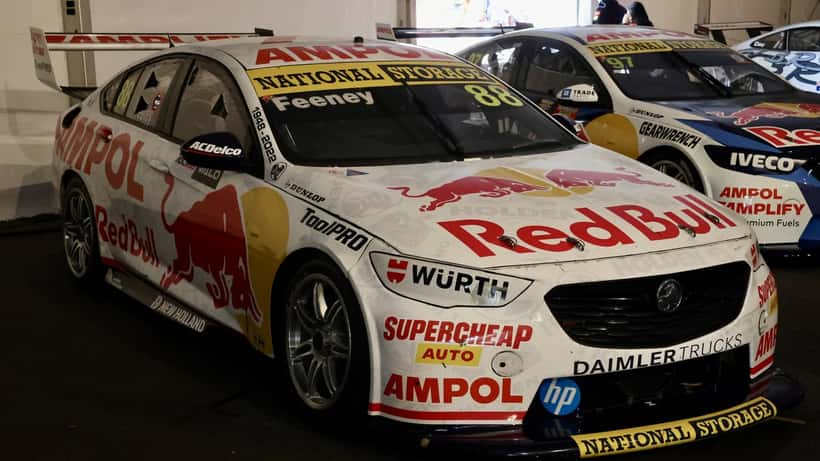
The starting grid for the 2026 Repco Bathurst 1000 will be locked in during Thursday and Friday qualifying at Mount Panorama, and Broc Feeney — who swapped his championship-contending setup at Triple Eight for a Ford Mustang this year — is among the drivers pushing every millimetre of tarmac for a front-row start. The spotlight lands on lap times and championship implications. What rarely enters the conversation is what those two-minute qualifying laps cost the body — and why that gap in understanding matters for the hundreds of thousands of Australians who attend track days and club motorsport events each year with none of the medical preparation professional drivers consider routine.
The Qualifying Stakes at Mount Panorama in October 2026
This year's Bathurst 1000 qualifying arrives at a charged moment in the Repco Supercars Championship. Feeney won three of the first six races of 2026 after Triple Eight's switch to Ford, briefly led the championship standings, and then lost that lead after a dramatic crash in Melbourne. At Bathurst — 6.2 kilometres of elevation change, concrete walls at trackside, and a 100-metre vertical difference between the pit straight and the top of the mountain — qualifying is not a dress rehearsal. It is a full-commitment sprint where every error is immediate and expensive.
A qualifying lap at Mount Panorama typically runs 2 minutes 3 to 2 minutes 6 seconds. During that lap, a Supercars driver manages cockpit temperatures above 40°C, sustains lateral forces of 2.5G to 3.5G through corners including The Cutting and Forrest's Elbow, and processes a continuous stream of visual and tactile information at speeds approaching 280 km/h on Conrod Straight. Heart rate telemetry from professional circuit drivers in comparable qualifying scenarios consistently shows sustained rates above 150 beats per minute, with peaks approaching 175 bpm at the highest-demand corner entries. A single qualifying run at Bathurst is, physiologically speaking, a two-minute maximum-intensity cardiovascular interval conducted in an extreme heat environment.
These demands scale down, not to zero, for amateur circuit drivers.
The Physical Reality Behind Every Fast Lap
Research published in June 2026 by the University of Pittsburgh Medical Center confirmed what motorsport physiologists have documented for decades: competitive circuit driving generates cardiovascular load comparable to sustained interval running, alongside physiological stressors that no other sport combines in quite the same way. Among the findings: drivers competing in warm conditions can lose up to 2.7 kilograms of body weight through perspiration in a single session — a fluid deficit that would impair reaction time and decision-making in any athlete, but one that circuit drivers are required to manage while simultaneously processing information at speed.
Beyond the cardiovascular and hydration demands, G-loading at circuits like Bathurst creates sustained musculoskeletal stress on the neck and core that accumulates across multiple sessions in a race weekend. These forces are manageable for a fit, specifically conditioned driver. For most amateur track day participants, they arrive without any preparatory conditioning whatsoever.
A 2026 article from the American Osteopathic Association described motorsport as "one of the most physically demanding sports in the world, yet with medical infrastructure that has lagged behind other professional sports." The professional level — Supercars, Formula 1, GT racing — has responded with structured sports medicine protocols. The club and track day level in Australia largely operates without them.
When a Track Day Becomes an Unmonitored Stress Test
Consider the situation of James, a 43-year-old project manager from the Central Coast of New South Wales who has attended between two and four track days per year since 2022, driving his own modified car at circuits including Phillip Island, Sydney Motorsport Park, and Winton. He is a typical Australian track day participant: experienced enough to stay safe within the limits of his vehicle, enthusiastic about improving his lap times, and completely without any formal motorsport medical assessment.
At a Phillip Island track day in March 2026, James completed six 20-minute sessions in 29°C ambient heat. Between sessions, he drank approximately 500ml of water — roughly a quarter of what Sports Medicine Australia recommends for sustained physical activity at that temperature. By sessions four and five, he noticed himself braking later for Turn 1 than intended and struggling to hold concentration through the back section of the circuit for a full lap. He attributed it to general fatigue and drove the final session regardless.
What James was experiencing were the early markers of heat-related cognitive impairment compounded by dehydration — conditions that directly correlate with elevated incident risk in motorsport medicine research. For James specifically, the risk carries an additional dimension: like roughly one in four Australian adults, according to the Australian Institute of Health and Welfare's cardiovascular disease data, he has elevated blood pressure — a condition he was aware of but had not discussed with his GP in over 18 months.
The if/then calculation is direct: if a driver aged 40 or over has unmanaged hypertension and participates in six 20-minute high-intensity driving sessions in 29°C heat without adequate hydration, the cumulative cardiovascular load is functionally equivalent to an unmonitored cardiac stress test conducted in adverse conditions. The risk is not theoretical — it is precisely the category of risk that a pre-event sports medicine assessment exists to identify and manage.
A pre-season cardiovascular assessment at a GP with sports medicine experience costs between $160 and $310 in most Australian states, depending on location and provider. A full initial consultation at a dedicated sports medicine clinic typically runs $280 to $480. That consultation would establish James's cardiovascular baseline, flag the hypertension as a contraindication requiring management before high-intensity activity, and provide a personalised hydration and heat protocol for his track days.
The cost of that single consultation is less than James's annual tyre budget for circuit events. For drivers inspired by the 2026 Supercars season to explore their own motorsport ambitions, it represents the most practical preparation available.
What Motorsport Medicine Offers Amateur Competitors
Australian sports physicians and GPs with sports medicine experience who work with circuit drivers offer a structured approach to the specific demands of track driving:
Pre-season cardiovascular screening establishes a baseline resting ECG, blood pressure reading, and resting heart rate before the driver's first session of the year. This is the most important step for any driver over 35 or with any known cardiovascular history.
Heat and hydration protocols are personalised to the driver's physiology, the circuit, and the intensity of planned sessions. A sports doctor can specify target fluid replacement rates by body weight, identify appropriate electrolyte supplementation strategies, and define the warning signs that should prompt the driver to stop — irrespective of whether another session is planned.
Neck and core conditioning guidance reduces the biomechanical risk from sustained G-loading, which is particularly relevant for drivers in older vehicles, kit cars, or any car without modern ergonomic packaging. Neck musculature strain is among the most commonly underreported club motorsport injuries in Australia, according to sports physiotherapy practitioners who treat recreational racing drivers.
For drivers with known risk factors — elevated blood pressure, previous cardiac events, respiratory conditions, or sleep disorders that interact with cockpit heat and sustained exertion — a sports physician consultation is a prerequisite for safe participation, not an elective extra. Motorsport Australia's competition licensing framework mandates medical declarations; track day operators typically require only a self-declaration, placing the full risk assessment responsibility on the individual.
The Preparation That Separates Race Starts from Roadside Incidents
Before Broc Feeney puts in a qualifying lap at Mount Panorama this week, weeks of physical conditioning, heat acclimatisation work, and sports science review have ensured that his body will not be the limiting factor during those 2 minutes 4 seconds. His fitness and preparation are as carefully tuned as the #88 Mustang's suspension settings.
Amateur drivers attending track days this summer face the same underlying physical demands at a scaled level. The heat, the cardiovascular load, the G-forces, and the cognitive intensity are all present — they simply arrive without the professional support infrastructure that Supercars drivers take for granted.
If you are over 40, plan to attend a multi-day event, or carry any cardiovascular risk factor you have not recently reviewed with a doctor, a consultation with a sports physician is the most practical circuit preparation available before the Australian summer heat peaks. The Bathurst weekend build-up is the ideal prompt — not just for preparing your car, but for preparing yourself.
Expert Zoom's Health category connects Australian drivers with sports physicians and GPs experienced in the specific demands of active and motorsport pursuits.
This article provides general health information only. For personalised medical advice about your fitness to participate in motorsport or high-intensity driving activities, consult a qualified sports physician or medical practitioner.
