 Emily Turner
Australia completed a dominant 3-0 T20I series clean sweep against Bangladesh in Chattogram on 21 June 2026, winning the final match by 7 wickets with 54 balls to spare. But beyond the scoreboard, this series unfolded in conditions that tested every player on the ground: temperatures of 33°C, a heat index touching 44°C, and the thick humidity of Bangladesh's monsoon season. For anyone who plays, coaches, or watches cricket in Australia — the heat lessons from Chattogram are worth taking seriously.
What Happened in Chattogram
Bangladesh posted 109/8 after 20 overs in the final T20I, with captain Towhid Hridoy top-scoring with an unbeaten 61. Spencer Johnson (2/4), Adam Zampa, and Nathan Ellis shared the wickets as Australia's bowlers dominated in sapping conditions. When Australia came to chase, Mitchell Marsh took just 11 overs to complete the job, blasting 60 runs off 28 balls.
For Australia, it was a clinical series win. For the bodies on that field — helmeted batters, heavily padded fieldsmen, and fast bowlers sprinting in 80 per cent humidity — it was a severe endurance test. The conditions in Bangladesh in June are among the harshest in international cricket: a heat index of up to 44°C means the body feels that temperature even when the thermometer reads 33°C.
Cricket's Hidden Opponent: Extreme Heat and Humidity
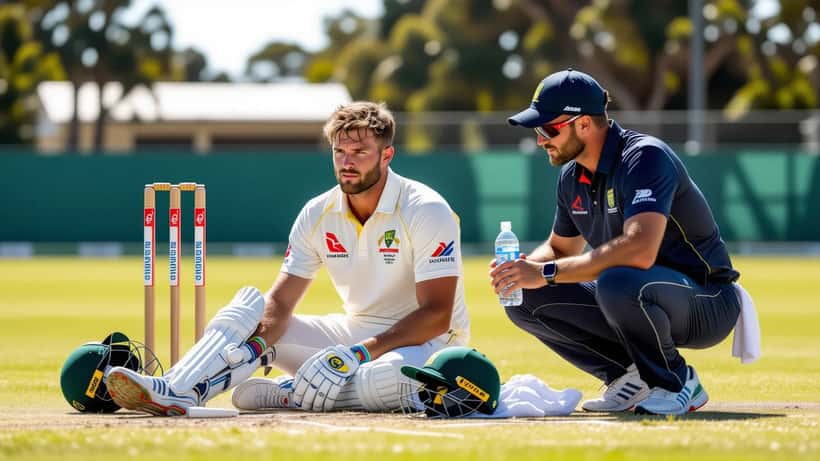
Cricket is uniquely demanding in extreme heat. Unlike football or basketball, matches can last hours with players standing on unshaded outfields, wearing protective equipment that blocks ventilation. Helmets, thick pads, batting gloves, and abdominal guards trap body heat and significantly reduce the efficiency of sweating — the body's primary cooling mechanism.
When humidity climbs above 70 per cent, as it routinely does in Chattogram during June, even sweating becomes less effective. The moisture in the air slows the evaporation of sweat from the skin, which is what actually cools the body. This is why a 33°C day in Bangladesh feels closer to 44°C and is physiologically more dangerous than the same temperature in dryer conditions.
According to Healthdirect Australia, heat exhaustion occurs when the body's temperature regulation system becomes overwhelmed. Left untreated, it can escalate into heat stroke — a life-threatening emergency.
5 Warning Signs You Should Never Ignore on the Cricket Field
Whether you're watching a junior club match or playing senior cricket yourself, recognising these signs could prevent a serious outcome.
1. Heavy, uncontrolled sweating — or an abrupt stop in sweating
Excessive sweating is the body's first response to heat. But if a player suddenly stops sweating despite the conditions, something more serious is happening. The absence of sweat when it should be present signals that the body's cooling system has started to shut down — a critical warning sign of progression toward heat stroke.
2. Dizziness, confusion, or difficulty standing
A batter who looks unsteady at the crease, or a fielder who seems disoriented when communicating with teammates, is showing signs that rising body temperature is affecting brain function. This is not tiredness. The player must be removed from the field immediately and assessed by a first aider or medical professional.
3. Rapid heartbeat or shallow, laboured breathing
In extreme heat, the heart pumps faster to push blood toward the skin's surface for cooling. A player at rest between overs who still has a pounding, rapid heartbeat — particularly when paired with pale or clammy skin — is under serious cardiovascular stress. This is a warning sign that should never be dismissed as "just fitness."
4. Intense muscle cramps during play
Heat cramps in the legs, arms, or stomach are caused by loss of sodium and other electrolytes through sweat. Many recreational cricketers mistake these for normal soreness. The key distinction: if cramps appear during play — not after — and are severe enough to limit movement, the player needs immediate shade, hydration, and rest. Playing through heat cramps risks worsening the condition rapidly.
5. Nausea, vomiting, or a severe, sudden headache
Nausea and intense headaches are the body's distress signals in a heat emergency. For a cricketer who has been batting or fielding for extended periods in a 40°C-plus heat index, these symptoms are not something to push through. They are urgent signs that medical assessment is needed promptly.
What to Do When You Spot the Signs
Immediate steps are straightforward:
- Move the player out of direct sun into shade or, ideally, air conditioning
- Offer cool (not ice-cold) water or an electrolyte drink in small sips
- Apply cool, damp towels to the neck, armpits, and groin
- Loosen or remove protective equipment and excess clothing
- Do not give caffeine, alcohol, or solid food until symptoms ease
Critical escalation point: if symptoms do not improve within 30 minutes of cooling, or the player becomes confused, loses consciousness, or has a measured temperature above 40°C — call 000 immediately. This is heat stroke and is a medical emergency.
For any heat illness that goes beyond mild discomfort, a GP or sports medicine professional should be consulted before the player returns to training or competition. Heat illness can have lasting effects on kidney function, cardiac health, and the nervous system, even when the initial episode appears to resolve.
From Chattogram to Your Weekend Oval
Elite athletes in Chattogram had team doctors, cooling protocols, and medical staff on standby throughout the series. Club cricketers, school teams, and amateur players rarely have the same resources. Yet they play in the same Australian summer heat — and increasingly, on tour to subcontinental conditions.
Australia's cricket travel calendar has expanded in recent years, with school and club tours to Asia, the subcontinent, and Southeast Asia becoming more common. If you're planning a cricket tour or coaching a team heading into a hot summer season, understanding heat illness is not optional — it is a duty of care.
For more on travel health risks for Australian cricketers heading overseas, see what health experts recommend for cricket tours involving tropical destinations, including the kinds of pre-departure health checks that can prevent an emergency on the field — India vs West Indies Cricket 2026: Health Risks Australian Fans and Players Face Overseas.
The Bottom Line
Australia's 3-0 sweep of Bangladesh was an outstanding result. Mitchell Marsh's brutal 11-over chase was elite cricket under difficult conditions. But the real lesson from those sweat-drenched Chattogram days is not about batting averages or bowling economies.
It's about knowing your body's warning signs, knowing when to step off the field, and knowing when to see a professional.
This article contains general health information. It is not a substitute for medical advice. If you or someone in your team is showing signs of heat-related illness, seek immediate medical attention. You can also consult a qualified health professional through Expert Zoom for personalised guidance on sport-related health concerns.
