 David Kelly
Championship leader Kimi Antonelli's race weekend unravelled in a single heartbeat on Saturday morning in Baku. The 20-year-old Ferrari driver struck the inside wall at Turn 1 during Q1 qualifying for the 2026 Azerbaijan Grand Prix, breaking his front suspension and ending his session immediately. Starting from 16th on the grid, Antonelli now faces a desperate recovery drive in one of Formula 1's most unforgiving circuits — but his misfortune carries a lesson that every Australian driver should hear before their next trip through a pothole-ridden suburban street.
The News: How One Wall Strike Rewrote the Championship Picture
George Russell capitalised brilliantly, clocking a dominant pole position time of 1m 42.526s to beat Charles Leclerc by 0.837 seconds. Oscar Piastri, Australia's championship hope, secured a crucial third-place start — just 0.001 seconds behind Leclerc — as he looks to capitalise on Antonelli's vulnerable grid position at the tail of the top 20. The championship battle heading into Baku's 51 laps has been transformed by three seconds of wall contact at Turn 1.
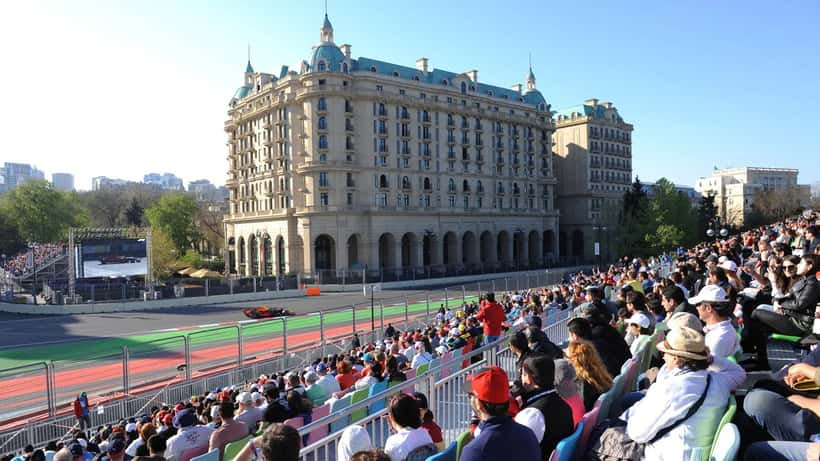
Baku's 6.003km circuit through Azerbaijan's capital is notorious among F1 engineers for one characteristic above all others: it destroys cars. The combination of street walls just 92cm from the racing line in the old city section, uneven asphalt joining old cobblestones near the harbour, and 340km/h straight-line speeds on the main straight creates mechanical stress that no other circuit on the calendar replicates. In 2017, Sebastian Vettel's rear tyre delaminated at full speed. In 2021, Max Verstappen's tyre exploded approaching Turn 20 at nearly 300km/h. In 2026, Antonelli's suspension failed on the turn-in for Turn 1 — a wall strike that looked minor on television but was catastrophic for the car's geometry.
For F1 mechanics, a suspension failure is immediately readable in the telemetry data. Within seconds of the impact, engineers spotted abnormal steering angle readings, asymmetric wheel load sensors, and GPS trace deviation confirming the car was undriveable. The retirement decision took under 90 seconds. The diagnosis was instant.
Your local mechanic doesn't have pit lane data streams — but they can identify exactly the same symptoms if you bring your car in promptly after a significant impact.
Why Baku Is Every Suspension Engineer's Worst Nightmare
The Azerbaijan GP's physical demands on suspension components mirror, at far greater magnitude, what Australian roads inflict on everyday vehicles. The latest Infrastructure Australia audit found approximately 38 per cent of local roads in capital cities are rated in poor or very poor condition, with Sydney and Melbourne consistently ranking worst for pothole density in major urban corridors.
When Antonelli hit Turn 1's wall, the impact transmitted several tonnes of lateral force through his front suspension's control arms, ball joints, and wheel hubs in a fraction of a second. The components couldn't absorb the energy — they failed catastrophically and visibly.
Your car's suspension works on the same mechanical principles, scaled for road-legal speeds. The tolerances are wider, the materials more forgiving — but the failure modes after a sudden impact are identical in nature. F1 merely makes the damage instantaneous and impossible to ignore. On public roads, the same damage unfolds over weeks, quietly destroying tyres and steering precision while the driver remains unaware.
The 2026 F1 season has already highlighted how new hybrid power unit regulations have shifted weight distribution toward the rear axle on most cars — placing even greater demand on front suspension geometry under braking and cornering. ExpertZoom previously reported how these changes affect front-end wear patterns on street circuits, a dynamic that's directly relevant to understanding Antonelli's failure today.
What an F1 Engineer Would Ask About Your Car
When an F1 mechanic assesses post-impact suspension damage, they run through a systematic checklist: steering responsiveness, tyre wear pattern, wheel geometry deviation, and acoustic signature under load. It takes two minutes with the right tools. Your mechanic should perform exactly the same assessment after any significant kerb or pothole strike.
The four symptoms most Australian drivers overlook:
Clunking or knocking sounds during cornering indicate a compromised ball joint or control arm bushing. These components can fail suddenly under load — exactly the failure mode Antonelli experienced, just at road speeds rather than racing speeds. A clunk that appears only during slow-speed turns is an early warning that should be assessed within days, not weeks.
Vehicle pulling to one side under braking means the wheel alignment is out of specification. A single pothole strike can shift camber by 0.5 to 2 degrees — invisible to the eye but measurable on an alignment rig. You may not feel the pull on open roads, but it reduces braking effectiveness and causes asymmetric tyre wear.
Steering wheel vibration above 60km/h points to a bent rim, damaged tyre sidewall, or wheel balance disruption — consequences of an impact that felt minor at the time but transmitted a spike force to the rim's bead seat.
Unusual tyre wear on inner or outer edges is the delayed signature of misaligned geometry from an earlier impact you may have forgotten. By the time wear feathering is visible, the tyre has already lost significant structural integrity.
As George Russell noted post-qualifying in Baku, the margin between finishing and retiring in Azerbaijan is wafer-thin. The same is true for Australian car owners: the margin between a $150 alignment check and a $1,500 tyre-and-wheel bill is often one ignored symptom.
One Pothole, Four Weeks, $1,400: A Real-World Case
Consider a scenario that unfolds for thousands of Australian drivers every week. You are commuting on a poorly lit urban road, clip a deep pothole at 72km/h, feel a solid thud beneath the front passenger seat, and continue driving because the steering seems normal. Nothing looks cracked. The tyre isn't flat. You keep going.
Here's what the if/then timeline typically looks like for a moderate-impact strike that shifts front wheel alignment by 1.5 degrees and causes a small rim dent — a common outcome on roads rated "very poor" in federal infrastructure audits:
If you act immediately (within 48 hours): A wheel alignment check and rim assessment costs $120–$180. If alignment is corrected now and the rim is within tolerance, that's the total cost. Tyre life is preserved, steering is restored, and the problem is solved.
If you wait two weeks: Tyre inner-edge wear accelerates. At a typical commuter average of 400km per week, the affected tyre loses 20–30 per cent of its remaining tread life compared to normal wear. An alignment correction now still costs $120–$180, but you've shortened the tyre's serviceable life by months.
If you wait four to six weeks: The bent rim section creates micro-vibration that progressively damages the tyre's internal belt structure. The tyre must now be replaced: $180–$380 depending on brand and size. Combined with alignment correction, total cost: $300–$560. Still manageable — but avoidable.
If you ignore the problem until symptoms become undeniable: A stressed ball joint fails under hard braking, causing sudden steering pull at speed. Emergency roadside recovery plus towing plus full suspension inspection plus parts and labour: $1,200–$2,800. In rare cases, sudden tyre blowout from sidewall delamination.
The rule Antonelli's engineers apply — assume damage until the telemetry proves otherwise — is directly applicable to your weekend drive. If you feel the impact, book the inspection.
Your Rights as an Australian Car Owner
Under the Australian Consumer Law, if a mechanic provides a service that fails to meet acceptable quality standards — including missing a diagnosable fault during an inspection you paid for — you have the right to a remedy: repair, refund, or compensation for consequential damage. This means that if you bring a car in for a post-impact assessment and a fault is overlooked, you have formal recourse under federal law.
It also means that when you pay for an alignment check and the mechanic certified the geometry as within tolerance, you have a documented record if symptoms emerge later. That paper trail matters.
The next time you feel that familiar thud of a pothole, treat it with the same urgency that Antonelli's pit crew treated Turn 1's wall — because the physics are the same, and the costs of delay are real. For a qualified mechanical inspection you can trust, ExpertZoom connects Australian drivers with licensed mechanics across every capital city and regional centre, available for post-impact assessments and alignment diagnostics when it matters most.
This article provides general information about vehicle maintenance. Always consult a qualified mechanic for assessments specific to your vehicle.
format_used: Expert reaction
