 Jess Johnson
Australia's Combatting Antisemitism, Hate and Extremism (Criminal and Migration Laws) Act 2026 became law on 20 January 2026 — the toughest hate-crime package in the country's history, passed in a single sitting day by both Houses of Parliament after the Bondi Beach attack on 14 December 2025. Four months on, the practical consequences for employers, schools, social-media users and visa holders are starting to surface. No conviction has yet been recorded under the Act, but the offences are now live, and the migration provisions began applying to applications lodged from the day of royal assent.
For anyone whose work touches public communication, employment decisions or border control — and for anyone whose social-media history might be reviewed by a future employer or a visa officer — five changes deserve attention.
1. Maximum penalties for advocating violence jumped to 10 years
The base offence of advocating or threatening force or violence against a protected group rose from a maximum of 5 years' imprisonment to 7 years. The aggravated form of the offence — where the conduct threatens the peace, order and good government of the Commonwealth — rose from 7 to 10 years. Aggravation now also covers leaders, preachers and people in positions of cultural authority who advocate violence; the previous law did not single out positional influence.
The threshold for what counts as "advocacy" is unchanged but the evidentiary practice is expected to shift. Prosecutors can now point to sustained patterns of online speech to establish a course of conduct, not just a single post or sermon.
2. Prohibited hate symbols expanded
The Criminal Code's prohibited hate symbol offence has been widened beyond Nazi symbols and the Islamic State flag to include any symbol prescribed by regulation as being used to threaten or vilify a protected group. The regulation-making power lets the Attorney-General add symbols without returning to Parliament — fast, but legally testable.
Practical effect: a symbol that is lawful one week could be prohibited the next. Employers, schools and event organisers should monitor the prescribed-symbol register and be prepared to remove items quickly when it updates.
3. New "prohibited hate group" regime
The Act creates a framework parallel to terrorist-organisation listing under the Criminal Code, allowing the government to proscribe organisations engaged in, preparing, planning, assisting or advocating hate crimes. Listed groups face penalties for membership, association, financing and material support — without the group needing to meet the terrorist-organisation threshold of "preparation for violence".
This is the most legally novel element of the Act and the one the Law Council of Australia has flagged for human-rights review. Members of groups that are subsequently listed may find themselves committing an ongoing offence by maintaining membership cards, subscription payments or symbolic affiliation.
4. Mandatory visa cancellation for permanent residents convicted
Permanent residents convicted of a designated hate crime now face mandatory visa cancellation and removal within 28 days, subject to limited humanitarian exemptions. The previous regime allowed discretionary cancellation; the new regime removes the discretion for designated convictions.
For temporary visa holders, the discretionary cancellation power has been broadened to capture conduct that "promotes or supports" hatred, even where no conviction has been recorded. Migration practitioners report visa applicants being asked to disclose social-media handles dating back five years — a process that previously applied mostly to skilled-visa security checks. Permanent and temporary visa applicants should expect heavier scrutiny of online history through 2026 and beyond.
5. Workplace and education-sector duties have shifted
The Act does not impose new direct obligations on employers or schools, but it sharply increases the legal exposure of organisations whose staff or students engage in conduct caught by the new offences. Three flow-through effects are emerging in practice.
First, workplace policy reviews. Many enterprise agreements and codes of conduct refer generically to "unlawful discrimination" or "unlawful hate speech". Lawyers advising HR teams are now recommending that policies reference the specific offences and prohibited-symbol provisions of the 2026 Act so that conduct can be addressed under disciplinary processes without legal ambiguity.
Second, social-media monitoring during recruitment. The combination of broadened offences and a visa-cancellation regime means a single archived social post can affect both employability and immigration status. A migration lawyer or employment lawyer with experience in defamation and online-speech matters is increasingly being engaged at the hiring stage.
Third, school and university duties. Educational institutions have safeguarding and anti-discrimination obligations under separate state laws. Where a student is charged under the new federal offences, the institution must navigate suspension, expulsion or reporting decisions in parallel with the criminal process. Getting the sequencing wrong creates wrongful-exclusion exposure.
What to do if you receive a notice or charge
Three actions matter in the first 48 hours. First, do not delete social-media history once aware that conduct is being reviewed; depending on the matter, deletion can amount to attempting to pervert the course of justice or evidence-tampering. Second, do not give an unrecorded interview to police, an employer or a school investigator without independent legal advice; the new offences have specific intent elements that hinge on what was actually said and intended. Third, identify the right specialist. A criminal-law solicitor handles charges; a migration lawyer handles visa cancellations; an employment lawyer handles workplace consequences. Many matters need all three.
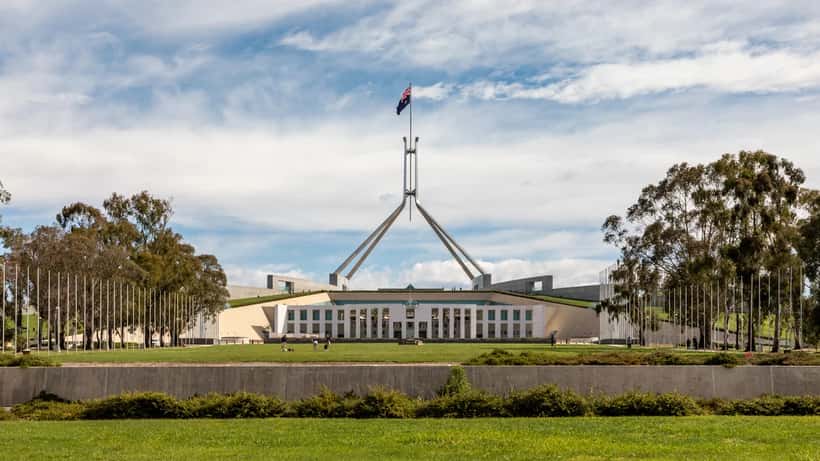
The official Parliamentary record of the Act, including the explanatory memorandum and amendments, is published on the Parliament of Australia Bills page.
The wider picture
Human Rights Watch has called for monitoring of how the Act is enforced, particularly around the prohibited-hate-group power and the migration provisions. The first prosecutions will set the practical scope of offences whose statutory wording is broader than anything previously enacted at federal level in Australia.
For now, the most useful position for the average Australian is informed caution: know what the law actually covers, keep records of online speech you have not deleted, and get specialist legal advice early if conduct of yours — or someone connected to you — comes under review. The Act applies to past conduct only where the conduct was already an offence at the time, but evidence from older posts can still support new aggravated charges based on current conduct.
