 Olivia Taylor
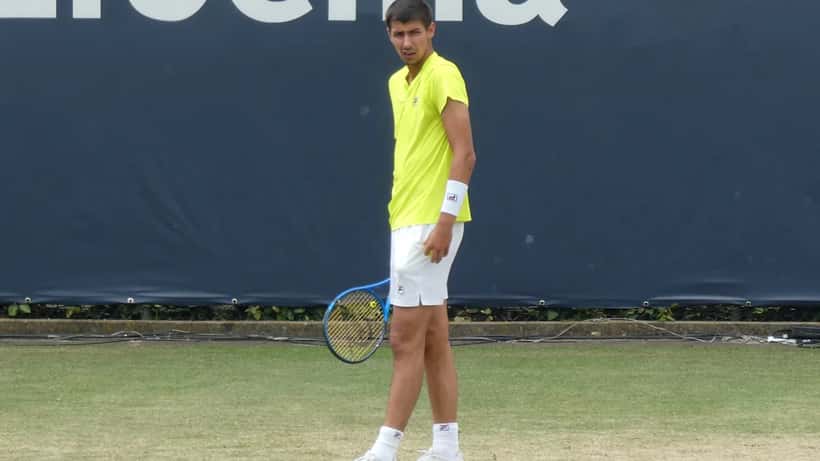
Alexei Popyrin walked onto the clay at Parc des Eaux-Vives in Geneva on 19 May 2026 and dismantled world number 4 Taylor Fritz 6-4, 6-4 in just 84 minutes — striking 25 winners with an efficiency that belied what had been a desperately difficult 2026 season until that point. The victory was Popyrin's 14th career top-10 win and his first of 2026, arriving at the perfect moment as a Roland Garros warm-up (the French Open main draw begins 24 May 2026).
For the 26-year-old born in Sydney to Russian immigrant parents, it was a statement of physical and mental recovery. For the estimated 1.7 million Australians who play recreational tennis each year, Popyrin's 2026 story — from cramping and crying on Melbourne Park in January to dismantling a world top-5 player in May — is a master class in understanding the injuries that end recreational seasons every weekend.
What Went Wrong for Popyrin in Early 2026
Popyrin entered the 2026 Australian Open as Australia's second-highest ranked player, carrying the remnants of a back injury that had ruled him out for approximately two months in 2025. He left after a five-set first-round loss to Alexandre Muller, visibly distressed and experiencing his second consecutive year of calf cramping at Melbourne Park.
His post-match interview was described by observers as concerning. In plain terms: his body failed him at the critical moment, on the biggest stage, for the second year running.
The calf cramping in January 2026 followed directly from that 2025 back injury — a lumbar stress condition caused by the rotation-heavy demands of his serve. The injury forced him to take a mental health break from the tour, restructure his coaching team, and approach the 2026 clay season with what he called "a more renewed and positive mindset."
By May, the rehabilitation had worked. A third-round loss to Jannik Sinner at the Rome Masters (6-2, 6-0) preceded a breakthrough week in Geneva: a three-set marathon win over Clement Tabur in round one, followed by the demolition of Fritz. His Geneva quarter-final against Casper Ruud is scheduled for 21 May 2026.
The Back Injury Every Recreational Player Ignores
Lumbar stress injuries are the leading cause of extended absence from tennis at both professional and recreational levels. The serve, the ground stroke backswing, and overhead shots all require significant spinal rotation under load. Over time, without adequate core strengthening and technique work, this accumulates as micro-damage to the lumbar facet joints and intervertebral discs.
Recreational players over 35 are particularly vulnerable, especially those returning after extended breaks or significantly increasing their weekly court time. The warning signs — persistent lower back stiffness after play, discomfort radiating into the buttocks or thigh, difficulty bending forward after a session — are frequently dismissed as general fatigue until they become acute injuries requiring weeks or months away from the game.
Popyrin's case was not a sudden acute injury. It was the accumulated result of high-intensity serving loads over multiple seasons without sufficient recovery. His 2025 season (a 17-23 win-loss record) was substantially derailed by this pattern.
The parallel for recreational players is straightforward: the player who plays four times a week during winter, serving at maximum effort every session without structured rest, is replicating in miniature the same load pattern that ended Popyrin's 2025 season early.
Calf Injuries: The Season-Stopper on Every Australian Court
The second element of Popyrin's physical struggles — the calf cramping and strain pattern at consecutive Australian Opens — represents the acute injury side of tennis.
Calf strains in tennis occur most often from the explosive lateral movement required on both clay and hardcourt. A sudden sprint, a direction change, or a split step on a cold morning can tear the medial gastrocnemius (the inner calf muscle), the injury that ends thousands of Australian recreational tennis seasons each year.
According to healthdirect.gov.au, tennis-related overuse injuries affecting the arm, wrist, and lower leg are among the most common sporting presentations to Australian GPs and physiotherapists. The acute calf injury typically causes a sudden sharp pain at the back of the lower leg, often described as feeling like a kick or a hit, frequently followed by swelling and bruising within hours.
The key risk factor for recreational players is returning to play before the injured muscle has fully recovered. A two-week calf strain that is "rested" for four days, then returned to prematurely, becomes a three-month chronic injury within two more playing sessions.
For related reading on injury patterns affecting Australian players at the recreational level, see Clay Courts and Injury Risk: What Alex de Minaur's Monte Carlo Run Reveals for Australian Amateurs.
When to Stop Playing and See a Doctor
The critical error recreational players make — unlike professionals like Popyrin, who have medical teams monitoring them in real time — is continuing to play through early warning signs.
Any of the following during or after a tennis session should prompt a medical review:
- Lower back pain that worsens over the course of a session rather than easing with warm-up
- Calf tightness that persists beyond 48 hours of rest and stretching
- Pain radiating from the lower back into the leg or buttock (possible disc involvement requiring imaging)
- Swelling or bruising in the calf following an acute pain episode during play
- Recurring cramping in the same muscle group across multiple consecutive sessions
Australian sports medicine doctors generally recommend the RICE protocol (Rest, Ice, Compression, Elevation) as a first response to acute soft tissue injuries. This is a bridge measure only. Persistent or recurring injuries require professional assessment to distinguish between muscle fatigue, tendon pathology, and structural damage — conditions with very different recovery timelines and treatment protocols.
What Popyrin's Recovery Teaches Recreational Players
The detail from Popyrin's 2025-26 recovery most applicable to recreational players is not the specific training regimen — it is the combination of physical and psychological intervention.
He took a mental health break. He changed coaches. He approached the 2026 clay season with a fundamentally different mental framework. The back and calf rehabilitation was necessary, but recovery momentum only came when the psychological component of chronic injury — frustration, loss of confidence, fear of re-injury — was addressed alongside the physical.
Recreational tennis players in Australia frequently cycle through the same pattern: injury, forced rest, premature return, re-injury. Breaking the cycle typically requires a sports physiotherapist for the physical component and sometimes a GP or sports psychologist for the mental health component.
The average Australian recreational tennis player does not have access to Popyrin's support network. But a qualified sports medicine doctor or physiotherapist can diagnose the specific tissue damage, prescribe an appropriate rehabilitation load, and provide a structured return-to-play protocol — the equivalent of the team Popyrin rebuilt around himself during 2025.
If persistent back pain, calf issues, or other sports injuries are affecting your tennis, an Australian sports medicine doctor or physiotherapist can assess your situation and build a return-to-play plan tailored to your specific needs.
