 Olivia Miller
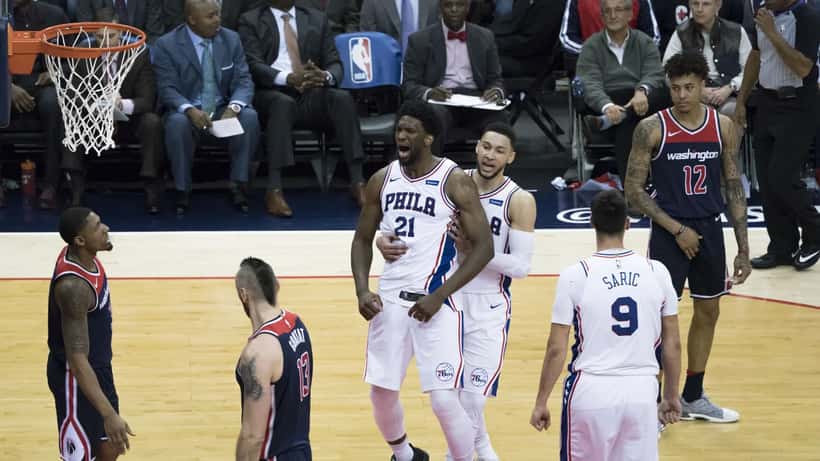
Joel Embiid, the Philadelphia 76ers' star centre, was listed as day-to-day with an abdominal injury ahead of Game 4 against the Boston Celtics on 26 April 2026 — a playoff series the Celtics currently lead after a 108-100 road win in Game 3 in Philadelphia. For the 1.3 million Australians who play basketball regularly, from social comps to rep leagues, Embiid's situation asks a question many of them will face themselves: when is a sports injury serious enough to need a doctor?
What Happened to Embiid, and Why It Matters
Embiid has been managing the abdominal injury while the 76ers lean on Tyrese Maxey — averaging 27.0 points per game in the series — and 20-year-old VJ Edgecombe, who has contributed 17.7 PPG. The team's ability to stay competitive despite their anchor centre playing through injury has been remarkable. But the fact that a professional athlete with access to the world's best sports medicine team is still classified as "day-to-day" illustrates how unpredictable abdominal sports injuries can be, even with expert management.
Abdominal injuries in sport are often underestimated precisely because they are invisible. Unlike a broken bone or an obvious soft-tissue tear, the abdomen presents no external signal. Pain levels can be misleading — some serious injuries cause relatively mild pain in the first hours, while minor muscle strains can feel debilitating. Without professional assessment, it is genuinely difficult to know what is happening.
The Most Common Sports Injuries Australian Weekend Athletes Ignore
Australian sports medicine clinicians report that abdominal injuries are among the most commonly under-assessed in recreational sport. But they are far from the only ones.
Abdominal muscle strains and tears. A sudden twist, an awkward landing, or a direct collision can strain the rectus abdominis or the oblique muscles. These feel like a sharp pull or a burning sensation during movement. Most athletes assume they will resolve with rest. Often they do — but a strained muscle and a more serious injury such as an internal haematoma (bleeding within the abdominal wall) can feel nearly identical in the first 24 hours.
Rib fractures. In contact sports and from falls, rib fractures are frequently underreported because many athletes assume "if I can breathe, it's fine." In reality, fractured ribs carry real risks: a displaced fracture can puncture a lung (pneumothorax), and even undisplaced fractures heal poorly without proper diagnosis and management advice.
Ankle sprains. The most common sporting injury in Australia by volume. An estimated 1 in 4 ankle sprains involves partial or complete ligament tear rather than a simple stretch injury. The distinction matters — a properly diagnosed Grade II or III sprain needs early physiotherapy to prevent chronic instability, which is one of the leading causes of repeated sprains in the same joint.
Concussion. Australian peak sporting bodies, from AFL to Basketball Australia, have strengthened their concussion protocols significantly in recent years. Despite this, recreational athletes frequently play through head knocks, particularly in social competition. A medical assessment within 24-72 hours of a suspected concussion is not optional — it is the standard of care recommended by the Australian Institute of Sport.
Shoulder dislocations and AC joint injuries. Basketball, netball, AFL, and rugby all produce high rates of shoulder injuries from falls and collisions. Many first-time dislocations are reduced (pushed back in) by a teammate or bystander and never assessed. Without imaging, the extent of soft-tissue damage — rotator cuff involvement, labral tears — remains unknown, significantly increasing re-injury risk.
The "Wait and See" Mistake
The default response to a sports injury among recreational athletes is rest and monitoring. This is appropriate for genuinely minor injuries: a small muscle bruise, a mild sprain, post-exercise soreness. But it becomes problematic when applied to injuries that fall into a grey zone — where the external presentation is unremarkable but something more serious is developing.
Abdominal injuries, concussions, and some joint injuries fall squarely into this category. The physiology of these injuries means that the window of peak danger is often 12-48 hours after the initial incident, when swelling, bleeding, or neurological changes may peak.
A sports medicine doctor does not just confirm whether a bone is broken. They assess blood flow, nerve function, range of motion, and tissue integrity — things that tell a far more complete story than a pain rating alone. They can advise on safe return to play, prescribe targeted rehabilitation, and identify the specific injury pattern that will guide treatment.
As explored in a previous expert analysis on NBA-level hamstring tears and what they reveal about recovery timelines, elite athletes and weekend warriors share the same biology — only the resources available to them differ.
Signs That Require Same-Day Medical Assessment
According to Better Health Channel, published by the Victorian Government, the following symptoms following a sporting injury warrant same-day assessment by a medical professional:
- Severe or worsening pain despite rest and ice
- Inability to bear weight or use the injured limb normally after 30 minutes
- Significant swelling, bruising, or deformity
- Abdominal pain that intensifies or spreads
- Headache, confusion, nausea, or sensitivity to light following any head contact
- Pain in the chest or shoulder blade following a rib injury
- Numbness, tingling, or weakness radiating from an injured joint
If any of these are present, self-assessment is not adequate. The threshold for getting a professional opinion is lower than most recreational athletes think — and significantly lower than most will admit.
Finding a Sports Doctor in Australia
Australia has a well-developed network of sports medicine practitioners, but access is not always straightforward, particularly outside major metropolitan centres or for injuries that occur on weekends.
ExpertZoom connects Australian athletes — amateur and recreational — with qualified sports medicine practitioners and general practitioners experienced in sports injury assessment, available for consultations including after-hours bookings. If you have taken a knock and you are not sure whether to play it off or get it looked at, that uncertainty is itself a reason to consult a professional.
Joel Embiid's medical team has the resources of an NBA franchise at their disposal. You have ExpertZoom.
This article provides general health information only and does not constitute medical advice. If you have sustained a sports injury, consult a qualified medical professional for personal assessment. Do not delay or avoid treatment based on general information.
