 Mark Taylor
Hiring a painter in Australia is one of the most cost-effective ways to transform your home — but the industry is unregulated in most states, meaning anyone can pick up a brush and call themselves a professional. Knowing what separates a skilled tradesperson from a weekend hobbyist can save you thousands of dollars and months of frustration. This guide covers the 7 essential things every Australian homeowner should know before booking a painter.
1. Licensing Requirements Differ Drastically by State
Painting in Australia sits in a regulatory grey zone that surprises most homeowners. Unlike electrical or plumbing work, house painting does not require a trade licence in every state — but the rules vary significantly:
| State/Territory | Licensing requirement |
|---|---|
| New South Wales | No painter's licence required. Contractor's licence needed for work over $5,000 (NSW Fair Trading) |
| Victoria | No specific painter's licence. Registered Building Practitioner needed for some works (VBA) |
| Queensland | Painting and decorating contractor licence required (QBCC) |
| Western Australia | Builder's licence required for work over $20,000 (DMIRS) |
| South Australia | Consumer and Business Services registration required |
| Tasmania | No painter's licence required |
| ACT | Required — Occupational licence from Access Canberra |
| Northern Territory | Required — Contractor licence from NTBSC |
À retenir: Always verify your painter's licence status on your state's building authority website before signing any contract. In Queensland, check the QBCC licence register; in NSW, use the NSW Fair Trading licence check tool.
This patchwork of regulations means that a painter who operated legally in Victoria may not be compliant in Queensland. When getting quotes, ask explicitly: "Are you licensed to do this work in [your state]?"
2. Cost Benchmarks for Painting in Australia (2026)
Understanding realistic cost ranges prevents you from being overcharged or misled by suspiciously low quotes. Painting costs in Australia depend on surface area, surface condition, paint quality, and region.
*Source: HIA Housing Industry Association, 2025. Prices exclude GST.*These ranges reflect market rates across major Australian cities. Sydney and Melbourne tend to sit at the upper end; regional areas often come in 20–30% lower. Quotes outside these ranges — especially on the low end — often signal the use of cheaper paint brands, shortcuts on preparation, or unlicensed labour.
Surface preparation accounts for 40–60% of a professional painting job's total time. A quality painter in Sydney will spend more time sanding, filling, and priming than actually applying colour. If your quote seems rushed or skips prep work in the description, that's a red flag.
3. The Difference Between Interior and Exterior Painting
Interior and exterior painting are distinct disciplines with different materials, techniques, and durability requirements. Many homeowners assume the same painter and the same paint can handle both — this is a common misconception that leads to premature paint failure.
Interior painting: precision and finish
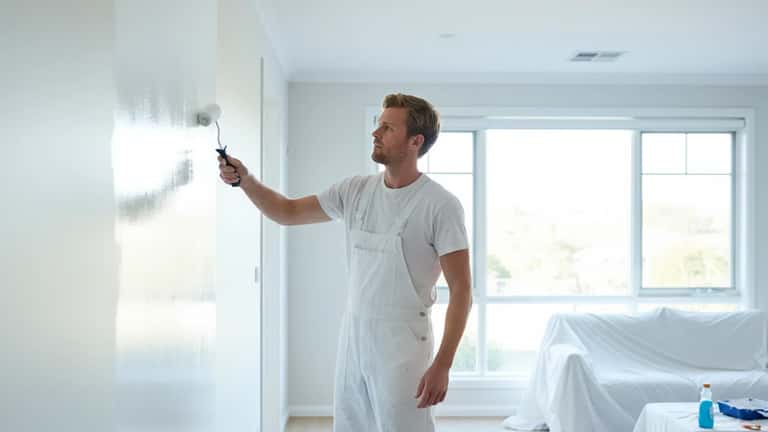
Interior paints are formulated for washability, low volatile organic compound (VOC) emissions, and smooth application. Australian homes typically use water-based acrylic paints for walls and ceilings, and semi-gloss or gloss alkyd for trims and doors. The painting process involves:
- Filling cracks and holes with filler compound
- Sanding surfaces smooth
- Applying one or two coats of primer
- Applying two topcoats of the chosen colour
Good indoor air quality matters during and after interior painting. Reputable painters use low-VOC or zero-VOC paints, especially in bedrooms and nurseries. Brands like Dulux, Taubmans, and Haymes Paint offer Australian-formulated products that comply with Green Star certification standards.
Exterior painting: durability over aesthetics
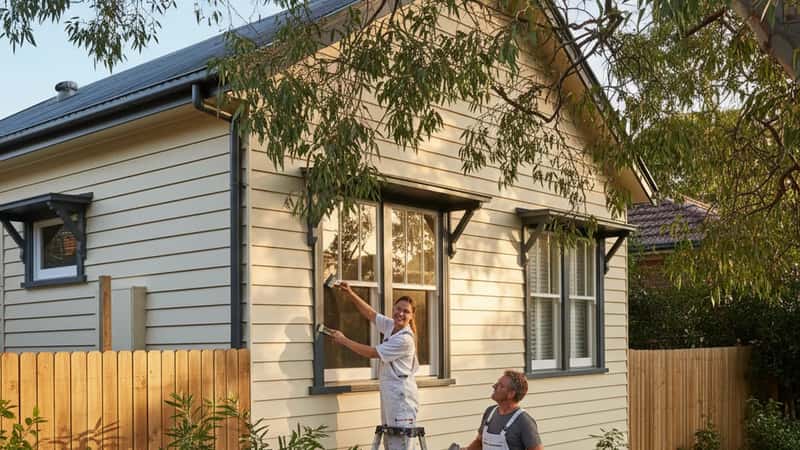
Exterior paint must withstand Australian conditions: UV radiation, temperature extremes (from -5°C in alpine areas to 45°C in central Australia), rain, humidity, and salt air in coastal zones. Exterior-grade acrylic paints with flexible binders are standard — they expand and contract with the substrate without cracking.
Preparation is even more critical outdoors. Professional exterior painters in Australia will:
- Pressure wash the entire surface to remove dirt, mould, and chalking
- Scrape off all peeling or flaking paint
- Sand rough areas
- Treat bare timber with a wood primer
- Apply a full coverage undercoat before topcoating
Skipping any of these steps dramatically shortens paint life — from a 10-year result to a 3-year failure. Always ask your painter for a detailed written scope of work that specifies each preparation step.
4. What to Look for in a Painting Quote
A professional painting quote should be a detailed document, not a figure scribbled on a piece of paper. If a painter hands you a one-line price without a breakdown, you have no way of knowing what you're paying for — or what will happen if costs increase.
A complete painting quote in Australia should include:
- Scope of work: Every surface to be painted, number of coats, and type of paint specified (brand and product name)
- Surface preparation details: What prep work will be done and by whom
- Exclusions: What is explicitly NOT included (e.g., moving furniture, plastering, window frame repairs)
- Timeline: Expected start date, duration, and completion date
- Payment schedule: Deposit amount, progress payments, and final payment terms
- Warranty: Most professional painters offer a workmanship warranty of 2–5 years
Getting three quotes from different painters is standard practice in Australia. However, don't automatically choose the lowest. A quote that comes in significantly below the others may exclude preparation, use cheaper materials, or simply underestimate the job — leading to variations (additional costs) once work has begun.
"The cheapest quote is almost never the best value. In 20 years of painting in Melbourne, the jobs I've been called in to fix were almost always done by the low-bid contractor who cut corners on prep," says a senior painting contractor affiliated with the Master Painters Australia association.
5. Lead Paint Risks in Older Australian Homes
Homes built before 1970 in Australia may contain lead-based paint. This is a significant health and safety consideration that affects how painting work must be carried out. According to Safe Work Australia, lead paint is the primary source of lead exposure for children in Australia, with blood lead levels elevated in children living in homes with deteriorating lead paint.
Lead paint does not pose a risk when intact and in good condition. The danger arises when it is disturbed — through sanding, scraping, or drilling — releasing lead dust and particles into the air. Australian painters working on pre-1970 homes must follow the Code of Practice for the Management and Control of Lead at Workplaces (Safe Work Australia, 2020).
What homeowners should know
- Ask your painter if they have completed the Lead Paint Awareness training offered through Master Painters Australia or a Registered Training Organisation (RTO).
- Request a lead test before any sanding or scraping begins on homes built before 1970. Test kits are available at hardware stores for under $30, or a professional assessor can be hired.
- Containment is mandatory for disturbing lead paint: plastic sheeting, negative air pressure, and disposal as hazardous waste.
- Children and pregnant women should vacate the property during and for 48–72 hours after lead paint disturbance work.
Non-compliance with lead paint safety regulations carries significant penalties under state WHS legislation — a fact that further incentivises hiring licensed, experienced painting contractors.
6. Choosing the Right Paint Finish for Each Room
Paint finish — or sheen level — is one of the most overlooked decisions in any painting project. Each finish has different durability, washability, and light-reflection properties that suit specific rooms and surfaces.
| Finish | Sheen level | Best for | Key property |
|---|---|---|---|
| Flat/Matte | 0–5% | Ceilings, low-traffic bedrooms | Hides surface imperfections |
| Low sheen | 10–25% | Living rooms, dining areas | Easy to clean, soft look |
| Semi-gloss | 40–60% | Kitchens, bathrooms, children's rooms | Moisture resistant, highly washable |
| Gloss | 70–90%+ | Trims, doors, cabinets | Hardest, most durable finish |
The "one finish for everything" mistake
A common DIY error is using the same paint finish on walls, ceilings, and trims. Professional painters in Australia almost always use different finishes for each surface. Using a gloss finish on a textured wall, for example, highlights every bump and imperfection rather than concealing them. Conversely, using a flat finish in a kitchen means food spills and grease marks are almost impossible to clean.
Australian paint manufacturers, including Dulux and Taubmans, publish detailed product selectors for the Australian climate, which account for the high UV index, coastal humidity, and extreme temperature variations. When in doubt, consult a professional painting contractor who can recommend the right product for your specific location and surface type.
7. How to Find and Vet a Professional Painter in Australia
Finding a trustworthy, skilled painter in Australia involves more than typing "painter near me" into a search engine. The best painters are often fully booked weeks in advance — and often don't need to advertise heavily. Here is a step-by-step approach to finding and vetting the right professional for your project.
Step 1: Ask for referrals Personal recommendations from neighbours, family, or your real estate agent carry far more weight than online reviews alone. Ask specifically: "Did the painter show up on time? Did the final result match what was quoted?"
Step 2: Check trade association membership Master Painters Australia (MPA) is the national industry body. Members must comply with a code of conduct, carry public liability insurance, and maintain professional development standards. The MPA website provides a national directory of member painters.
Step 3: Request proof of insurance Every professional painter operating in Australia should hold:
- Public liability insurance (minimum $5 million cover)
- Workers compensation insurance if they employ workers
Ask to see the current certificate of currency before any work begins. An uninsured painter working on your property exposes you to significant liability if an injury or property damage occurs.
Step 4: Verify licence and check for complaints Use your state building authority's online tool to verify the painter's licence status and check for any recorded complaints or disciplinary actions. In NSW, use the Fair Trading licence check; in Queensland, the QBCC licence search.
Step 5: Get a detailed written contract Never proceed with a handshake agreement. Your contract should reference the quote, include the scope of work, payment schedule, start and completion dates, and warranty terms. In most Australian states, contracts for residential building work over $5,000–$10,000 (depending on the state) must be in writing by law.
The Most Common Painting Mistakes Homeowners Make
Even with a professional painter on the job, homeowners sometimes make decisions that undermine the quality of the result. Awareness of these common pitfalls helps you get the most value from your investment.
Choosing colour from a small chip
Paint chips at a hardware store look nothing like the same colour on a full wall, in your specific lighting conditions. Most professional painters recommend purchasing 1-litre sample pots and applying at least an A3-sized test patch directly on the wall. Live with the colour for 24–48 hours, observe it in morning and evening light, and only then commit to the full order.
Rushing the dry time between coats
Every coat of paint needs adequate dry time before the next is applied — typically 2–4 hours for water-based paints, 6–8 hours for oil-based. Applying a second coat too soon traps solvent under the surface, leading to bubbling, peeling, or texture problems within months. Reputable painters factor proper cure time into their project timeline.
Skipping primer on new surfaces
Primer is not optional on unpainted surfaces, bare timber, or freshly plastered walls. It seals the substrate, provides adhesion, and reduces the number of topcoats needed. Homeowners who skip primer to save money often end up with patchy, uneven colour that requires an extra coat to fix — costing more in paint than the primer would have.
Ignoring weather conditions for exterior painting
Exterior painting in Australia requires careful scheduling. Paint should not be applied in temperatures above 35°C, below 10°C, or when rain is forecast within 4 hours. Painting in direct sunlight accelerates drying too quickly, preventing proper adhesion. The optimal window is 15–25°C with low humidity — common in Australian spring and autumn.
Understanding Paint Technology: What the Labels Really Mean
Walk through any Australian paint department and you'll encounter a wall of technical claims: "10-year guarantee", "extreme weather resistant", "mould inhibitor technology". Understanding what these labels mean — and don't mean — helps you make smarter choices.
Acrylic vs. enamel vs. oil-based: the core distinction
The vast majority of modern Australian houses use water-based acrylic paints for walls. These paints use acrylic polymers as the binder, making them fast-drying, low-odour, and easy to clean with soap and water. They're suitable for almost all interior and exterior applications.
Enamel paints historically meant oil-based (alkyd) paints that dried to a hard, glossy finish. Today, "enamel" is a marketing term also applied to water-based formulations that dry harder than standard acrylics. Water-based enamel has largely replaced oil-based enamel for doors, trims, and cabinets in Australian residential painting because it has less yellowing, faster drying, and easier clean-up.
Oil-based paints are still used in specific applications — marine environments, heavy-traffic industrial surfaces, and some heritage restoration projects where period-appropriate materials are required. They offer superior adhesion to chalky or porous surfaces but require solvent for clean-up and have higher volatile organic compound (VOC) emissions.
Lightfastness and UV stability
Australia has some of the highest UV radiation levels in the world, which accelerates paint fading. When selecting exterior paint, look for products rated for UV resistance and with lightfast pigments. Premium brands like Dulux Weathershield and Haymes Solashield are formulated specifically for the Australian UV environment and typically carry 10–15 year durability guarantees.
The "guarantee" language on paint packaging refers to the paint's film integrity — it does not cover application errors, unsuitable surfaces, or inadequate preparation. A 15-year exterior paint guarantee is only valid when applied according to the manufacturer's instructions, which almost always requires professional-standard preparation.
Low-VOC and zero-VOC options
Volatile organic compounds (VOCs) in paints contribute to indoor air pollution and are linked to respiratory irritation, headaches, and long-term health effects with repeated exposure. Australia's National Construction Code encourages the use of low-VOC materials, and Green Star certification criteria (administered by the Green Building Council of Australia) include paint VOC limits.
For Australian homeowners with children, asthma sufferers, or those concerned about indoor air quality, specifying a zero-VOC paint is a straightforward upgrade. Brands like Dulux Envirosolutions, Taubmans Fresh Coat, and Murobond offer certified low or zero-VOC ranges at a price premium of approximately 15–25%.
Painting for Property Value: What Australian Real Estate Agents Say
Fresh paint is consistently cited by Australian real estate agents as one of the highest return-on-investment home improvements before sale. According to data from the Real Estate Institute of Australia (REIA), a professionally repainted home can attract 2–5% higher offers compared to an equivalent unpainted property, with a cost-to-return ratio that outperforms most other pre-sale renovations.
The key is choosing neutral, current colours. Real estate agents in Sydney and Melbourne report that off-white, warm grey, and greige (grey-beige) tones dominate the buyer-preferred palette in 2026. Saturated or highly personalised colours — bright feature walls, dark ceilings — can deter buyers who struggle to visualise the space repainted.
The 80/20 rule for rental properties
For investment properties in Australia, professional painters recommend the 80/20 approach: 80% neutral base colours for longevity and tenant appeal, 20% feature or accent colours in low-risk areas like a single wall or a hallway. This minimises the frequency of full repaints between tenancies while maintaining visual interest.
Australian residential investment property managers (REPM) typically recommend repainting rental interiors every 7–10 years in standard condition. Properties with high tenant turnover, smokers, or pets may require repainting every 3–5 years. The cost of a fresh interior repaint can be claimed as a deductible maintenance expense under the Australian Tax Office (ATO) rules for rental property expenses — a consideration that further improves the financial case for professional painting.
Heritage-listed properties: special considerations
Properties listed on state or local heritage registers in Australia may require special approval before exterior colour changes. In Sydney's inner-west, Melbourne's inner-north, or Adelaide's historic precincts, the local council may specify approved colour palettes for heritage properties. Painting outside these palettes without approval can result in fines and orders to repaint at the owner's expense. Always check with your local council before selecting exterior colours for a heritage-listed property.
Sustainability in Australian Painting: Eco-Friendly Choices
The building and renovation sector accounts for approximately 18% of Australia's total waste by weight [Department of Climate Change, Energy, the Environment and Water, 2024]. Painting contributes to this through leftover paint, solvent waste, and used brush and roller disposal. Sustainable painting practices are increasingly expected by both residential and commercial clients.
Planet Ark's PaintBack program
PaintBack is Australia's national paint stewardship scheme, jointly funded by paint manufacturers. It provides free drop-off points across the country where homeowners and contractors can dispose of unwanted paint and empty packaging, diverting them from landfill. In 2024, PaintBack collected over 5 million litres of unwanted paint nationally.
When purchasing paint for your project, buying only the quantity you need (with 10–15% extra for touch-ups) is the most effective waste reduction strategy. Most paint stores offer free colour matching if you need to reorder — eliminating the temptation to overbuy.
Choosing sustainably certified paints
The Good Environmental Choice Australia (GECA) certification marks paints that meet stringent environmental criteria: low VOCs, sustainable pigment sourcing, and responsible manufacturing. Several mainstream Australian brands carry GECA certification on specific product lines, providing an evidence-based way to choose environmentally responsible products.
Disclaimer: Costs, regulations, and licensing requirements in this article reflect general conditions as of 2026 and may vary by state, territory, and individual circumstance. Always verify licensing and regulatory requirements with the relevant state building authority before engaging a painting contractor. Costs are indicative ranges and should not be treated as fixed pricing.