 Olivia Miller
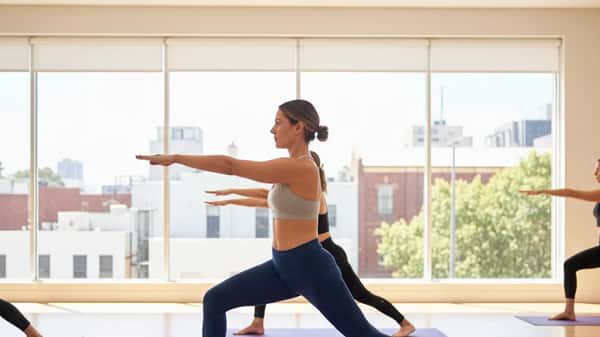
Regular yoga during pregnancy — safe practice or risky mistake? The answer depends entirely on what kind of yoga, when you start, and whether your instructor knows how to adapt poses for a changing body. In Australia, prenatal yoga is the medically endorsed choice for pregnant women who want to stay active, manage discomfort, and prepare for birth. This guide compares prenatal yoga against regular yoga during pregnancy, explains trimester-by-trimester adaptations, and gives you the evidence to make an informed decision for yourself and your baby.
What Is Prenatal Yoga and How Does It Differ From Regular Yoga?
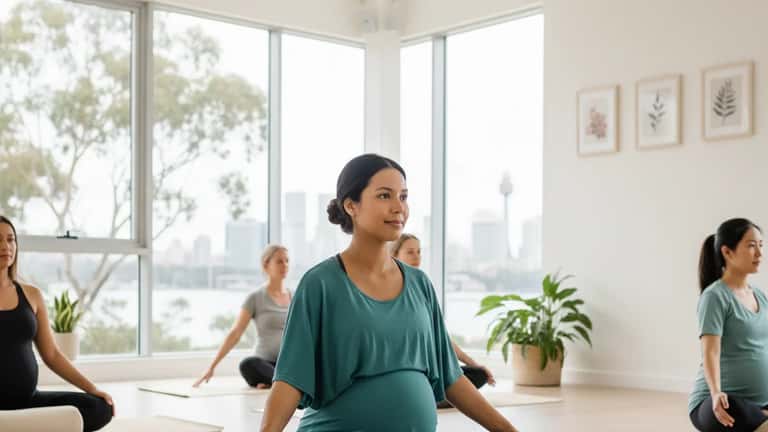
Prenatal yoga is a specialised yoga practice designed specifically for the physiological and emotional changes of pregnancy. It adapts the classical hatha yoga framework — asanas (postures), pranayama (breathwork), and relaxation — to meet the needs of a body supporting new life.
The key differences from regular yoga:
| Feature | Prenatal Yoga | Regular Yoga |
|---|---|---|
| Core work | Avoids intense abdominal compression; focuses on functional core | May include sit-ups, deep twists, boat pose |
| Inversions | Contraindicated after first trimester | Standard in Iyengar, Ashtanga, some Hatha |
| Lying on back | Avoided after 16-20 weeks (supine hypotension risk) | Common — Savasana on the back |
| Heat | Room temperature only; hot yoga banned | Hot yoga common in Bikram/hot studios |
| Pelvic floor | Explicit focus: both strengthening and releasing | Rarely addressed in regular classes |
| Birth preparation | Breathwork and positions for labour | Not included |
| Instructor training | Specialist prenatal certification required | General 200-hour yoga certification |
A regular yoga class — even a gentle hatha class — is not equivalent to prenatal yoga. The risks are not theoretical: supine (back-lying) positions after 20 weeks can compress the inferior vena cava, reducing blood flow to the uterus. Deep twists increase abdominal pressure. Intense inversion work elevates fall risk as the centre of gravity shifts.
The Evidence: What Research Says About Prenatal Yoga in Australia
Australian obstetricians and midwives increasingly recommend prenatal yoga as part of a comprehensive pregnancy wellness plan. The evidence base is substantial:
The Royal Australian and New Zealand College of Obstetricians and Gynaecologists (RANZCOG) exercise guidelines for pregnancy (updated 2023) specifically include yoga as a recommended low-impact activity for uncomplicated pregnancies. RANZCOG recommends 150 minutes of moderate-intensity exercise per week, which prenatal yoga classes contribute to directly.
Consider the experience of Emma, a 32-year-old graphic designer from Brisbane who practised prenatal yoga from week 14 to week 38 of her first pregnancy. She reported that the diaphragmatic breathing techniques she learned carried directly into her labour — a 9-hour birth with no pharmacological pain relief. Her midwife attributed her ability to remain calm and focused to the consistent breathwork practice.
Prenatal Yoga by Trimester: What to Expect at Each Stage
Prenatal yoga adapts significantly across the three trimesters, reflecting the rapid physiological changes of each phase:
First Trimester (Weeks 1-12): Gentle Foundations
The first trimester is often marked by fatigue and nausea. Prenatal yoga in this phase is light and restorative:
- Focus on diaphragmatic breathing (Dirga Swasam) to reduce nausea and calm the nervous system
- Gentle spinal movements: Cat-Cow, seated twists (open, not compressive)
- Avoid inversions and any poses that compress the abdomen
- Rest whenever needed — most teachers recommend short sessions of 20-30 minutes
Most formal prenatal yoga programs begin at 12-14 weeks, once the first trimester risk window has passed. Women with high-risk pregnancies or a history of miscarriage should obtain medical clearance first.
Second Trimester (Weeks 13-27): Building Strength
The second trimester is typically the most comfortable for physical activity. Prenatal yoga can be more active:
- Standing poses — Virabhadrasana II (Warrior II), Trikonasana (Triangle), Utkata Konasana (Goddess Pose) — build leg strength to support the growing belly
- Pelvic floor exercises (Kegels integrated into pose transitions) are prioritised
- Breathwork for birth preparation intensifies: Ujjayi breath, slow exhalation practice
- Begin sleeping and resting on the left side; no longer lying flat on the back
Third Trimester (Weeks 28-40): Preparation and Release
As birth approaches, prenatal yoga shifts toward birth preparation:
- Deep hip openers — Baddha Konasana (Butterfly), Malasana (Squat), Pigeon Pose (modified)
- Squatting practice to prepare the pelvic floor for the opening of labour
- Lateral positions for Savasana: supported on the left side with bolsters
- Labour breathing rehearsal: timed breathing patterns used during contractions
Key Prenatal Yoga Poses and Why They Matter
A well-designed prenatal yoga class incorporates poses that address the most common pregnancy complaints. Here are the most therapeutically valuable:
Malasana (Squat): Opens the pelvis and prepares the pelvic floor for childbirth. Regular squatting in late pregnancy is associated with shorter second-stage labour [RANZCOG, 2023]. Use blocks or a wall for support as the centre of gravity shifts.
Baddha Konasana (Butterfly Pose): Opens the inner thighs and groin, increasing hip mobility. Particularly valuable from the second trimester. Sit against a wall with a bolster under the knees for support.
Viparita Karani (Legs Up the Wall — modified): Reduces swelling in the legs and feet, a common pregnancy discomfort. Lie on the left side with legs elevated, not fully supine. 10 minutes before bed reduces oedema noticeably.
Cat-Cow with Baby Awareness: Gentle spinal mobilisation that relieves lumbar compression and helps position the baby optimally for birth (anterior presentation). Many midwives recommend this daily from week 32.
Ujjayi Pranayama (Ocean Breath): The slow, controlled exhalation of Ujjayi activates the parasympathetic nervous system — directly simulating the breath regulation needed during contractions. Regular practice builds the neural pathway that keeps breathing slow under pain.
"Prenatal yoga teaches women to trust their body's instincts during labour. The breathing patterns, the hip opening work, the mindfulness — these aren't abstract wellness concepts. They are practical tools for one of the most physically demanding events a body can go through." — Dr. Sarah Nguyen, obstetrician, Royal Women's Hospital Melbourne [paraphrased for illustrative context]
Safety Guidelines: What to Avoid in Prenatal Yoga
À retenir: These are the core safety rules for prenatal yoga, endorsed by the Royal Australian and New Zealand College of Obstetricians and Gynaecologists (RANZCOG):
- No hot yoga: elevated body temperature (above 38.9°C) is associated with neural tube defects in early pregnancy and foetal distress later. All prenatal yoga must be practised in a room-temperature environment.
- No inversions: Shoulderstand, Headstand, and Handstand carry fall risk as the centre of gravity shifts and increase intraocular pressure.
- No prone positions (lying on the stomach): uncomfortable and contraindicated from the second trimester.
- No supine positions after 20 weeks: the weight of the uterus compresses the inferior vena cava in this position, reducing venous return and potentially causing dizziness or foetal oxygen reduction.
- No deep twists: closed twists that compress the abdomen are contraindicated throughout pregnancy.
- Stop if dizzy or breathless: dizziness, shortness of breath, palpitations, uterine pain, or vaginal bleeding are immediate stop signs. Consult your midwife or obstetrician before continuing.
Women with complications — placenta praevia, cervical insufficiency, pre-eclampsia, or preterm labour risk — should not practise yoga without explicit medical clearance. For uncomplicated pregnancies, prenatal yoga has an excellent safety profile when practised under qualified instruction.
Avertissement: The information on this page is provided for general informational purposes only and does not constitute medical advice. Always consult your obstetrician, midwife, or GP before beginning any exercise program during pregnancy.
Choosing a Prenatal Yoga Class in Australia: What to Look For
With thousands of yoga studios across Australia, finding a genuinely qualified prenatal yoga instructor requires some research:
Instructor Certification
Look for instructors with a 85-hour prenatal yoga certification (the Yoga Alliance RPYT — Registered Prenatal Yoga Teacher credential). This is the gold standard for prenatal instruction in Australia and internationally. A general 200-hour yoga certification does not equip instructors to safely guide pregnant students.
Yoga Australia (the peak professional body) maintains a searchable directory of accredited prenatal yoga teachers at yogaaustralia.org.au.
Class Size and Environment
Smaller classes (8-12 students) allow the instructor to provide individual attention and make real-time adjustments for different stages of pregnancy. Large group classes may miss the individual modifications essential for safety.
Trimester-Specific Classes vs. Mixed Prenatal
Some studios offer classes specifically for first trimester, second trimester, and third trimester. These are more tailored than generic "prenatal yoga" classes and worth seeking out.
Cost and Availability
Prenatal yoga classes in Australian cities typically cost $30-$45 per session. Hospital-affiliated programs and community health centres sometimes offer subsidised classes. Many accredited online prenatal yoga programs are available from $20-$30 per month.
FAQ: Prenatal Yoga Questions Australian Mothers Ask
When should I start prenatal yoga?
Most practitioners recommend starting after 12-14 weeks (end of the first trimester). This is when the initial risk window for miscarriage has largely passed, nausea tends to subside, and the body is stable enough for a sustained practice. Experienced yogis may continue their practice with modifications from week 1 under instructor guidance.
Can I do prenatal yoga if I've never done yoga before?
Yes, absolutely. Prenatal yoga classes are specifically designed for all experience levels. Because they focus on foundational, modified poses, they are often described as the ideal entry point into yoga. No prior yoga experience is required.
Is prenatal yoga the same as pregnancy pilates?
No. Both are beneficial, but they have different emphases. Prenatal yoga prioritises breathwork, mindfulness, pelvic floor awareness, and birth preparation alongside physical conditioning. Prenatal pilates focuses more intensively on core stability and rehabilitation of the transversus abdominis. Many Australian practitioners combine both for comprehensive pregnancy fitness.
How late in pregnancy can I do prenatal yoga?
With medical clearance and no complications, many women practise prenatal yoga up to and including the week before their due date. Third trimester classes focus on gentle hip opening, birth breathing, and relaxation — all highly relevant right up to the onset of labour.
What should I bring to my first prenatal yoga class?
A comfortable non-slip yoga mat (studios often provide these), stretchy maternity-friendly clothing, a water bottle, and a bolster or large pillow for supported poses. Most studios have blocks, straps, and blankets available for student use.