 Emily Turner
Hatha Yoga has been practiced for over 500 years, yet Australians are only now discovering the depth of what it offers. With mental health costs reaching $70 billion per year in Australia [Australian Institute of Health and Welfare, 2024] and chronic back pain affecting 1 in 6 Australians, the demand for evidence-based mind-body practices has never been higher. Hatha Yoga is not a fitness trend — it is a structured, progressive system that rewires how the body and mind respond to stress. This guide walks you through what hatha yoga is, how it works, and how to build a sustainable practice from zero.
What Is Hatha Yoga? The Foundation Explained
Hatha yoga is the branch of yoga that uses physical postures (asanas) and breath control (pranayama) as its primary tools. The word "Hatha" comes from Sanskrit: ha meaning sun and tha meaning moon — representing the opposing energies (effort and ease, heat and cool, masculine and feminine) that the practice seeks to balance.
Unlike many modern yoga styles, hatha yoga is explicitly defined in classical texts such as the Hatha Yoga Pradipika (15th century), written by the sage Swatmarama. This text describes a system where physical purification of the body is the foundation for higher mental states and, ultimately, meditative absorption.
In Australia's contemporary yoga landscape, "Hatha Yoga" typically refers to classes that move at a measured pace — holding postures for several breaths, focusing on alignment, and pausing between poses. This distinguishes it from Vinyasa (flowing sequences), Ashtanga (set sequences at faster pace), and Yin (passive holds of 3-5 minutes per pose).
À retenir: Hatha yoga is the parent tradition from which most Western yoga styles derive. Understanding its principles makes all yoga styles more accessible and effective.
Step 1: The Three Pillars of Every Hatha Yoga Practice
A complete hatha yoga session works through three interconnected components. Understanding each one prevents the common beginner mistake of treating yoga as purely physical exercise:
Asana: Physical Postures
Asanas are the physical positions that most people associate with yoga. In hatha yoga, the purpose of asanas is not athletic performance but sthira sukha — the balance of steadiness and ease. Each pose is held long enough for the practitioner to:
- Become aware of physical sensations and alignment
- Observe and release habitual muscle tension
- Synchronise movement with breath
Common hatha yoga asanas include: Tadasana (Mountain Pose), Adho Mukha Svanasana (Downward-Facing Dog), Virabhadrasana I and II (Warrior Poses), Trikonasana (Triangle Pose), Bhujangasana (Cobra Pose), and Savasana (Corpse Pose — the final rest).
Pranayama: Breath Regulation
Pranayama is the systematic practice of controlling the breath to regulate the nervous system. In hatha yoga, pranayama is not just "breathing exercises" — it is a technology for shifting the body between its sympathetic (fight-or-flight) and parasympathetic (rest-and-digest) states. Core techniques include:
- Nadi Shodhana (Alternate Nostril Breathing): balances the nervous system
- Ujjayi (Ocean Breath): creates internal heat and focuses attention
- Dirga Swasam (Three-Part Breath): deepens diaphragmatic breathing
Dhyana: Meditative Awareness
Hatha yoga traditionally culminates in meditation — or at minimum, a meditative state of focused awareness. Even a 5-minute Savasana with conscious breath awareness counts as dhyana in the beginning stages.
Step 2: The Evidence-Based Benefits of Hatha Yoga
Australia's healthcare system increasingly recognises yoga as a complementary practice with measurable clinical benefits. Research published in peer-reviewed journals demonstrates:
| Health Outcome | Evidence Level | Key Finding |
|---|---|---|
| Chronic back pain | Strong (multiple RCTs) | 12 weeks of hatha yoga reduced pain and disability scores [Cochrane Review, 2023] |
| Anxiety and depression | Moderate-strong | Yoga reduces cortisol and increases GABA levels [Harvard Medical School, 2023] |
| Sleep quality | Moderate | Regular practice improves sleep onset and duration in adults over 60 [Sleep Medicine Reviews, 2023] |
| Blood pressure | Moderate | Consistent yoga practice associated with 5-10 mmHg reduction in systolic BP [Journal of Hypertension, 2024] |
| Flexibility and balance | Strong | Significant improvements in older adults within 8-12 weeks [Journal of Aging and Physical Activity, 2024] |
The Harvard Medical School Guide to Yoga (2023 edition) notes that hatha yoga activates the parasympathetic nervous system more reliably than most other forms of exercise, making it particularly effective for stress-related conditions.
À retenir: For Australians managing chronic pain, anxiety, or cardiovascular risk factors, hatha yoga is now listed in the Royal Australian College of General Practitioners (RACGP) chronic pain management guidelines as a recommended complementary intervention [RACGP, 2023].
Step 3: Build Your First Hatha Yoga Routine (Beginner-Friendly)
Starting hatha yoga at home or in a studio requires a structured approach to avoid injury and build sustainable habits. Here is a progressive beginner sequence:
Start with breath awareness (5 minutes): lie on your back and practice Dirga Swasam (three-part breath) — inhaling into the belly, then the ribs, then the chest; exhaling in reverse order. This activates the parasympathetic nervous system and prepares the body for movement.
Warm up the spine (5-10 minutes): Cat-Cow pose (Marjaryasana-Bitilasana) gently mobilises the thoracic and lumbar spine. Perform 8-10 slow cycles, synchronising each movement precisely with the breath.
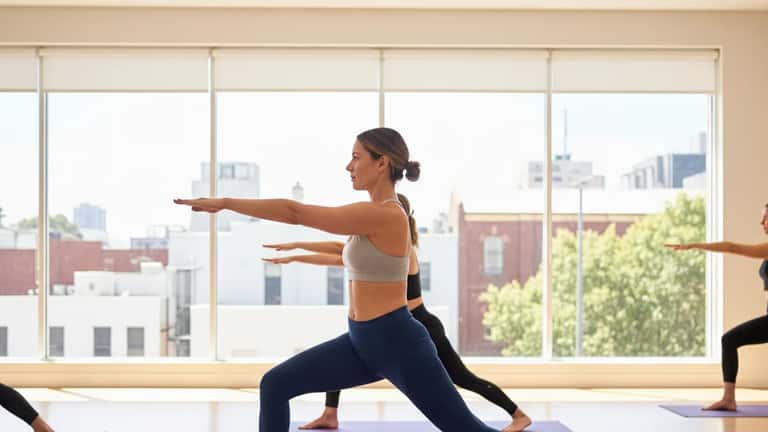
Build heat and strength (15-20 minutes): introduce standing poses — Tadasana, Virabhadrasana I, Virabhadrasana II, Trikonasana. Hold each pose for 5-8 breaths. In hatha yoga, quality of attention matters more than depth of stretch.
Hip opening and forward folds (10 minutes): Prasarita Padottanasana (wide-legged forward fold) and Baddha Konasana (Butterfly Pose) address the hip flexors and hamstrings — the tightest muscles in most desk workers.
Cool down with gentle backbends (5 minutes): Bhujangasana (Cobra) and Setu Bandhasana (Bridge Pose) counterbalance the forward folding and relieve lumbar compression from sitting.
Close with Savasana (5-10 minutes minimum): lie flat, release all muscular effort, and observe the breath without controlling it. Savasana is not optional — it is when the neurological integration of the session occurs.
A 45-60 minute session following this structure, practiced 3 times per week, produces measurable improvements in flexibility and stress markers within 8 weeks [Yoga Alliance Australia, 2024].
Step 4: Choose the Right Hatha Yoga Class or Teacher in Australia
Australia has over 2,500 registered yoga studios and instructors [Yoga Australia, 2026], ranging from introductory community classes to intensive 200-hour teacher training programs. When choosing a hatha yoga class or instructor, consider:
Teacher Qualifications
Yoga Alliance Australia (YAA) and Yoga Australia are the two main professional associations. Look for instructors registered with at least a 200-hour certification from a Yoga Alliance Registered Yoga School (RYS). For therapeutic or remedial yoga (addressing specific health conditions), seek instructors with a 500-hour certification or a C-IAYT credential (Certified International Association of Yoga Therapists).
Class Types and What They Mean
- Hatha Yoga (general): foundational practice, suitable for all levels
- Iyengar Yoga: precision-focused hatha tradition with props; excellent for beginners and injury rehabilitation
- Sivananda Yoga: classical 12-posture sequence with pranayama and meditation; traditional hatha approach
- Restorative Yoga: deeply passive supported postures; a gentler subset of hatha, especially suited to high-stress individuals
Practical Considerations for Australian Students
The average cost of a hatha yoga class in an Australian city is $25-$35 per session in a studio setting. Many studios offer introductory packs (e.g., unlimited classes for 2 weeks from $29-$49) for new students. Online platforms such as yoga.com.au and Yoga International offer quality hatha yoga instruction from $10-$20/month for Australians who prefer home practice.
Step 5: Hatha Yoga Safety — Who Should Take Precautions
Hatha yoga is among the safest forms of exercise, but certain populations should consult a medical professional before starting:
- Osteoporosis: spinal flexion poses (forward folds, rounding the back) can increase fracture risk. Modified hatha sequences exist specifically for bone health — seek an instructor trained in yoga for osteoporosis.
- Recent surgery or injury: poses that load the affected area should be avoided until cleared by a physiotherapist.
- Glaucoma or high blood pressure: inversions (Shoulderstand, Headstand) are contraindicated for elevated intraocular pressure and uncontrolled hypertension.
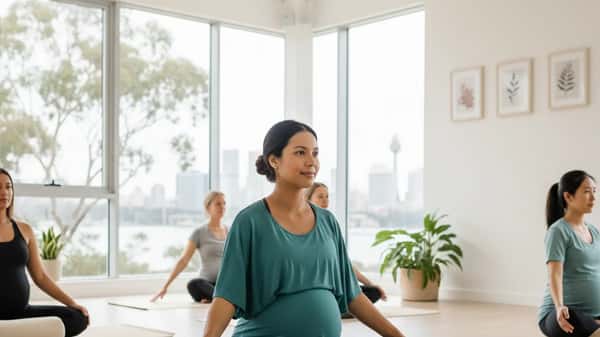
- Pregnancy: standard hatha yoga sequences require modification after the first trimester. Prenatal yoga programs are specifically adapted for pregnancy physiology.
- Sciatica or lumbar disc issues: deep forward folds and hip flexion can aggravate sciatic nerve compression if performed incorrectly.
The Australian Physiotherapy Association (APA) notes that yoga-related injuries, while rare, are most often caused by overexertion or incorrect technique in unsupervised home practice. A qualified teacher dramatically reduces injury risk by providing real-time alignment feedback.
Avertissement: The information on this page is provided for general informational purposes only and does not constitute medical advice. Consult your doctor or a qualified health professional before starting any new exercise program, particularly if you have pre-existing health conditions.
Step 6: Deepen Your Practice — Pranayama and Meditation
Once the foundational asanas feel familiar (typically 4-8 weeks of consistent practice), hatha yoga's real power begins to emerge through pranayama and seated meditation. These practices address the deeper dimensions of stress, energy, and mental clarity.
Intermediate Pranayama Techniques
Kapalabhati (Skull-Shining Breath): rapid, forceful exhalations through the nose, with passive inhalations. This technique cleanses the respiratory tract, increases alertness, and builds core engagement. Practice 3 rounds of 30-50 repetitions after a physical sequence.
Bhramari (Humming Bee Breath): exhalation through the nose with a humming sound. Highly effective for reducing anxiety — clinical studies show Bhramari activates the vagus nerve and reduces heart rate within minutes [Journal of Ayurveda and Integrative Medicine, 2023].
Sitali (Cooling Breath): inhalation through a curled tongue (or pursed lips), exhalation through the nose. Used to reduce internal heat, particularly effective in hot Australian summers and for menopausal practitioners experiencing heat surges.
Seated Meditation: The Goal of Hatha Yoga
Hatha yoga's classical purpose is to prepare the body to sit in meditation without physical discomfort. After 15-20 minutes of asanas and pranayama, the body is genuinely ready for stillness. Begin with 5-10 minutes of focused breath awareness before extending to 20-minute sessions.
Research from the Benson-Henry Institute for Mind Body Medicine confirms that 20 minutes of daily meditation reduces physiological stress markers (cortisol, adrenaline) by up to 30% over 8 weeks [Harvard Medical School, 2024].
Hatha Yoga vs. Other Yoga Styles: Which Is Right for You?
Australians new to yoga frequently encounter an overwhelming range of style names. Here is how hatha yoga compares to the most popular alternatives:
- Hatha vs. Vinyasa: hatha holds poses for 5-10 breaths with pauses between; vinyasa links poses in flowing sequences choreographed to breath. Hatha is better for beginners, therapeutic applications, and stress reduction. Vinyasa is better for cardiovascular conditioning.
- Hatha vs. Yin: both involve sustained holds, but yin targets deep connective tissue (ligaments, fascia) rather than muscles. Yin poses are passive and held for 3-5 minutes. Hatha is more active and builds strength alongside flexibility.
- Hatha vs. Kundalini: kundalini yoga emphasises repetitive movements, breathwork, mantras, and spiritual awakening. It has a stronger spiritual/religious dimension. Hatha is more secular and physically focused.
- Hatha vs. Bikram/Hot yoga: Bikram (a standardised hatha-derived sequence) is practiced in 40°C rooms. The heat increases flexibility but also cardiovascular load. Standard hatha yoga is practiced at room temperature and is safer for most health conditions.
For Australians seeking their first yoga class, hatha yoga in a neutral temperature studio with a qualified instructor remains the gold standard starting point.