 Cora Nelson
Tiger Woods was involved in a rollover crash on Jupiter Island, Florida on Friday, March 27, 2026 — just two weeks before the Masters. No injuries were reported, but the incident raises urgent questions about what serious athletes should do after a car accident.
What Happened on Jupiter Island
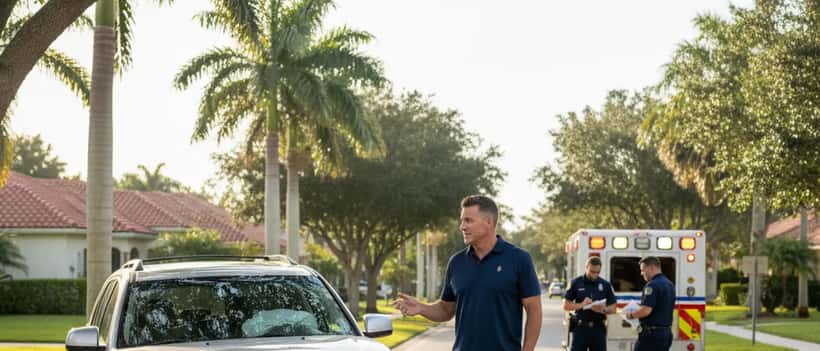
At approximately 2 p.m. on March 27, 2026, Martin County Fire Rescue and the Martin County Sheriff's Office responded to a two-vehicle rollover crash at 281 Beach Road on Jupiter Island, Florida. Tiger Woods, 50, was at the scene. First responders confirmed there were no injuries, and eyewitnesses reported seeing Woods on the scene, appearing to be okay.
The timing could not be more critical: Woods had just competed in the TGL Finals and the Masters at Augusta National is scheduled for early April 2026. His girlfriend Vanessa Trump and daughter Kai had cheered him on just days earlier at the SoFi Center in Palm Beach Gardens.
The Martin County Sheriff's Office confirmed they would provide additional details as the investigation continues.
Why Car Accidents Are More Serious Than They Appear
Even when there are no visible injuries, medical professionals warn that rollover accidents can cause hidden trauma that manifests hours or days later.
According to the American College of Emergency Physicians, the most common delayed-onset injuries after a rollover include:
- Whiplash and cervical spine strain: The sudden deceleration of a rollover subjects the neck to extreme forces. Symptoms — stiffness, headaches, radiating arm pain — can take 24 to 72 hours to appear.
- Concussion without loss of consciousness: Mild traumatic brain injury frequently goes undetected immediately after impact. Cognitive fog, light sensitivity, and balance problems may only emerge the following day.
- Soft tissue injuries in the shoulder and back: Particularly relevant for a golfer, whose swing mechanics depend on rotational stability through the thoracic spine and shoulder complex.
- Internal bruising from seatbelt forces: The abdominal region and ribs absorb significant compression during a rollover even when the restraint system works correctly.
The Specific Risk for Elite Athletes
For professional athletes at Tiger Woods' level, even minor post-traumatic inflammation can disrupt competition performance. Sports medicine specialists emphasize that the body's acute stress response — adrenaline — can mask pain signals in the immediate aftermath of an accident, making self-assessment unreliable.
The Mayo Clinic's sports medicine protocol recommends that any athlete involved in a significant vehicle collision undergo a full clinical assessment within 24 hours, including:
- Neurological screening for concussion (SCAT6 protocol)
- Cervical range-of-motion testing
- Imaging if shoulder or lumbar pain is present
- Cardiovascular monitoring if airbags deployed
Tiger Woods has a well-documented history of spinal surgeries — including a lumbar disc replacement procedure in 2025 — which makes post-accident evaluation even more critical. Any new trauma to an operated spine warrants immediate specialist review, not a wait-and-see approach.
What Amateur Athletes Should Do After a Car Accident
You don't need to be a professional golfer to take post-accident health seriously. Anyone who is physically active — weekend runners, cyclists, gym-goers — faces the same invisible injury risks.
If you're in a car accident:
- Do not dismiss "I feel fine" — the adrenaline response is powerful and temporary.
- Seek a sports medicine consultation within 24-48 hours, even without obvious pain. A sports doctor can assess trauma patterns specific to your activity demands.
- Avoid returning to training for at least 48 hours, regardless of how you feel immediately after.
- Document everything: photographs, symptom diary, medical reports — critical for insurance claims and treatment planning.
- Watch for red flag symptoms: severe headache, visual disturbance, arm or leg numbness, memory gaps — these require emergency evaluation, not a GP visit.
According to the National Highway Traffic Safety Administration (NHTSA), rollover crashes account for approximately 29% of all passenger vehicle occupant fatalities despite representing only 3% of serious crashes — underscoring the violent physics involved even in accidents where participants walk away.
When to Consult a Sports Medicine Specialist
If you are an athlete recovering from a car accident, a sports medicine specialist offers something a general practitioner may not: a return-to-sport protocol tailored to your specific athletic demands.
This matters because:
- The mechanics of a golf swing place 8× body weight through the lumbar spine
- Running gait requires precise neuromuscular coordination that soft tissue swelling disrupts
- Competitive cycling demands head-forward posture that aggravates whiplash injuries
A sports medicine doctor will not just clear you to "rest" — they will build a structured rehabilitation and return-to-competition timeline that protects your long-term athletic capacity.
Note: This article provides general health information. It does not constitute medical advice. If you have been in a vehicle accident, consult a licensed medical professional.
Don't Wait Until the Pain Peaks
Tiger Woods' crash on Jupiter Island is a reminder that even the most physically prepared athletes are vulnerable. The key difference between a quick recovery and a season-ending setback is not luck — it is early expert assessment.
If you or someone you know has been in a car accident and is wondering about the implications for their sports practice, a qualified sports medicine specialist can provide a full evaluation and a clear roadmap back to performance.
