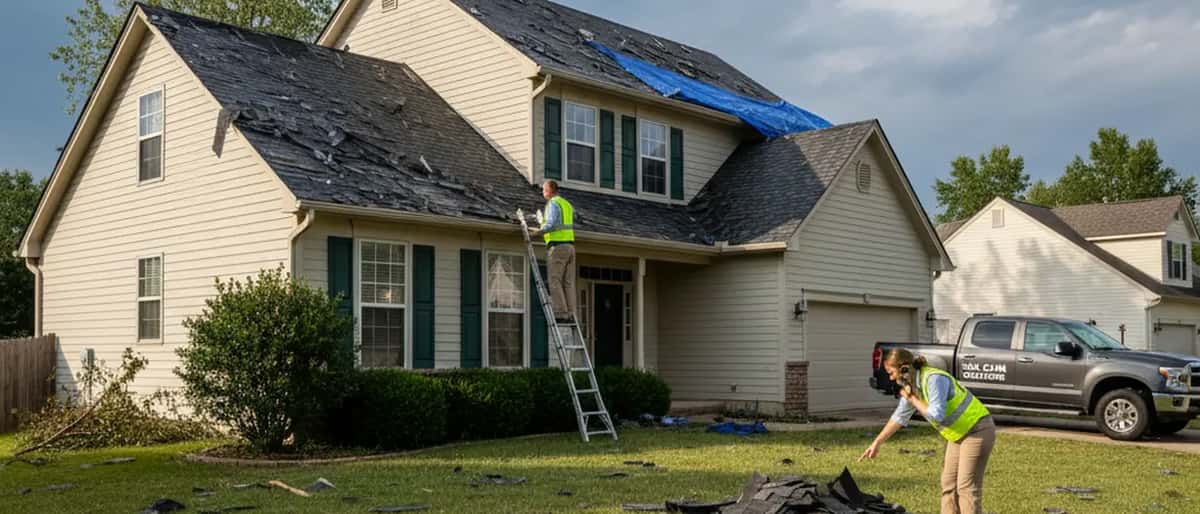
A catastrophic tornado outbreak and severe thunderstorm system swept across Illinois and Indiana on March 10, 2026, leaving an estimated 12,500 properties damaged by hailstones up to 4.8 inches in diameter. Hawaii was hit simultaneously by a powerful kona storm. State officials in both regions are urging homeowners to file insurance claims immediately — and the clock is already ticking.
The March 2026 Storm: What Happened and Where
The March 10 outbreak produced multiple tornadoes and a supercell thunderstorm system that struck Kankakee County (Illinois), Downers Grove, and Northwest Indiana simultaneously. According to Sill Public Adjusters, approximately 12,506 properties in Downers Grove alone were potentially impacted by hail measuring 2.5 inches or larger — well above the threshold for structural roof damage. Some areas recorded hailstones up to 4.8 inches in diameter, causing widespread windshield shattering and significant vehicle body damage.
On the same date, a strong kona storm hit the Hawaiian Islands, prompting the State of Hawaii to urge residents to file claims promptly. The Honolulu Star-Advertiser reported on March 15 that officials stressed the importance of quick filing before policy deadlines pass.
Why Filing Quickly Matters: Legal Deadlines You Cannot Miss
Most homeowners insurance policies contain notice provisions — contractual deadlines requiring you to notify your insurer of a claim within a specific timeframe, typically 30 to 60 days from the date of damage. Missing this window can give your insurer grounds to deny your claim entirely, even if the damage is legitimate.
Beyond notice provisions:
- Duty to Mitigate: Under insurance law in Illinois, Indiana, and most US states, you are legally required to take reasonable steps to prevent further damage once the storm has passed. This means boarding up broken windows, using tarps on damaged roofs, and documenting all temporary repairs. Failure to mitigate can reduce or void your payout.
- Statute of Limitations: Most states allow you 2 to 5 years to file a lawsuit against your insurer if a claim is denied — but starting the documentation process early is critical.
- Proof of Loss Requirements: Many policies require a formal "proof of loss" document within 60 days of the insurer's request. Missing this deadline is a common reason claims are denied.
How to Document Your Claim Correctly
Step 1: Photograph and video everything immediately. Capture the damage from multiple angles before any cleanup. Include date-stamped photos. Do not discard any damaged items until an adjuster has inspected them.
Step 2: Create an inventory of all damaged property. List every item, its estimated value, and approximate age. For structural damage (roof, siding, foundation), note the specific locations.
Step 3: Get multiple repair estimates. Insurers often lowball initial assessments. Independent contractor estimates give you leverage if you need to negotiate the settlement.
Step 4: Track all temporary expenses. If the storm made your home uninhabitable, document hotel costs, meals, and storage fees. Most policies include "Additional Living Expenses" coverage — but you must document every dollar.
Step 5: Review your policy before calling your insurer. Know your deductible, coverage limits, and any exclusions. Standard homeowners policies cover wind and hail damage but often exclude flooding from storm surge.
When to Hire a Public Adjuster or Lawyer
Insurance adjusters work for the insurance company — not for you. When the stakes are high, professional representation makes a measurable difference:
A public adjuster is a licensed professional who negotiates your claim on your behalf. They typically charge 5–15% of the settlement but often recover significantly more than unrepresented homeowners. Consider a public adjuster when your damage estimate exceeds $10,000 or when the insurer disputes the cause of damage.
An insurance attorney is essential when:
- Your claim is denied in full or in part, and you believe the denial is wrongful
- Your insurer invokes a policy exclusion you believe should not apply
- The settlement offer is significantly below repair costs
- Your insurer delays unreasonably (bad faith conduct)
In Illinois, insurers who act in bad faith — including unreasonable delays or unjustified denials — can be liable for the original claim amount, attorney fees, and additional penalties under the Illinois Insurance Code.
Common Denial Tactics to Watch For
"Pre-existing damage": Insurers sometimes attribute storm damage to wear and tear or deferred maintenance. Get a contractor's opinion in writing that confirms the damage is consistent with the recent storm event.
"The damage doesn't meet your deductible": Insurers may undervalue damage to keep the payout below your deductible. An independent estimate is your strongest counter.
"Flooding is not covered": True for most standard policies — but if the damage was caused by wind-driven rain entering through storm damage (not ground flooding), it may still be covered.
Federal and State Assistance Available
Beyond insurance, federal assistance may be available. If your county is declared a federal disaster area by FEMA, you can apply for Individual Assistance grants, low-interest SBA disaster loans, and temporary housing assistance at DisasterAssistance.gov.
Illinois and Indiana state emergency management agencies also maintain lists of registered licensed contractors — important because fraudulent contractors descend on storm-damaged areas and target homeowners immediately after major events.
Legal disclaimer: This article provides general information only and does not constitute legal or insurance advice. Laws and policy terms vary. Consult a qualified attorney for advice specific to your situation.
If your storm damage claim has been denied, delayed, or undervalued, the insurance and property law specialists at Expert Zoom — US Legal Experts can review your situation and advise on your options in a fast online consultation.
