 Eleanor Vaughan
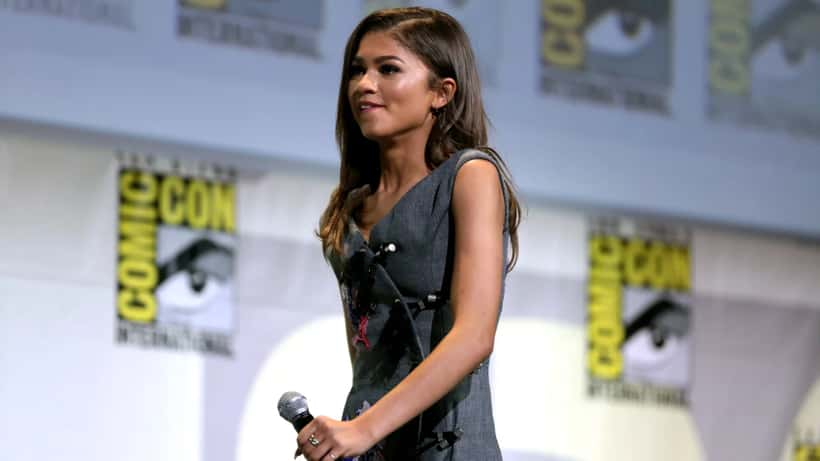
Zendaya stepped onto the red carpet for Christopher Nolan's The Odyssey premiere in New York on 14 July 2026, marking the fourth major press tour of her year — with Dune: Part Three still to come in December. The actress, who plays the Greek goddess Athena in the $250 million epic, has already completed promotional cycles for The Drama, Euphoria Season 3, and Spider-Man: Brand New Day — a schedule that would stretch almost any working professional to their limit.
For millions of UK fans, 2026 has been a year of marvelling at Zendaya's capacity to inhabit entirely different worlds — from the deserts of Arrakis to the halls of Olympus. But behind the premiere gowns and the standing ovations sits a contractual reality that rarely enters public discussion: five major productions, each carrying its own legal obligations, exclusivity windows, and image-use provisions. For working performers, creative freelancers, and producers across the UK, the mechanics behind that schedule raise questions that are far more relevant to everyday careers than they might seem.
The Machinery Behind Five Simultaneous Productions
Exclusivity clauses are standard in UK entertainment contracts. They prevent a performer from working on competing productions during defined windows — typically the principal photography period plus a promotional tail of 30 to 90 days. On a single project, they are straightforward. Across five simultaneous major studio films, they become considerably more complex.
For UK actors, the Equity trade union — which represents professional performers across film, television, and theatre — publishes standard-form contract agreements that set baseline protections, including limits on how broadly exclusivity can be defined and what compensation must be paid if a clause prevents additional work. These protections apply most strongly to Equity-signatory productions. Independent and lower-budget productions often demand far broader exclusivity terms with significantly fewer safeguards, leaving performers exposed if they are juggling multiple commitments.
A secondary complication arises around image rights. Unlike some EU jurisdictions, the UK does not recognise a freestanding statutory image right. Any control a performer has over their likeness during a promotional period — which studios are permitted to use their face, on which platforms, for which products — must be negotiated and codified contractually. For a performer appearing in five different studio campaigns simultaneously, the scope for image-use conflicts is substantial, and disputes can arise months or even years after a project wraps.
UK Entertainment Contracts: The Three Clauses That Create the Most Conflict
Three standard provisions cause the most friction when UK performers take on multiple simultaneous commitments:
Pay-or-play clauses commit a production to paying the performer's fee even if the film does not proceed — but they also lock the performer in. Withdrawing from a pay-or-play contract because of a scheduling conflict with another production typically exposes the performer to damages equivalent to their full contracted fee. Performers who sign these without checking for conflicts elsewhere in their contract portfolio can find themselves caught between two productions, legally liable to both.
Promotional obligation clauses specify how many press days, interviews, and public appearances the performer must make. When five productions each carry promotional obligations with overlapping calendar windows, a performer can find themselves physically unable to fulfil all five — and technically in breach of any commitment they cannot honour.
Residuals and streaming rights have become a major negotiating pressure point since streaming platforms entered the production market at scale. If one contract grants a studio exclusive streaming rights for a defined territory and another contract with a streaming platform asserts first-look rights on the same territory, the collision can create legal and financial exposure that neither contract's drafter anticipated. This is an increasingly common issue for UK performers working across both broadcast television and streaming co-productions.
Concrete Case: The UK Actor Signing Two Overlapping Productions
Consider a professional UK actor — working at a solid mid-career level — who signs two contracts in the same 12-month window: a supporting role in an American co-production filming in London for 14 weeks (Weeks 1–14), and a lead in a BBC drama filming for 12 weeks (Weeks 10–21). The overlap is four weeks.
Both contracts contain standard exclusivity clauses preventing participation in "other dramatic productions" during the principal photography period. The actor signs both, reasoning that the productions can negotiate the scheduling clash between themselves.
If she proceeds without obtaining written amendments to both contracts, three outcomes become possible:
- Best-case scenario: Both productions agree informally to adjust schedules. The conflict is resolved without legal action. But without a written amendment, the actor has no protection if either relationship turns adversarial — if the production is acquired, the budget is cut, or the director is replaced, that informal agreement is unenforceable.
- Mid-scenario: The American production, which was signed first, exercises its exclusivity clause at Week 10. The actor must pause the BBC drama or risk breach. The BBC claims damages for the scheduling disruption — covering replacement casting costs and rescheduled crew days, which for a 12-week BBC drama can reach £20,000 to £60,000.
- Worst-case scenario: Both productions issue breach notices simultaneously. The actor faces parallel claims potentially totalling her combined contracted fees. At BBC Equity standard rates for a lead role — approximately £1,200 to £2,000 per day — exposure across a 12-week production can exceed £100,000.
The solution is not to decline projects. It is to ensure every exclusivity clause contains three elements before signing:
- A defined scope — which specific types of production are excluded (same genre? Same distributor? All screen work?)
- A defined window — when exclusivity begins and ends, including whether the promotional tail is counted
- A written carve-out — explicitly naming any existing commitment that is exempt from the exclusivity provision
A one-hour consultation with a UK entertainment solicitor before signing the second contract typically costs £200 to £400 and would identify a conflict like this in minutes. The legal cost of not doing so is orders of magnitude higher.
This article is for informational purposes only and does not constitute legal advice. If you are managing overlapping production commitments, consult a qualified entertainment solicitor.
What Zendaya's 2026 Tells Every UK Performer
Zendaya's five-film schedule reflects extraordinary talent meeting extraordinarily detailed legal planning. Every one of those contracts will have been negotiated by a team of specialist entertainment lawyers — ensuring that exclusivity windows were carved out, promotional obligations were sequenced, and image-use rights were ring-fenced for each studio. When Christopher Nolan praised her publicly as "always perfect" on set, part of what made that possible was the legal groundwork laid before cameras rolled.
For UK performers working at every level, the lesson is the same: the more projects you take on, the more critical it is to review each contract in the context of your full portfolio, not in isolation. A first-look deal with a streaming platform — increasingly offered to mid-career performers as platforms compete to lock in emerging talent — can restrict your ability to accept independent commissions for two to three years. That is a commitment requiring specialist input before signing, not after.
Earlier this year, performers working on Celebrity Traitors 2026 encountered exactly this kind of complexity: reality TV format contracts carry image-use and exclusivity provisions that frequently conflict with existing agent agreements or brand endorsement deals. Similarly, as UK freelancers in the entertainment sector discovered this year, the distinction between PAYE employment and self-employed contractor status carries profound consequences for how exclusivity clauses can be enforced and what remedies are available if they are breached.
Zendaya's 2026 will be remembered as one of the most remarkable runs of back-to-back releases in modern cinema. What makes it legally instructive is not the scale — it is the reminder that behind every successful simultaneous career move is a contract framework built carefully enough to hold it together. For UK performers managing two projects, let alone five, investing in that framework is not a luxury. It is the foundation.
If you are a UK performer, creative freelancer, or production professional navigating overlapping commitments, Expert Zoom connects you with qualified entertainment solicitors available for video consultations — typically bookable within 24 to 48 hours.
