 Isobel Fraser
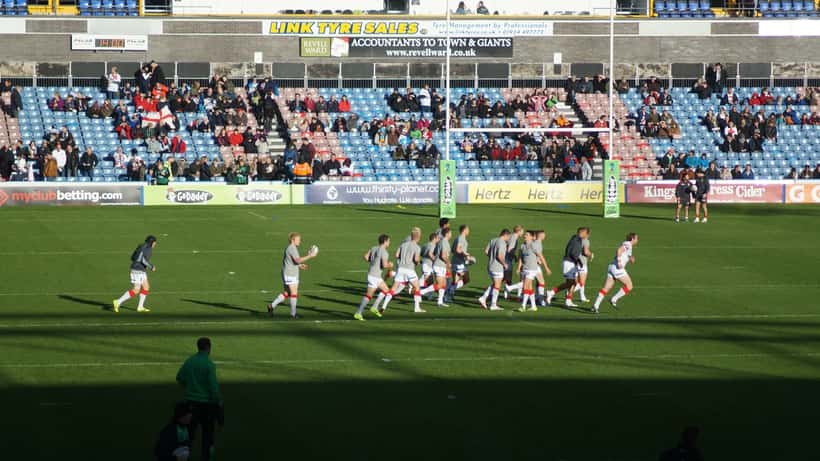
York Knights have secured their place in Super League for the 2026 season — but the club's journey from the Championship to rugby league's top flight has exposed the brutal financial reality facing newly promoted sides. With cash flow problems emerging as early as May 2026 and a potential ownership change looming, the Knights' story is a masterclass in the risks and rewards of backing a promoted rugby league club, and what fans and small investors need to understand before putting money on the line.
The Financial Gap Between Promotion and Sustainability
York Knights were promoted to Super League alongside Toulouse Olympique for 2026, receiving approximately £650,000 in central distribution funding from the Rugby Football League — roughly half the £1.3 million paid to established top-flight clubs such as Bradford Bulls. That funding gap is not symbolic. It represents the structural disadvantage every newly promoted club faces: the costs of competing at Super League level (player wages, stadium standards, broadcast infrastructure) scale up immediately upon promotion, while income catches up only gradually, if at all.
Chairman Clint Goodchild confirmed to supporters in May 2026 that the club had requested an early advance on its June central distribution payment from the RFL to cover pitch renovation works at the York Community Stadium, after funding promised by incoming investors had not yet materialised. That is a significant admission: the club was spending money it had not yet received, on infrastructure it needed simply to meet Super League entry standards.
Head coach Mark Applegarth moved quickly to reassure players and staff, confirming that wages were being paid and that operations were continuing normally. But the episode shone a spotlight on how thin the financial margins are for promoted clubs in a league that Sky Sports presenter and analyst Mike Stephenson warned was "not financially ready for 14 teams."
What the Numbers Actually Mean for York Knights
The funding structure in Super League creates a two-tier system that is rarely explained clearly to fans. According to Rugby Football League distribution guidelines, central distribution is calculated partly on league position and partly on broadcasted status. Here is what that means in practice for 2026:
- Established Super League clubs: approximately £1.3 million in central distribution
- York Knights and Toulouse (promoted clubs): approximately £650,000 — a £650,000 annual shortfall against their top-flight rivals
- Additional costs of Super League entry: stadium upgrades, squad depth requirements, increased travel (including European fixtures for Toulouse), commercial and media obligations
The numbers suggest that a club finishing bottom of Super League in year one would need to generate close to £650,000 in additional commercial revenue — sponsorship, match-day income, merchandise, and local partnerships — just to break even against the baseline funding their rivals receive. For a club the size of York, operating in a city of 210,000 people, that is a significant commercial ask.
When Promised Investment Doesn't Arrive: A Concrete Case
This is where a financial expert's perspective becomes directly relevant to fans and anyone connected to the club.
Consider the situation York found themselves in during May 2026. The club had budgeted on the basis that investor funding would arrive by a certain date. When it did not materialise on schedule, the club was left with a cash flow shortfall that required an early drawdown of RFL distribution funding. This is a textbook liquidity crisis — not necessarily a solvency crisis, but a dangerous gap between when money is owed and when it actually lands.
If the shortfall had been, say, £50,000 — the amount Goodchild reportedly sought early from the RFL — and if the club's monthly wage bill at Super League level is estimated at £200,000 to £350,000 (a realistic range for a squad meeting minimum Super League standards), then even a two-week delay in promised investment arriving creates a deficit that cannot be covered by gate receipts alone. York's Community Stadium capacity of around 8,000, at average attendances of 4,000 to 5,000 per game, generates roughly £60,000 to £90,000 per home fixture in gate income at typical Championship-to-Super-League pricing.
If your club's monthly wage bill is £250,000 and your investor's money arrives six weeks late, you face a shortfall of approximately £150,000 that cannot be covered by match-day income alone. That is the if/then arithmetic that club boards and financial advisers need to model before a season begins — and that fans putting money into supporter schemes should understand before they contribute.
The Takeover Question: What a Wealthy Buyer Actually Needs to Consider
Reports in July 2026 indicated that a local businessman with long-standing ties to York is positioned to take over the club from Clint Goodchild, potentially giving the Knights the financial stability they need to remain competitive in Super League. This kind of acquisition — a high-net-worth individual buying into a community rugby league club — is increasingly common in British sport, and it comes with a very specific set of financial and legal considerations that a wealth manager or financial adviser would raise immediately.
Buying a rugby league club is not like buying shares in a listed company. There is no liquid secondary market. The asset is illiquid, heavily people-dependent (squad value depreciates rapidly), and exposed to regulatory risk (league rules on salary caps, licensing requirements, stadium standards). The return on investment is almost never financial in the traditional sense — it is reputational, community-focused, or passion-driven.
For any prospective buyer or backer of York Knights, a financial adviser would ask:
- What is the club's actual balance sheet? Total liabilities, not just the cash flow gap.
- What is the working capital requirement for a full Super League season? Not the RFL distribution figure, but the total cost of operations from January to November.
- What is the exit strategy if Super League relegation occurs in year one? Championship distributions are substantially lower. Does the business model survive demotion?
- Are there personal guarantees attached to any club debts? A common trap for directors of small sports clubs under UK company law.
What Fans and Supporters Can Do
For ordinary York Knights supporters who are not potential buyers but who care about the club's financial health, there are practical steps worth taking in 2026:
Season tickets and direct debit schemes generate predictable income that clubs can plan against — unlike match-day casual sales. If the club is offering early-bird season ticket renewal for 2027, buying early is one of the most financially useful things a fan can do.
Supporter trusts and ownership stakes are another route. The Supporters Direct model, recognised by the RFL, allows fans to hold a formal equity stake in their club, giving them transparency over finances and a democratic voice in governance. York already has a supporter group; escalating that into a formal trust structure could provide both community capital and constitutional protection.
Commercial partnerships — even at small scale — matter more for a club like York than for a wealthier rival. A local business spending £2,000 on a pitch-side banner or match programme advertising directly contributes to the commercial revenue the club needs to close that £650,000 central distribution gap.
The Bigger Picture: Super League's Structural Challenge
York's financial difficulties are not unique to York. They reflect a structural tension in Super League between the ambition to grow the sport geographically — bringing in clubs from France, expanding into new cities — and the funding model that still heavily rewards history and commercial scale over promotion on merit.
If the RFL does not address the funding gap between newly promoted clubs and established sides, it risks creating a cycle where promotion becomes financially punishing rather than rewarding. A club that earns the right to Super League through performance on the pitch should not then be threatened with insolvency because the prize money is structurally insufficient to cover the costs of playing there.
For York Knights and their supporters, 2026 represents a pivotal year. The on-pitch results — three consecutive wins reported in July 2026 — suggest the playing squad is performing above the club's financial weight. Whether the financial foundations can be rebuilt around a new ownership structure before the end of the season will determine whether this is the beginning of York's Super League story, or a cautionary tale about the gap between sporting ambition and financial reality.
A financial or legal expert can help fans, investors, and club directors navigate exactly this kind of high-stakes, high-complexity situation — one where passion and money intersect in ways that require professional guidance to get right. As shown in the Wrexham AFC ownership case, high-profile club investments carry risks that go well beyond the pitch.
Disclaimer: This article is for informational purposes only and does not constitute financial or legal advice. If you are considering investing in or acquiring a sports club, consult a qualified financial adviser or solicitor before making any decisions.
