 Harriet Price
World Space Week 2026 (4–10 October) is sweeping across British universities and high streets under its theme of "Rocket Revolution." From Guildford's High Street Takeover to Imperial College London's panel on "Sovereign capability: innovation and access," the mood in the UK's 1,907-company space sector is one of extraordinary opportunity. Yet for the growing number of entrepreneurs and startups inspired by this week's events to launch their own satellite business, one legal framework — fundamentally rewritten just eight months ago — will define whether that ambition becomes viable or catastrophically expensive.
Why 2026 Is a Turning Point for UK Space Law
The Space Industry Act 2018 gave the UK the legal framework to license commercial spaceflight from British soil for the first time. But it contained a potentially fatal flaw for startups: licence holders faced unlimited personal liability to indemnify the government for any damage caused by their space objects. In a worst-case scenario — a satellite collision triggering cascading debris in low Earth orbit — that exposure had no ceiling whatsoever.
That changed on 18 February 2026. The Space Industry (Indemnities) Act 2025, which received Royal Assent on 18 December 2025 and entered into force in February 2026, amended the original Act to make liability caps mandatory under UK law. Under the new rules, every operator licence issued under the Space Industry Act 2018 must include a statutory limit on the operator's financial exposure. The state retains unlimited international liability under the UN Outer Space Treaty — but the commercial operator's risk is now bounded, and crucially, insurable.
According to the UK Civil Aviation Authority (CAA), which oversees space launch licensing, the standard cap currently sits at approximately €60 million for most missions, though it varies by risk profile. Vertical launch licences recently granted to Rocket Factory Augsburg and Skyrora from UK spaceports set the cap at £10.5 million — a figure calibrated specifically to the risk profile of suborbital and small-satellite missions.
What Space Lawyers Are Saying This Week
For solicitors advising UK companies, World Space Week 2026 has taken on genuine urgency. The combination of operational spaceports — SaxaVord in Shetland, Sutherland Spaceport, and Spaceport Cornwall — with reformed liability rules has lowered the legal barrier to launch. But "lowered" does not mean "simple."
According to Fieldfisher's Satellite and Space Projects Newsletter from March 2026, the Indemnities Act has "removed the sword of Damocles that was hanging over UK operators." But the firm also notes that the licence application process, insurance requirements, and third-party liability procedures "remain complex and time-sensitive. Companies that delay taking legal advice until after they have built their satellite are starting far too late."
Key legal obligations still in force under the 2018 Act include obtaining a spaceflight operator licence from the CAA before any launch activity, maintaining third-party liability insurance at levels specified in the licence, and indemnifying the government up to the capped amount for any damage caused. Ongoing obligations once a satellite is in orbit — including debris mitigation plans aligned with the European Space Agency's Zero Debris Charter — also carry legal weight and must be documented before a licence is granted.
The UK government's own guidance on liabilities under the Space Industry Act 2018, published by the Department for Transport, runs to 47 pages — and that is before accounting for the 2025 amendments and the CAA's updated operator guidance issued this year.
The £255,000 Mistake That World Space Week Won't Warn You About
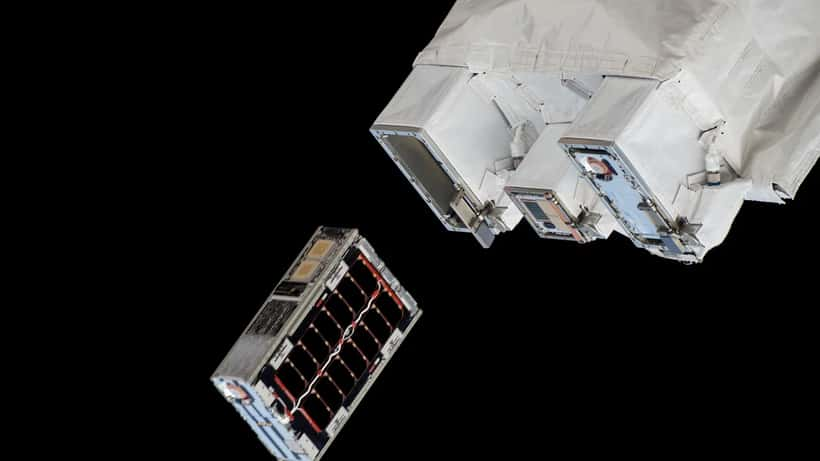
Consider TechOrbit, a composite but representative UK earth-observation startup preparing its first 6U CubeSat launch in late 2026. Its three founders — two engineers and a data scientist — have spent three years developing their imaging payload. They hire a launch integrator, book a rideshare slot on a Rocket Lab mission departing from a US pad, and carry out their legal preparation through a single consultation with a general commercial solicitor who confirms their company structure is sound.
What they do not realise: their third-party liability insurance policy was written before the Space Industry (Indemnities) Act 2025 came into force. Their broker used the pre-February 2026 standard, quoting a €50 million policy. But the CAA's updated licence terms require that the policy language specifically covers indemnification of the Secretary of State for Transport and the CAA under Section 36 of the 2018 Act as amended — wording that older policy templates do not include.
The mismatch is flagged during the CAA's licence review. Correcting it requires re-underwriting through a specialist space insurer — a process taking 6 to 10 weeks — and adds an additional £35,000 to £75,000 in premium adjustments. Their launch slot is missed, incurring a £180,000 rideshare rebooking fee. Total financial impact: up to £255,000 in direct costs, plus an eight-month delay to first revenue.
If the founders had engaged a specialist space law solicitor at the business plan stage — before signing any supplier contracts — the total legal fees would have been £8,000 to £20,000. If you proceed without specialist counsel: risk up to £255,000 in delay costs. If you engage a space lawyer early: pay £8,000–£20,000 and launch on schedule. One is a business cost; the other is a business crisis.
This is not an edge case. According to legal briefings reviewed after World Space Week 2023 and 2024, insurance policy language mismatches are among the most common causes of UK launch licence delays for first-time operators — alongside incomplete debris mitigation documentation and missing ground segment operator authorisations.
The Insurance Market Most Entrepreneurs Have Never Heard Of
Third-party liability insurance for UK space operators is not available through standard commercial brokers. Specialist syndicates at Lloyd's of London and a handful of continental reinsurers dominate the market. Annual premiums for a small satellite operator under the UK regime typically range from £120,000 to £350,000, depending on orbit, debris risk profile, and mission duration — figures that are not widely known among technology entrepreneurs entering the space sector from adjacent industries such as drones, IoT, or earth observation software.
The liability landscape is further complicated for operators who use non-UK launch providers, as UK-licensed operators must still hold a UK licence if the satellite is registered in Great Britain, even when launching from a foreign pad. This creates a layer of international legal complexity — including coordination between the UK CAA, the launch country's regulator, and the operator's insurance syndicate — that a generalist legal team is not equipped to navigate alone. Entrepreneurs tracking related trends such as the rapid rise of UK-focused space surveillance businesses will find the legal framework equally relevant to their commercial decisions.
What to Do If World Space Week 2026 Has Inspired You to Launch
For any UK entrepreneur attending events this week and seriously considering a satellite venture, the sequence matters enormously:
1. Legal review first, hardware second. Seek specialist space law advice before signing any contracts with launch providers, satellite manufacturers, or ground segment operators. The regulatory timeline for a UK launch licence can take 12 to 18 months; starting late cascades into every other deadline.
2. Understand the liability cap specific to your mission. The cap is set in your individual licence based on a CAA risk assessment — it is not a uniform figure across all missions. For a small CubeSat in a low-debris-risk orbit, it may be significantly lower than €60 million. A solicitor experienced in UK CAA licensing can advise on the likely range before you commit capital to hardware.
3. Commission a specialist space insurance broker early. Mainstream commercial brokers cannot adequately serve this market. A space law solicitor can make introductions to the Lloyd's syndicates and specialist brokers who understand the post-2025 indemnities framework and can issue compliant policy language for a first-time UK operator.
4. Plan for ongoing obligations, not just launch day. The licence imposes obligations throughout the satellite's operational life, including end-of-life deorbit plans that meet CAA debris mitigation standards. Failing to document these at the licence application stage is a common reason for applications to be returned for revision — adding months to an already lengthy process.
Legal note: This article is for informational purposes only and does not constitute legal advice. UK space law is complex and situation-specific; always consult a qualified solicitor before taking any action relating to space industry licensing or liability.
World Space Week 2026 is a genuine celebration of how far the UK has come: £18.6 billion in annual sector income, 55,550 space jobs, and working spaceports taking shape on British soil. The legal framework has finally caught up with the ambition. But ambition without specialist legal guidance is a recipe for the kind of expensive, avoidable setback that costs companies their launch window — and sometimes their viability. The Rocket Revolution runs on law as much as liquid fuel.
Thinking about entering the UK space sector? An Expert Zoom legal specialist can help you navigate the Space Industry Act, insurance requirements, and CAA licensing before you commit to your first launch contract.
