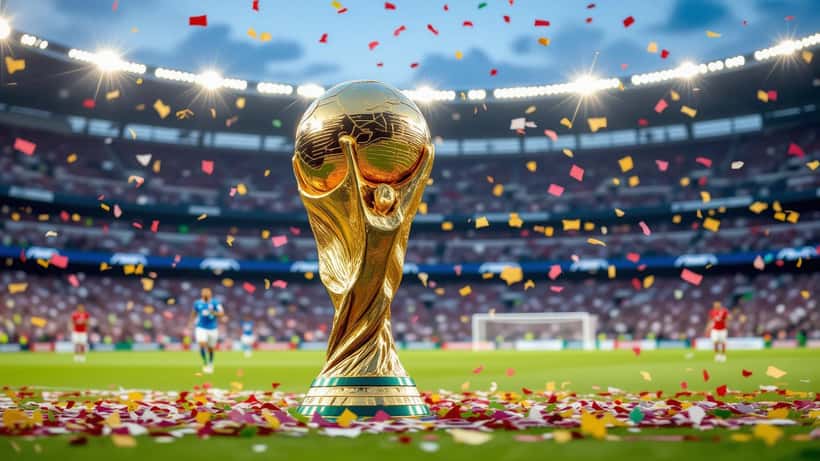
As the 2026 FIFA World Cup moves through the knockout rounds, one question is dominating search engines, pubs, and group chats across the United Kingdom: who will actually lift the trophy? With the tournament now co-hosted by the United States, Canada, and Mexico, the expanded 48-team format has produced more shocks, more goals, and more tactical intrigue than any edition in recent memory. While bookmakers update their odds by the hour, the sharpest predictions are coming not from algorithms alone, but from football analysts, former professionals, and performance consultants who understand how momentum, squad depth, and marginal gains decide World Cup winners.
The early exits of several pre-tournament favourites have already rewritten the narrative. What looked like a coronation for a handful of established superpowers has become a genuine contest, with underdogs exploiting the extra rest days and tactical flexibility that the new format provides. For businesses and content platforms operating in the expert-consultation space, this is a textbook example of why generalist headlines rarely age well. The teams still standing are the ones that treated every group-stage minute as data, adjusted their systems in real time, and managed player loads with the precision of a high-performance consultancy.
From an expert perspective, the question of who wins the 2026 World Cup is best broken into three variables: tactical identity, physical resilience, and mental fortitude. Tactical identity is no longer about having the best individuals; it is about how quickly a coach can impose a clear game model and how willingly players sacrifice personal statistics for collective shape. The sides that have progressed deepest have all shown one common trait: a recognisable style that does not collapse under pressure. When substitutes come on, they know exactly where to stand, when to press, and which passing lanes to block. That clarity is the product of months of coaching repetition, not improvisation.
Physical resilience has become the silent divider between contenders and pretenders. The modern tournament calendar is brutal. Clubs arrive at World Cups carrying fatigue from domestic leagues, continental competitions, and international travel. Teams with medical and sports-science departments that can monitor load, accelerate recovery, and individualise training are seeing measurable returns on the pitch. It is no coincidence that the nations still competing in late July are the ones that rotated intelligently during the group stage, even at the cost of short-term criticism from fans and media.
Mental fortitude, meanwhile, is the hardest variable to quantify and often the decisive one. World Cup winners are rarely the teams that play the most beautiful football for ninety minutes; they are the teams that make the fewest catastrophic decisions in the highest-leverage moments. Penalty shootouts, last-minute set pieces, and refereeing controversies all test a squad’s emotional regulation. Sports psychologists and leadership coaches increasingly view these moments through the same lens used in high-stakes business negotiations: control the controllable, anchor on process over outcome, and maintain physiological calm under scrutiny.
Looking at the remaining field, several names keep recurring in expert analysis. South American sides benefit from a playing culture that treats tournament football as a default setting, not an exception. European teams bring structural discipline and deep squads forged in the world’s most competitive club leagues. A handful of nations from other confederations have demonstrated that the gap in raw technical quality is shrinking faster than many observers assumed, thanks to improved youth development and the global diffusion of coaching knowledge through digital platforms and academy partnerships.
One trend that analysts highlight is the declining importance of pure possession. The 2026 tournament has rewarded teams that can defend compactly and then transition with vertical speed. Managers who still fetishise ball dominance without penetration have found themselves punished by opponents who sit in a mid-block, win second balls, and attack with three or four passes. This mirrors broader lessons from business and consulting: efficiency beats activity, and the value of an asset depends on what it produces, not how much of it you collect.
Set pieces have also returned as a decisive factor. In a knockout environment where margins are microscopic, a well-drilled corner routine or a rehearsed free-kick can be worth more than an hour of open-play creativity. Analysts tracking expected goals from dead-ball situations have noted that the teams with dedicated set-piece coaches are dramatically overperforming their underlying numbers. That specialisation is another expert lesson: in competitive arenas, the team that allocates resources to the highest-leverage moments usually wins.
For readers searching "world cup winners 2026", the honest answer is that no one knows yet. But the methodology for picking a winner is becoming clearer. The trophy is most likely to go to a squad that combines tactical clarity with physical freshness and emotional control, led by a coaching staff that treats every match as a discrete project with its own plan, risks, and contingency protocols. It is the same combination of disciplines that makes expert consultants valuable in any high-stakes domain: diagnose the situation, build a robust plan, execute under pressure, and adapt faster than the competition.
Betting markets will continue to move, and social media will crown and dethrone favourites after every half-time whistle. But if history is any guide, the eventual champions will not be the team that generated the most viral clips. They will be the team that made the best decisions when the noise was loudest, the legs were heaviest, and the stakes were highest. In that sense, predicting World Cup winners is less about football mystique and more about recognising the organisational habits that produce repeatable success under uncertainty.
