 Amelia Davies
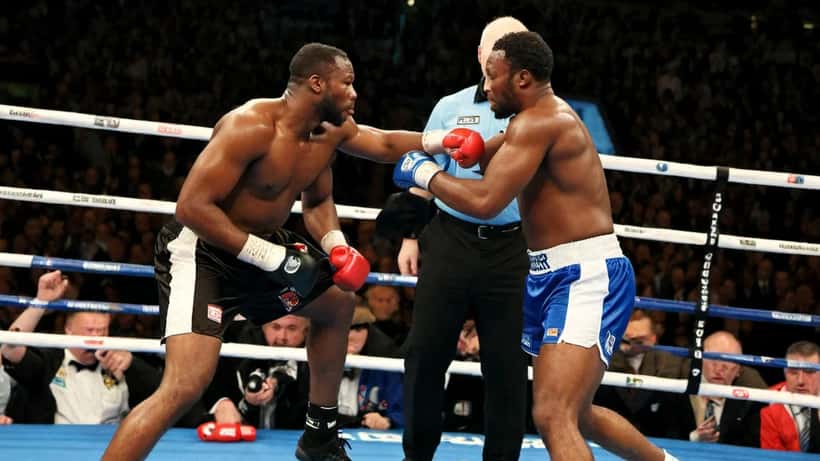
Deontay Wilder won by split decision over Derek Chisora at London's O2 Arena on 4 April 2026, but it was the referee — not the fighters — who generated the most controversy afterwards. Now the British Boxing Board of Control has cleared Mark Bates of any wrongdoing, leaving Wilder furious and fans asking: what legal options do athletes actually have when they believe an official has failed them?
The Fight That Sparked a National Debate
The Wilder vs Chisora contest on 4 April was, by most accounts, a chaotic spectacle. Both men entered their 50th professional bouts. Three knockdowns occurred across twelve rounds. A point was deducted from Wilder. And Chisora's corner entered the ring during the first round — ordinarily a cause for disqualification or immediate intervention.
Referee Mark Bates, who has officiated over 807 bouts since 2017, was widely criticised for his handling of the contest. Long-time boxing commentator Al Bernstein called it "the most biased piece of refereeing I have ever seen." Wilder himself told reporters he was "afraid to sleep" after the fight, questioning whether Bates would ever work again.
The British Boxing Board of Control (BBBofC) announced a review. Within days, it confirmed no sanctions would be imposed. The board said it was "satisfied that he refereed a messy fight in an honest manner."
For UK sports law specialists, the episode highlights how difficult it is for athletes to achieve accountability through official channels — and how limited their legal options actually are.
What Powers Does the BBBofC Actually Have?
The British Boxing Board of Control is the primary regulatory body for professional boxing in England, Wales, Scotland and Northern Ireland. Licensed under the Sporting Events (Control of Alcohol etc.) Act 1985 and operating under its own constitutional rules, the board has extensive authority: it grants and withdraws boxing licences, oversees contest approvals, appoints match officials, and conducts post-event reviews.
When a referee is referred for disciplinary review, the BBBofC's Stewards of the Board consider whether the official breached their professional standards. But the board's internal disciplinary process has no statutory obligation to publish its reasoning or to invite submissions from the affected boxer. Its decisions are, in effect, private.
This creates a power imbalance that lawyers who work in sports law frequently encounter. The BBBofC can, as one legal analysis noted, "pick and choose which cases to examine, what to ignore, who to appoint, who to fine, who to suspend." There is no equivalent of the Court of Arbitration for Sport (CAS) for domestic boxing disputes in the UK, and no mandatory appeals process that a licensed boxer can trigger as of right.
Can Wilder — or Any Boxer — Sue the Referee?
Under UK tort law, a referee owes a duty of care to participants in the events they officiate. The landmark case of Watson v British Boxing Board of Control [2001] established that the BBBofC itself could be held liable for failures that led to a boxer suffering injury — in that case, Michael Watson's brain injury following his fight with Chris Eubank.
However, suing a referee for a controversial in-ring decision is an entirely different matter. For a claim in negligence to succeed, a claimant must demonstrate that the defendant owed them a duty of care, breached that duty, and that the breach caused them a legally cognisable loss.
When it comes to refereeing decisions, the courts have consistently been reluctant to intervene. The principle of "referee immunity" is not formally codified in English law, but in practice, judges treat sporting officials' decisions in the heat of competition as protected by the wide margin of appreciation granted to those exercising professional judgement in real time.
According to the UK's legislation.gov.uk, unfair referee decisions during a contest would not, under most circumstances, constitute the kind of identifiable, quantifiable loss required for a successful civil claim. Losing a split decision — even a controversial one — does not translate automatically into legal damages.
Challenging a Sporting Body's Decision
The more realistic avenue for an aggrieved boxer is judicial review — a public law mechanism that allows courts to scrutinise decisions made by bodies exercising a public function. The BBBofC, as a regulatory body with a monopoly over professional boxing licensing in the UK, is a plausible candidate for judicial review challenge.
But judicial review is not a merits-based appeal. Courts will not substitute their view of whether Bates refereed correctly; they will only ask whether the BBBofC followed fair procedures, acted rationally, and complied with its own rules. If the board conducted a review — however brief — and reached a conclusion that was not irrational, the courts are unlikely to interfere.
A sports law solicitor would advise any boxer contemplating this route that the threshold for judicial review success is high, the costs are significant, and the outcome, even if successful, is unlikely to be the reversal of a fight result.
What This Means for UK Athletes in All Sports
The Wilder-Chisora controversy exposes a wider truth about how sports governance works in the UK: regulatory bodies retain enormous discretion, and athletes — particularly those in individual combat sports — often have fewer formal rights than they realise.
In contrast, the World Anti-Doping Agency (WADA) framework and UEFA's governing structures both include independent appeals processes with external oversight. Boxing, at the domestic level, operates under a more opaque model.
Any UK athlete who believes they have been prejudiced by an official's conduct — whether in boxing, football, cricket, or another sport — should consult a solicitor experienced in sports law before taking any action. The complexity of boxing contracts and athlete rights has been a recurring theme in UK combat sports in 2026. The specific rights available will depend on the governing body's own rules, any applicable national legislation, and whether an arbitration clause exists in their licence or contract.
In the meantime, the BBBofC's decision to clear Mark Bates means the matter is, officially, closed. Whether the arguments it has sparked will lead to any structural reform remains to be seen.
Legal disclaimer: This article is for informational purposes only and does not constitute legal advice. If you have a specific legal issue relating to sports governance, contact a qualified solicitor.
