 Imogen Bennett
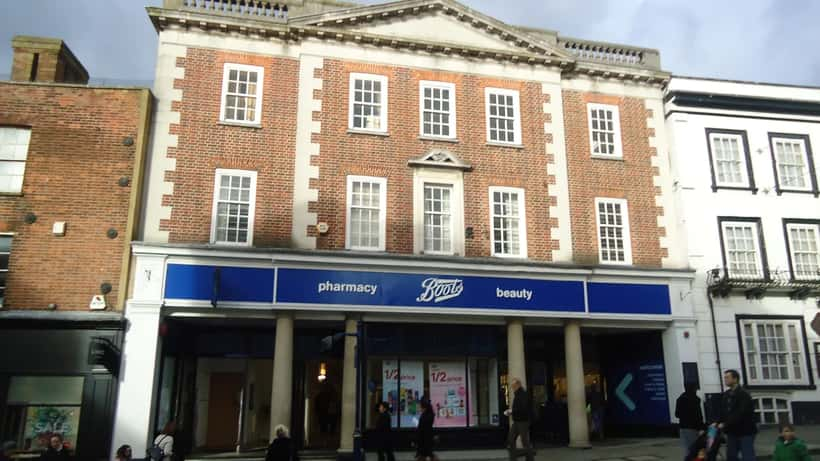
On 7 October 2026, Wittington Investments — the holding company of the Weston family — confirmed it had entered into agreements to acquire Boots from Sycamore Partners for approximately US$8.9 billion (around £7 billion), in one of the largest retail transactions in British history. The Westons, who already control Fortnum & Mason, hold a majority stake in Primark through Associated British Foods, and operate Loblaw and Shoppers Drug Mart across Canada, have executed a textbook move in dynastic wealth management. For the 4.7 million family business owners across the UK, the announcement is more than financial news — it is a masterclass in succession architecture. And the timing could not be more relevant, given what changed on 6 April 2026.
A £7 Billion Structure Built Over Generations
The Weston family's capacity to absorb a £7 billion acquisition without triggering a disorderly transfer of wealth is not accidental. At the heart of their empire sits Wittington Investments, a holding company that has allowed three generations of Westons — from Garfield Weston, who turned his father's biscuit business into a global food and retail empire, to today's Alannah and Galen Weston Jr. — to move assets across borders and between generations without forcing a fire sale at each inheritance event.
This is precisely what Business Property Relief (BPR) was designed to protect at a domestic level: the ability to pass a functioning business to the next generation without forcing heirs to liquidate it to pay a 40% IHT bill. But the BPR landscape changed fundamentally this spring — and most UK business owners have not yet recalculated what that means for them.
According to HMRC's Business Property Relief guidance, 100% BPR has historically applied to the full value of qualifying shares in unlisted trading companies. From 6 April 2026, that relief is capped at £2.5 million per individual. Any business value above that threshold attracts only 50% relief — producing an effective IHT rate of 20% on the excess. For a business valued at £4.5 million, the change creates an IHT exposure of £400,000 that simply did not exist six months ago.
The Data That Should Alarm UK Business Owners
Three figures define the new landscape:
£2.5 million — the new BPR/APR cap for 100% relief, effective 6 April 2026. Every pound of business value above this threshold now carries an effective 20% IHT rate.
£8.3 billion — the record HMRC inheritance tax receipts for 2025-26, up from £7.5 billion the previous year. The freeze on the nil-rate band at £325,000 — unchanged since April 2009 and locked until April 2030 — means rising property values are dragging hundreds of thousands of ordinary estates into IHT territory without any increase in real wealth.
37,000 — the projected number of IHT-liable estates by 2027, a 50% increase on today's figure, according to HMRC modelling. This number rises again sharply from 6 April 2027, when inherited defined-contribution pension pots are brought into the IHT estate for the first time, exposing accrued pension savings to the standard 40% rate.
Together, these figures describe a landscape in which the default outcome — doing nothing — has become significantly more costly. The Weston family has never relied on the default outcome. Most UK families still do.
Why the Boots Deal Happened in 2026, Not 2028
The timing of the Weston acquisition is worth noting. Sycamore Partners took Walgreens Boots Alliance private in a $24 billion transaction in 2025. The Weston family, through Wittington, was identified as a prospective buyer early in 2026, and while negotiations stalled in August — after a rival bidder withdrew and Sycamore rejected a reduced offer — the deal was revived and confirmed by October.
For a family that manages generational wealth, the imperative to act within known regulatory windows is second nature. The BPR reform window is no different. The Westons do not wait for tax rules to become more favourable; they structure ahead of the known timeline. The same logic applies to pension IHT: from 6 April 2027, defined-contribution pensions passed to beneficiaries above the nil-rate threshold will face 40% IHT. That window is fewer than six months away.
See also our reporting on the UK's proposed 2% wealth tax in the October 2026 Budget, which — if enacted — would add a further layer of exposure for families with assets above £10 million. And for a broader picture of how the wealthiest UK families are restructuring in response, our Sunday Times Rich List 2026 analysis covers the strategies being deployed at the top of the wealth distribution.
A Yorkshire Estate Agency and Its Hidden £364,000 Liability
David and Sarah own an independent estate agency in Harrogate. The business was valued at £3.5 million in April 2026 by their accountant; their marital home is worth £650,000; and they hold combined defined-contribution pensions of £280,000. Their combined estate value stands at approximately £4.43 million.
Under the pre-April 2026 rules, their position was reassuringly simple: the full £3.5 million business attracted 100% BPR, meaning no IHT on that asset. Today, the calculation is materially different.
Business assets (£3.5M):
- First £2.5M → 100% BPR → zero IHT on this portion
- Remaining £1M → 50% BPR → effective IHT rate 20% → £200,000 IHT liability
Marital home (£650k): At their combined estate value of £4.43M, the Residence Nil-Rate Band begins to taper: every £2 of estate above £2M reduces the available RNRB by £1. By the time David and Sarah's estate reaches £4.43M, the RNRB is substantially eroded, leaving approximately £120,000 of property value exposed at 40%: a further £48,000 liability.
Pensions (£280k — from April 2027): Under the forthcoming pension IHT rules, if David predeceases Sarah and she inherits the pension, that £280,000 will be added to her estate. On second death, the surviving pension pot could contribute up to £112,000 in IHT at the standard 40% rate.
Total estimated IHT exposure without any planning: approximately £360,000–£364,000.
If David and Sarah consulted a wealth management specialist this autumn, the options available include: restructuring the business as a Family Investment Company ahead of any succession event, which can preserve BPR eligibility and may reduce the exposed portion above the £2.5M cap; making lifetime gifts of business assets under the seven-year rule, so the transferred value falls outside the estate if either of them survives the transfer by seven years; writing life insurance policies in trust to fund the residual IHT bill — at their ages (mid-50s), premiums of approximately £3,400–£5,200 per year can fund a £360,000 death benefit trust; and reviewing pension nominations now, before the April 2027 rules take effect, to ensure beneficiary designations are structured to minimise the new IHT exposure.
The cost of an initial wealth management review: approximately £1,500–£3,500. Against a £364,000 liability, that conversation is one of the most financially significant David and Sarah could have before the year is out.
The Succession Lesson From Wittington
The Weston family will spend months working through the regulatory and competition review process for the Boots acquisition. The parallel for UK family business owners is not to replicate a £7 billion deal — it is to replicate the mindset behind it: that wealth, whether it is a family pharmacy chain in Yorkshire or a global retail empire, does not preserve itself.
The difference between a family that passes on its business intact and one that hands 40% to HMRC on the top slice of value is almost always the presence — or absence — of timely professional structuring. Wittington exists because someone, generations ago, chose to structure rather than default.
If your business is valued above £2.5 million, your estate includes a family home, or your pension pot will exceed the nil-rate band on second death, the question the Weston deal is asking you is: who is doing for your family what Wittington does for theirs?
ExpertZoom connects UK families with accredited wealth management specialists for a private, no-obligation initial consultation — before the pension IHT window closes on 6 April 2027.
This article covers financial and inheritance tax matters. It is for informational purposes only and does not constitute financial, legal, or tax advice. Individual circumstances vary significantly. Always consult a qualified financial adviser or tax specialist for advice tailored to your situation.
format_used: Data deep-dive
