 Charlotte Hughes
When West Ham United dropped out of the Premier League at the end of the 2025/26 season, thousands of supporters faced a question nobody wants to ask after a relegation: what happens to the hundreds of pounds already spent on next season's ticket?
Nuno Espírito Santo's side opened their pre-season schedule with a friendly against Stevenage at Broadhall Way on 22 July 2026 — a League One club's ground as the setting for a once-Premier League outfit's Championship preparations. For many West Ham fans watching that match, the bigger concern is not the scoreline but the contract clause: did they buy a ticket for Premier League football, and can they claim back the difference now that the division has changed?
The answer hinges on three factors that consumer law specialists say most fans overlook entirely.
West Ham's Championship Drop — The Scale of the Financial Change
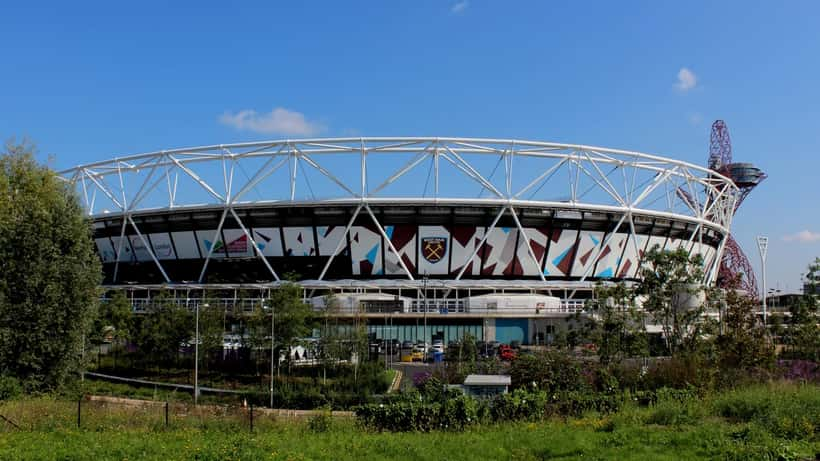
West Ham United's relegation ends a sustained top-flight run that included European competition at the London Stadium. The financial scale of the drop is significant. The club will receive approximately £55 million in Premier League parachute payments during 2026/27 — a safety net for the club, but no compensation whatsoever for supporters who paid Premier League season-ticket prices.
Championship ticket pricing at the London Stadium is considerably lower than Premier League equivalents. According to the club's published pricing for 2026/27, mid-tier Category B seats that were priced at around £875 for Premier League football are now available in the Championship bracket for figures closer to £520. That gap of over £350 per seat — multiplied across thousands of season ticket holders — represents a material financial change in the product being delivered.
Under the Consumer Rights Act 2015, services must be provided as described at the time of purchase. Whether a season ticket sold as Premier League football, subsequently delivered as Championship football, constitutes a breach of that standard depends on two things: when you bought, and exactly what your club told you at the point of sale.
What the Consumer Rights Act 2015 Actually Says About Season Tickets
The Consumer Rights Act 2015 establishes that services in the UK must be provided with reasonable care and skill, within a reasonable time, and as described. The "as described" element is the most legally consequential for relegated clubs.
When a club sells a season ticket — particularly one marketed with explicit Premier League branding, fixture listings, or division-specific benefits — it is making an implicit representation about the nature of the service. If that representation turns out to be materially inaccurate because the club changes division before the season begins, consumers have grounds to argue the contract was based on a misrepresentation.
However, clubs routinely insert T&Cs that specifically exclude refunds in the event of relegation. Whether those clauses hold up is not a settled question. The Competition and Markets Authority (CMA) has issued guidance making clear that a contractual term cannot lawfully strip a consumer of rights they hold under statute. A clause that says "no refund on relegation" may not be enforceable if it defeats the purpose of the Consumer Rights Act.
It is also worth noting that if your season ticket was purchased via the club's website or over the phone, the Consumer Contracts (Information, Cancellation and Additional Charges) Regulations 2013 normally provide a 14-day cooling-off period. Football clubs typically invoke the exemption that applies to leisure services on fixed dates, but that exemption only applies once the event timetable is established — and if relegation had not occurred at the point of sale, the "fixed date" exception may not apply in the way clubs assume.
This is exactly the kind of nuanced legal question that demands specialist advice. Consumer law solicitors who work in this area routinely advise fans that outcomes often depend on the specific wording of the club's acceptance email rather than any general rule. You can also explore how employment and sports contracts handle unexpected divisional changes in our analysis of how West Ham's Jarrod Bowen navigated the transfer clause process.
Timing Is Everything: The Critical Purchase Window
Not all season ticket holders are in the same legal position. Consumer law experts draw a clear distinction based on when the purchase was made relative to the club's relegation being confirmed.
Purchased before relegation was confirmed: This is the strongest legal position. If West Ham sold 2026/27 season tickets during the spring — when relegation was a real possibility but not yet mathematically certain — the club was selling a product it could not guarantee. Any written marketing material referring to Premier League football, or confirming a seat for the "Premier League 2026/27 season," may constitute the kind of misrepresentation that voids the original contract.
Purchased after relegation but before official division change: Fans who bought at this stage were on weaker ground. The club's relegation was known, and any reasonable purchaser could be expected to understand the division would change. However, if the club's communications remained ambiguous or if the purchasing system had not been updated to reflect Championship status, there may still be grounds for complaint.
Purchased after the Championship season was fully announced: Here, the consumer had full information at the time of purchase. No refund rights based on misrepresentation would apply, though cooling-off rules might still offer a brief window.
A Concrete Case: The West Ham Fan Who Bought in March 2026
Consider a specific scenario: a West Ham supporter who purchased a Category B season ticket in March 2026 for £875. At that point, West Ham were in the bottom three but technically still capable of survival. The ticket confirmation email bore Premier League branding and included a fixture list against Premier League opponents.
By June 2026, West Ham were relegated. The club emailed season ticket holders confirming their seat would be valid for Championship matches, with a revised pricing schedule reflecting the new division. No refund was offered. The fan is now paying £875 for a seat the club is selling to new buyers at £520 — a difference of £355.
Under this scenario, the following options are open:
- Section 75 chargeback (credit card): If the £875 was charged to a credit card and exceeded £100, Section 75 of the Consumer Credit Act 1974 makes the card issuer jointly liable with the retailer. The fan can file a chargeback dispute arguing the service was not delivered as described. Success rates in clear misrepresentation cases are high.
- Debit card chargeback: Visa and Mastercard's chargeback schemes allow disputes on debit card transactions, typically within 120 days of the charge. The standard is slightly lower than Section 75 but the outcome is similar.
- Formal written complaint to West Ham: Under consumer law, a complaint must be submitted in writing, specifying the basis in the Consumer Rights Act 2015 and the specific remedy sought (in this case, a refund of £355). The club has 14 days to respond before further action is appropriate.
- Small Claims Court: For amounts under £10,000, England's Small Claims Track provides a low-cost route. Court fees start at £35. Clubs rarely contest these claims once proceedings are issued — the reputational and legal cost of defending "we think £875 is fair for Championship football" in court is significant.
If the chargeback is raised within 120 days of the purchase date, the fan has the strongest available route without needing to initiate court action. The key document to attach: the original confirmation email showing Premier League branding or fixture references.
What West Ham Season Ticket Holders Should Do Now
The Stevenage friendly marks the beginning of West Ham's Championship era. For fans uncertain about their legal position, the window for acting on pre-relegation purchases remains open — but not indefinitely.
1. Find your original purchase confirmation. The exact wording at the point of sale is the most important piece of evidence you have. Screenshots of the booking confirmation, marketing emails, and any written terms provided at purchase are all relevant.
2. Compare prices formally. Obtain the current Championship equivalent pricing for your exact seat category from the West Ham website. Document the gap — this is the quantum of your potential claim.
3. Write to the club first. Any formal legal process requires you to demonstrate that you attempted to resolve the dispute directly. A written complaint citing the Consumer Rights Act 2015 and requesting a partial refund equal to the price differential is the correct first step. Send by email and request a read receipt.
4. Act within 120 days of your purchase date. If you paid by card, the chargeback window closes 120 days after the transaction date, not the date of the match. Don't wait for the first Championship fixture before checking whether this route is still open.
5. Seek specialist advice before the season kicks off. Consumer law solicitors who specialise in sports and leisure contracts can assess whether your specific T&Cs — and the wording of your club communications — support a legal claim. Many offer fixed-fee initial consultations. A season ticket dispute of £300-£400 is well within the range where professional advice pays for itself.
This article provides general information about UK consumer law and should not be taken as legal advice. If you have a specific dispute with a football club regarding season ticket refunds, you should consult a qualified consumer law solicitor. The legal position may vary depending on your individual circumstances and the specific terms of your purchase.
