Weather Tomorrow Forecast: Why Expert Advice Matters More Than Ever in 2026
Every evening, millions of people in the United Kingdom open a search engine and type the same urgent question: “weather tomorrow.” It is one of the most common informational queries on the internet, driven by a simple, universal need—to know whether the next day will bring sunshine, rain, frost, or storms. Yet behind that innocent three-word search lies a surprisingly complex world of atmospheric science, risk management, and personal decision-making. In 2026, as climate patterns become more volatile and the cost of weather-related disruption rises, getting an accurate forecast is no longer just a convenience. It is a financial, health, and lifestyle priority.
The hidden complexity of “weather tomorrow”
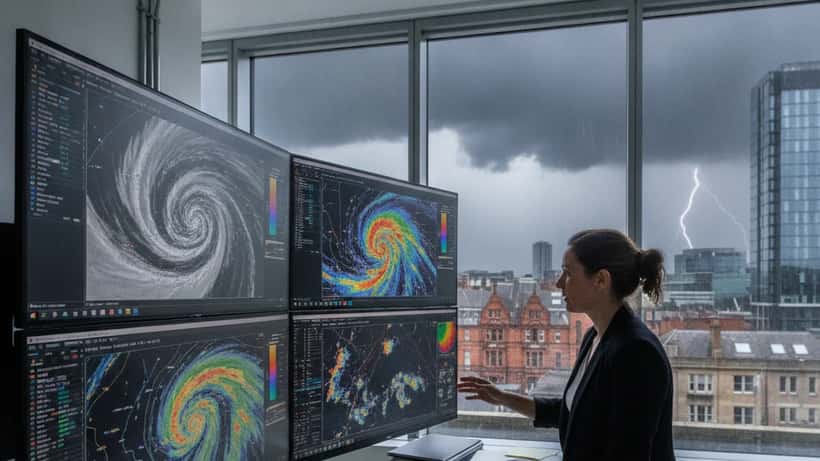
A daily forecast may look straightforward on a smartphone screen, but producing it involves satellites, radar networks, supercomputers, and skilled meteorologists interpreting multiple atmospheric models. The UK’s position between the Atlantic Ocean and continental Europe makes it especially vulnerable to rapid weather changes. A warm front moving in from the southwest can collide with cold polar air within hours, producing conditions that automated apps often underestimate.
This is where expert meteorological consultation becomes valuable. General-purpose weather apps are designed for broad audiences. They provide averages and probabilities for entire postal districts. They rarely account for microclimates, coastal exposure, elevation, or local topography. If you are planning a wedding in the Cotswolds, scheduling a roofing job in Manchester, or deciding whether to spray crops in East Anglia, a generic “weather tomorrow” result can be misleading. A qualified meteorologist can translate raw model data into site-specific guidance.
When tomorrow’s weather affects your money
For many households and businesses, tomorrow’s forecast has direct financial consequences. Consider the following scenarios that play out across Britain every week:
- Home improvement and repairs: Builders, painters, and landscapers lose money when rain interrupts an exterior project. A reliable 24-hour forecast helps contractors schedule labour and materials more efficiently.
- Events and hospitality: Outdoor festivals, farmers’ markets, and sporting fixtures depend on accurate weather intelligence. A shift in wind direction or a band of showers can change staffing, equipment, and insurance requirements.
- Agriculture: Farmers use short-term forecasts to time irrigation, harvesting, and livestock movements. A frost warning issued 12 hours early can save an entire crop.
- Transport and logistics: Haulage companies, airlines, and ferry operators adjust routes based on expected visibility, wind shear, and precipitation.
- Health and wellbeing: Older adults and people with respiratory conditions may need to limit outdoor activity during high-pollen days, cold snaps, or heatwave conditions.
In each case, “weather tomorrow” is not a casual query. It is a planning input with measurable impact. Expert advice can turn a vague forecast into an actionable plan.
The 2026 context: more data, more uncertainty
Climate scientists note that 2026 is continuing a trend of more energetic weather systems over the North Atlantic. The jet stream has shown increased meandering, which can trap low-pressure systems over the UK for days or pull tropical warmth northwards with little warning. This means that even short-range forecasts now require more frequent updates and more careful interpretation.
Artificial intelligence has improved forecasting speed dramatically. Machine-learning models can now generate rainfall predictions in seconds rather than hours. However, speed is not the same as context. An AI model may correctly predict a 70 percent chance of rain but cannot tell a homeowner whether their specific street is prone to surface flooding, or whether a wedding marquee should be reinforced against gusts. Human experts still provide the judgment layer that sits between raw data and real-world decisions.
How to read a weather forecast like an expert
If you want to get more value from your “weather tomorrow” search, here are five practical tips used by professional forecasters:
- Check multiple sources. Compare the Met Office, reputable private providers, and local meteorological services. If they disagree, uncertainty is high.
- Look at probability, not just icons. A 30 percent chance of rain is not “dry.” It means roughly one in three chance of measurable rainfall.
- Consider the timing. A forecast showing rain “tomorrow” may mean light morning drizzle or an intense afternoon thunderstorm. Timing changes everything.
- Think local. Coastal towns, valleys, and cities can experience very different conditions from the regional average.
- Update before bed. Weather models run on six- or twelve-hour cycles. The forecast you saw at lunchtime may have changed significantly by evening.
For high-stakes decisions, these tips are a starting point, not a substitute for professional guidance.
Where expert consultation adds value
The Expert Zoom marketplace connects individuals and businesses with specialists who can interpret tomorrow’s weather in context. A homeowner worried about storm damage can speak with a building surveyor. An event planner can consult a risk advisor about cancellation protocols. A farmer can get a second opinion from an agronomist on whether conditions favour sowing or harvesting.
This expert layer becomes especially important when weather interacts with regulation or insurance. For example, if high winds are forecast, a business may need to document precautionary measures to satisfy policy conditions. If flooding is possible, landlords and tenants may need clarity on responsibility for drainage and emergency access. In these situations, a forecast alone is not enough. You need someone who understands both the science and the practical implications.
Conclusion
“Weather tomorrow” will remain one of the most searched phrases in the UK because the weather touches almost every part of daily life. But in 2026, the smartest users are moving beyond the basic app forecast. They are treating weather intelligence as a specialist input and consulting experts who can translate atmospheric signals into personal, financial, and operational decisions. Whether you are protecting a home, running a business, or caring for your health, expert advice can help you face tomorrow with confidence—whatever the sky brings.
