 Christopher Bell
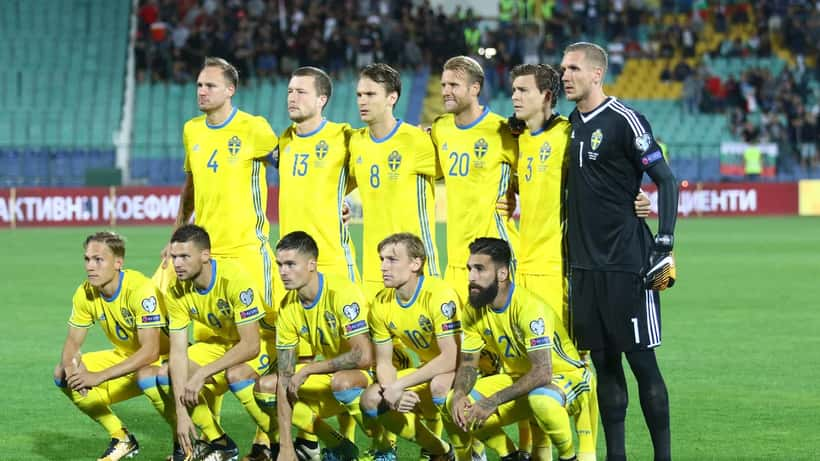
Sweden defeated Romania 2-1 in the UEFA Nations League at Strawberry Arena in Stockholm on 25 September 2026, but the match's decisive moment almost didn't stand. A Video Assistant Referee review into a potential handball by Swedish forward Elliot Stroud held up the winning goal for four minutes — long enough to spark a heated debate on social media, in commentary boxes, and across UK living rooms. The controversy is far from isolated: VAR has been at the centre of a growing storm in football throughout 2026, and the Sweden–Romania case raises questions that go well beyond sport.
The Handball Decision That Held Up a Nation
VAR reviewed the play in the build-up to Stroud's shot, checking whether the ball had struck his arm before reaching the net. After a prolonged review that stretched to four minutes, the goal was allowed to stand. Romania's players were furious; Swedish fans exhaled with relief. The final score — 2-1 to Sweden — effectively settled the evening's Nations League standings.
The frustration was not just with the outcome, but with the opacity of the process. Fans watching on streaming services in the UK saw the referee walk to the pitchside monitor, watch the footage, and then point to the centre circle — but no graphic appeared explaining what was reviewed or why the call went the way it did. That absence of transparency has become a recurring complaint in 2026: at the World Cup in June, a critical penalty review involving Qatar and Switzerland produced no on-screen infographic at all, leaving supporters across the world — and several professional commentators — unable to tell what technology had actually decided.
How VAR Actually Makes Its Calls
VAR systems rely on a combination of high-definition multi-angle cameras, computer vision algorithms, and human operators who initiate reviews. The technology itself is certified by FIFA and the International Football Association Board (IFAB), the body responsible for the Laws of the Game. IFAB approved updated VAR protocols ahead of the 2026 season specifically to address concerns about marginal calls and communication failures — yet those problems have persisted.
For offside decisions, the system uses skeletal-mapping software to plot body positions at the precise frame a pass is played, accurate to fractions of a centimetre. The precision is genuinely remarkable, but it has created its own controversy: goals have been disallowed for margins invisible to the naked eye, sometimes for a toe or shoulder that was "ahead" by a matter of millimetres.
For handball calls like the one in tonight's Sweden–Romania game, the technology is less deterministic. A handball review requires human operators to assess intent and body position — the algorithm can confirm where the ball struck, but whether that contact was deliberate or natural remains a judgement call made by a human sitting in a remote review centre, watching the same frames you are, and making a decision under time pressure.
This is where IT experts argue the real gap lies: football has adopted the tools of machine-vision and computer-aided decision-making without necessarily building the oversight frameworks, audit trails, and error-reporting standards that those tools require in any other industry.
What the Expert Reaction Tells Us
IT consultants who work with automated decision systems in regulated industries — from financial trading algorithms to medical imaging — point to several structural weaknesses in VAR's current implementation that would be unacceptable in other contexts.
"In any automated system used to make material decisions, you need a documented audit trail that stakeholders can inspect after the fact," explains the kind of IT expert you'd find consulting for sports organisations, broadcasters, or technology vendors. "The fact that a VAR decision can be made without a publicly accessible log of the frames reviewed, the algorithm version used, or the operator's decision pathway is actually unusual by the standards of any other industry that uses automated judgement."
The 2026 Premier League season has already seen one significant admission: the league acknowledged a VAR error in the Arsenal versus Aston Villa match that wrongly disallowed a goal, citing a misapplication of the offside protocol. The correction came after the match had concluded, meaning it affected the result of a real game with real sporting and financial consequences — but no recourse was available to the affected club.
For clubs, broadcasters, and technology companies operating in this space, the question increasingly is not whether VAR makes mistakes, but how those mistakes are managed, communicated, and — where possible — corrected.
When Technology Decides: A Concrete Case for UK Organisations
Consider this scenario: a UK-based sports analytics company is evaluating a computer-vision platform that promises to automate performance analysis and foul detection for lower-league football clubs. The vendor quotes £18,000 for a one-year licence covering video review, automated event tagging, and a disputes dashboard. The startup's technical director runs the tool through a basic demo but lacks the internal expertise to interrogate the underlying system architecture.
Before signing, they engage an IT consultant through Expert Zoom. The consultant reviews the platform's technical documentation and runs a benchmark test against a set of 200 historical match clips. The results show the system achieves 97% accuracy on offside calls but only 89% accuracy on handball events — an 11% error rate on the exact category of call that caused tonight's controversy in Stockholm.
If that 11% error rate applied across 250 club-level matches a year, it would generate approximately 27 incorrect automated decisions annually — each one potentially subject to a formal dispute from a club that lost a game partly on that call. The licence fee aside, the club's liability exposure from disputed results and reputational risk from a contested automation tool could run well into five figures.
The IT expert's recommendation: negotiate a conditional licence at £9,500 for six months, with a break clause tied to accuracy benchmarks, before committing to the full term. That single consultation, typically costing a fraction of the difference, changes a potentially costly contract into a measured, evidence-based commitment.
This is the if/then logic that automated systems demand: if a technology makes decisions with real consequences — financial, sporting, or legal — then the organisation deploying it needs external, independent verification of its accuracy and failure modes before going live.
The Broader Transparency Challenge in 2026
VAR's credibility problem in 2026 is, at its core, an IT governance problem. The cameras and algorithms work. The data pipeline is sophisticated. What is missing is the layer of accountability that technology deployments in any other consequential context are expected to have: clear documentation, explainability, appeals processes, and public reporting on error rates.
IFAB has acknowledged these concerns and is working on updated transparency requirements for VAR providers, including mandatory post-match disclosure of the specific frames and criteria used in each review. Those changes are expected to roll out during 2027 — meaning the current season, including tonight's Nations League fixtures, operates under a system where the technology is trusted but not, in any formal sense, verifiable.
UK fans watching the Sweden–Romania match on streaming services had no way of knowing what Elliot Stroud's arm did or didn't do at the moment of the shot. They simply had to trust that the room full of operators in a remote VAR centre reached the right conclusion. That is a reasonable position in sport. In business, in healthcare, or in any regulated sector, it is not.
What to Do When You're Navigating Automated Decisions
Whether you are a sports organisation evaluating video analysis software, a broadcaster managing streaming disputes, or a business considering any AI-assisted decision tool, the questions raised by tonight's Sweden–Romania VAR call are practical ones:
- Can you independently verify the accuracy of the system before it goes live?
- Is there an audit trail for decisions that go wrong?
- Who is accountable — the algorithm, the operator, or the vendor?
- What contractual protections apply if the system produces incorrect outcomes?
An IT consultant can help you design the governance framework that automated tools require, assess vendor claims about accuracy and reliability, and build the documentation that protects your organisation if a decision is ever challenged. The IT specialists on Expert Zoom work with organisations across the UK navigating exactly these questions — from sports technology to enterprise AI adoption.
For the bigger picture on how technology decisions intersect with legal accountability in football, the Expert Zoom guide to UEFA penalty complaint procedures and VAR sports law covers the legal side of the same systemic issue.
Tonight's match is over. The goal stands. But the question of whether VAR — and by extension, every automated decision tool — is being used with the rigour its consequences demand is one that will not go away.
