 Harriet Price
Netflix's new British thriller Unchosen launches on 21 April 2026, following Rosie — a devoted wife trapped in a secretive Christian community run by the controlling figure of Mr Phillips. As the series reaches audiences across the UK, it arrives at a moment when awareness of cult coercion and psychological control is higher than it has been in decades. The show has already sparked intense interest in the real legal protections available to people in similar situations.
What Is Unchosen About?
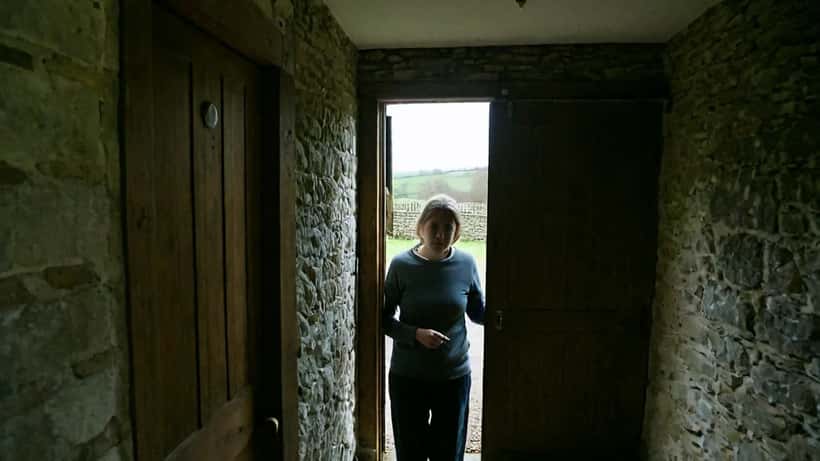
Created by Julie Gearey (Intergalactic), Unchosen is a six-episode psychological thriller built on interviews with real cult survivors. Its fictional setting is closely inspired by the Bruderhof — an actual Christian communal sect with branches in southern England. Christopher Eccleston plays Mr Phillips, the religious leader who shapes every aspect of life inside the community, while Molly Windsor plays Rosie, a woman beginning to question the world she has always known.
The series explores how a community can exercise total control over its members without ever resorting to physical violence — through social isolation, emotional manipulation, fear of expulsion, and the dismantling of individual identity. The question the show asks is deceptively simple: when does a faith community cross the line from spiritual guidance into coercive control?
The UK Law That Applies to Cult-Style Coercion
Many viewers will be surprised to learn that the UK has specific criminal legislation that directly addresses the kind of coercive dynamics portrayed in Unchosen. The Serious Crime Act 2015 introduced the offence of controlling or coercive behaviour in an intimate or family relationship — a law that came into force in December 2015. It carries a maximum sentence of five years' imprisonment.
Under the Domestic Abuse Act 2021, the definition of domestic abuse was formally expanded to include economic abuse and coercive or controlling behaviour — not just physical violence. Crucially, the law applies to behaviour between people who are "personally connected", which includes spouses, family members living together, and people in intimate relationships. A religious community leader who exercises control over members through their family relationships could, in some circumstances, fall within this framework.
The 2015 Act also introduced new protections around forced marriage. The Forced Marriage (Civil Protection) Act 2007 had already made forced marriage a civil matter; from 16 June 2014, it became a criminal offence under the Anti-social Behaviour, Crime and Policing Act 2014, carrying a maximum sentence of seven years.
For survivors of cult environments who were raised inside such communities — as many Bruderhof members are — the question of consent is particularly complex. UK courts have grappled with the legal status of individuals who were never given a genuine choice about their membership.
What Legal Options Do People in Controlling Situations Have?
If Unchosen has prompted you to think about your own situation or that of someone you know, here is a grounded overview of the legal options available in England and Wales.
Coercive control: If you are experiencing controlling behaviour in a domestic context — your spouse, partner, or a family member preventing you from working, isolating you from friends, monitoring your communications, or dictating your religious practice — this is potentially a criminal matter. You can report it to the police. A solicitor specialising in domestic abuse can advise you confidentially on whether your situation meets the threshold for a formal complaint.
Forced marriage: The Forced Marriage Unit (FMU), run jointly by the Home Office and Foreign Commonwealth & Development Office, provides direct assistance to people who fear being forced into marriage or who have already been. In 2023, the FMU handled 1,049 potential cases. If you are under pressure to marry against your will, the FMU can provide practical support, including assistance with overseas situations. The helpline is 020 7008 0151.
Leaving a community: There is no law preventing an adult from leaving a religious community in the UK. However, individuals raised inside closed communities may face significant practical barriers: no National Insurance number, gaps in formal education or employment history, no independent financial history. A legal adviser can help navigate the practical steps required to establish legal independence, access benefits, or contest decisions made on your behalf without your consent while you were a minor.
Child protection: If there are children in a controlling religious community situation, their welfare is governed by the Children Act 1989 and related legislation. Social services can investigate welfare concerns regardless of whether the context is religious. The threshold for intervention is the same whether or not a faith dimension is present.
Why This Matters Beyond the Drama
The timing of Unchosen is significant. In the UK, awareness of coercive control as a form of abuse has grown substantially since the 2015 legislation. According to the Office for National Statistics, 2.1 million adults in England and Wales experienced domestic abuse in the year ending March 2024. A growing proportion of those cases involve non-physical coercion.
Yet awareness of the specific legal tools available — coercive control charges, domestic abuse protection orders, forced marriage protection orders, special measures in court — remains patchy, particularly for people whose experience of control happened within a religious or communal context rather than a conventional domestic relationship.
See also: The real legal reality of coercive control in the UK, which explores how popular drama continues to drive awareness of a law that changed how England and Wales understands psychological abuse.
If a programme like Unchosen has resonated with your experience, or if you are uncertain whether your circumstances have legal dimensions you have not yet considered, speaking to a solicitor is the right first step. An initial legal consultation is confidential, and many solicitors who handle domestic abuse and family law cases offer a free first appointment.
Legal disclaimer: This article is for general informational purposes only and does not constitute legal advice. If you are in danger, contact the police on 999 or the National Domestic Abuse Helpline on 0808 2000 247.
