 Eleanor Vaughan
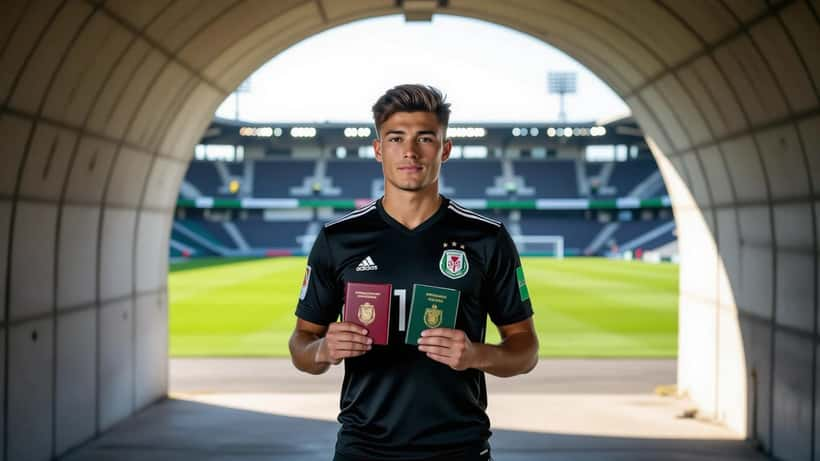
When Curaçao walked out at the 2026 FIFA World Cup this summer, midfielder Tyrese Noslin carried more than a shirt for the smallest nation ever to reach the tournament. The 22-year-old SC Telstar player was born and raised in the Netherlands, yet he lines up for a Caribbean island of fewer than 160,000 people — a choice governed not by geography but by a tangle of nationality and eligibility rules that quietly shapes hundreds of professional careers.
Curaçao sealed its place on 18 November 2025 with a goalless draw against Jamaica, topping its CONCACAF group under veteran coach Dick Advocaat, according to Sky Sports. With a population smaller than a mid-sized English town, it became the smallest nation by both area and population to qualify for a men's World Cup. The squad that made history, per Olympics.com, was built largely from Dutch-born players with Curaçaoan heritage — Noslin among them.
Why heritage, not birthplace, decided his World Cup
Curaçao is a constituent country of the Kingdom of the Netherlands. That constitutional link means many players eligible for the island hold Dutch passports and grew up in Dutch academies, yet qualify to represent Curaçao through parentage or ancestry. FIFA's eligibility framework allows a player to switch or choose an association where a genuine connection exists — birth, a parent or grandparent born there, or long-term residence — provided strict conditions are met before a competitive senior cap ties them permanently.
For Noslin, the pathway ran through heritage rather than the country on his birth certificate. It is the same mechanism that has reshaped international football across the Caribbean and Africa for a decade, and it is far more common than most fans realise. The decision is rarely simple. It touches passports, tax residency, future transfers and, occasionally, military or civic obligations in a second country.
The eligibility question British readers keep asking
This is not a distant Caribbean curiosity. England's own game is full of players raised in one country who represent another through ancestry — think of the steady flow of English-born professionals who have chosen Jamaica, Nigeria, Ireland or Ghana. Every one of those decisions rests on documented proof of a qualifying ancestor and, crucially, on timing.
The trap is that a single competitive appearance for a senior national team can lock a player in for life, subject to narrow exceptions FIFA introduced in 2020 for those with limited caps. Get the paperwork wrong, or accept a call-up before the family history is verified, and a promising dual-eligible teenager can find future options closed. That is where professional advice stops being optional.
Where a lawyer earns their fee
A sports or immigration solicitor working on an eligibility case does unglamorous but decisive work long before any anthem plays. The core tasks tend to cluster around a few areas.
First, proving the bloodline. Establishing a grandparent's place of birth can mean chasing civil registry records across two or three jurisdictions, translating and legalising certificates, and confirming they satisfy the receiving association's rules. A gap in a paper trail from the 1950s can stall a call-up for months.
Second, securing the second nationality itself. Representing a country through ancestry often requires actually holding — or being entitled to — its citizenship. In the UK, holding more than one nationality is entirely lawful; the government confirms British nationals may hold dual citizenship without giving up their British status, as set out on the official GOV.UK dual citizenship guidance. Other states are far stricter, and some force a renunciation. A lawyer maps that terrain before a player commits.
Third, the knock-on consequences. Tax residency, work permits for the club country, image-rights structures and even inheritance can all shift when a young athlete formalises a second nationality. These are decisions with 20-year tails, made when the player is often still a teenager.
What it means beyond football
Noslin's story is a vivid version of a question thousands of ordinary families face: what am I actually entitled to through my parents and grandparents? A British resident with a Curaçaoan, Irish or Nigerian grandparent may hold rights they have never claimed — to a passport, to work abroad, or to pass citizenship to their own children. Those rights can also lapse if not registered within set deadlines.
The practical takeaway is the same whether the goal is a World Cup or a second passport for a family move. Nationality claims are documentary. They rise or fall on certificates, dates and correctly filed applications, and the rules differ sharply between countries. An immigration solicitor can confirm eligibility, gather and legalise the records, and flag the tax and residency consequences before anything is signed.
The bottom line
Tyrese Noslin's appearance for Curaçao is being remembered as a feel-good footnote to the smallest nation's giant leap. Underneath it sits a serious, technical process that decided which flag he could stand behind. For fans, it is trivia. For anyone with a mixed family tree and a decision to make — a call-up, a passport, a move overseas — it is a reminder to check the rules early and in writing.
If you believe you may hold rights through ancestry, a qualified immigration or nationality lawyer can assess your specific case. This article is general information, not legal advice, and eligibility rules vary by country and change over time; always confirm your position with a professional before acting.
