 John Green
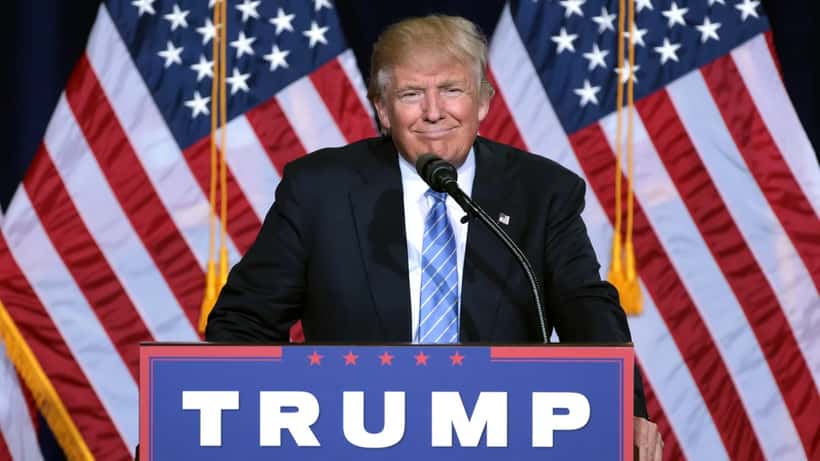
On 9 September 2026, President Donald Trump stood before the Republican National Committee's midterm convention in Dallas and made an extraordinary pledge: if Republicans retain control of both the House of Representatives and the Senate in November's midterm elections, every adult American will receive a one-off payment of $5,000 — what Trump is branding the "Trump dividend."
The announcement sent immediate ripples across global financial markets. For the 200,000-plus British nationals living and working in the United States, and for UK-based investors holding exposure to American equities, bonds, or dollar-denominated assets, the question is urgent: does this affect you, and what should you be doing about it right now?
This article is for informational purposes only and does not constitute financial advice. Consult a regulated wealth management adviser before making any investment decisions.
What exactly is Trump's $5,000 "dividend" — and how firm is the pledge?
The Trump dividend would represent one of the largest direct-payment programmes in US history. With approximately 260 million adults in the United States, the total cost would run to around $1.3 trillion — a figure that eclipses even the Covid-era stimulus cheques of 2020 and 2021.
However, there are critical caveats. First, the payment is explicitly conditional: Republicans must win both chambers of Congress in the November 2026 midterms, an outcome that is far from guaranteed. Second, Trump specified the money must be spent domestically in the United States — it cannot be transferred abroad or used outside the country. Third, and perhaps most significantly, US Vice President JD Vance appeared to walk back the promise within hours of Trump's Dallas speech, suggesting the pledge may be more electoral rhetoric than concrete fiscal policy.
That ambiguity matters enormously to financial planning. Markets react not just to policy, but to the credibility of policy. A trillion-dollar spending promise that may or may not materialise — depending on an election outcome and legislative will — introduces exactly the kind of volatility that moves exchange rates, bond yields, and equity valuations in both directions simultaneously.
Does the pledge qualify as credible policy — or is it an election gambit?
This is the question financial analysts have been asking since Wednesday evening. Several factors point toward scepticism. The United States is already running a significant fiscal deficit; adding $1.3 trillion in direct payments without a corresponding revenue source would push the national debt higher still and would almost certainly require Congressional approval — the same Congress whose composition is the condition of the pledge itself.
The walk-back by Vance also matters. Senior administration figures rarely publicly qualify a presidential announcement unless they are managing expectations or distancing themselves from a promise they know is unlikely to be kept. For UK investors trying to model scenarios, the honest answer is: treat this as a possible tail risk, not a base case.
Political futures markets — which are legal and regulated in several jurisdictions — were pricing in a Republican midterm victory at roughly 50-55% as of this writing, reflecting a genuinely uncertain outcome. That uncertainty is itself a market event.
Are British expats in the US eligible for the $5,000 payment?
This is the most immediately pressing question for UK nationals living stateside. The short answer, based on current indications: almost certainly not.
The "Trump dividend," as described, is structured as a payment to "every adult US citizen." That phrasing is legally significant. UK nationals living in the United States on work visas — including the H-1B, L-1, or O-1 — are not US citizens. Even green card holders, who hold lawful permanent residency, are not citizens and have historically been excluded from citizenship-specific benefit programmes.
Even naturalised British-Americans who hold dual nationality may find themselves in ambiguous territory, depending on how any enabling legislation is ultimately drafted — if it is drafted at all. The payment is not currently law; it is a campaign promise.
UK expats who had been mentally spending the money should treat it as unlikely to arrive. Anyone restructuring finances in anticipation of a $5,000 payment they probably will not receive is taking a significant financial risk — and may wish to speak with a cross-border financial adviser before making any major decisions.
Concrete case: A UK investor with a £30,000 S&P 500 ETF position
Consider this realistic scenario. Sarah, a 44-year-old secondary school teacher from Bristol, has £30,000 invested in a low-cost S&P 500 index tracker held within her Stocks and Shares ISA. At current exchange rates (approximately £1 = $1.25), her holding represents around $37,500 in US market terms.
If Trump's $5,000 dividend is confirmed as policy after a Republican midterm victory in November 2026, two distinct outcomes are plausible — and they pull in opposite directions.
Scenario A — stimulus euphoria (short term): Markets initially surge on the expectation of a $1.3 trillion boost to US consumer spending. The S&P 500 rises 4–6% in the weeks following the election result. Sarah's fund climbs to approximately £31,200–£31,800 in sterling terms — a gain of £1,200–£1,800. However, the Federal Reserve signals rate increases to counter expected inflation. Over the following three to six months, the S&P 500 gives back those gains as higher borrowing costs bite into corporate earnings. Sarah ends the year roughly where she started — or slightly below.
Scenario B — fiscal concern dominates (medium term): Bond markets sell off immediately on news of a $1.3 trillion spending commitment. US 10-year Treasury yields rise from their current level toward 5.5–6%. The dollar weakens 3–5% against sterling as inflation fears dominate safe-haven demand, pushing GBP/USD toward 1.29–1.31. Sarah's £30,000 S&P 500 position falls in value to approximately £27,600–£28,500 in sterling terms — a loss of £1,500–£2,400 — even if the US index in dollar terms falls only modestly. The currency move amplifies her loss.
The critical point: if Sarah does nothing, she is still making an active decision. Remaining fully invested in US equities at a moment of heightened political and fiscal uncertainty is a choice — and its consequences will depend on which scenario unfolds. Whether doing nothing is the right call depends on her investment horizon (if she is not accessing this money for 15+ years, short-term volatility matters less), her overall portfolio diversification, and her cash reserve cushion. According to the Financial Conduct Authority's guidance on international investment risks, currency fluctuation is consistently one of the most underestimated risks facing UK retail investors in overseas markets — and sudden political developments are among its primary triggers.
For more on how Trump's broader economic agenda is already affecting British businesses, see our earlier analysis of the UK-US trade deal's financial impact.
What should UK investors and expats do now?
The most important action right now is to avoid reacting to a pledge that has not yet become policy. Here is a structured approach for each group:
If you are a UK expat in the United States: Do not restructure your finances, make major purchases, or alter your savings plan based on a payment that may never arrive. If Republicans do win the midterms and legislation is passed, seek clarity on eligibility before spending. A lump-sum US payment may have UK tax consequences depending on your residency and domicile status — particularly if HMRC considers you UK-domiciled.
If you are a UK-based investor with US market exposure: Use this moment for a portfolio review. Ask: What percentage of my portfolio is in US equities? What is my net currency exposure after hedging? Am I comfortable with the additional volatility that US political uncertainty is introducing into my holdings? Consider whether your ISA or pension contributions are appropriately diversified across geographies.
For both groups: A wealth management specialist — particularly one with expertise in US-UK cross-border investment and currency risk — can help you stress-test your position against multiple midterm scenarios. The value of professional advice at a moment of genuine uncertainty lies not in predicting which scenario plays out, but in ensuring that whichever outcome arrives, you are not caught off guard.
ExpertZoom connects you directly with verified UK wealth management advisers who specialise in international market exposure, cross-border taxation, and tax-efficient portfolio structuring. A single consultation could save you from a reactive decision whose cost far exceeds any five-thousand-dollar dividend.
