 Grace Davies
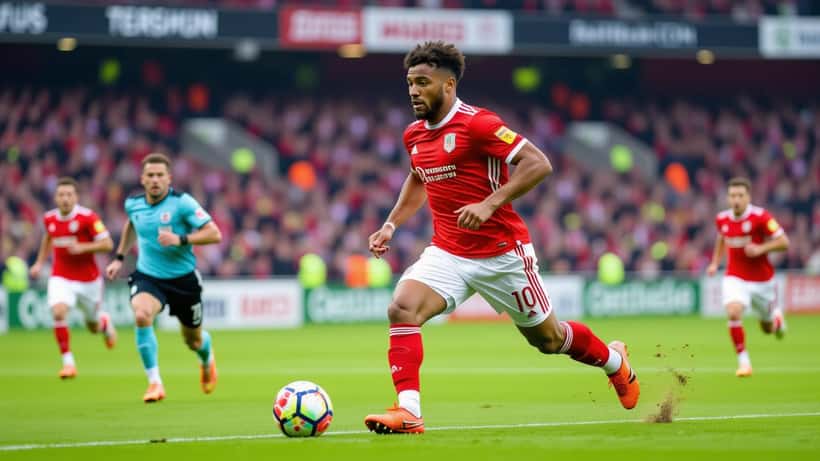
When Rochdale's Ian Henderson ran out against FC Halifax Town in a pre-season friendly last week and put the ball in the net, most observers focused on the score. What made the wider sports media take notice was the number on his birth certificate: 41. Now Henderson is in contention to start for Rochdale in the Carabao Cup preliminary-round tie at Tranmere Rovers on 1 August 2026 — meaning that one of English professional football's most experienced forwards could be competing in a competitive fixture at an age when the majority of players retired five or more years ago.
Henderson's potential inclusion in Rochdale's starting eleven today is not just a feel-good story. It forces a question that millions of recreational players across England quietly ask themselves every Saturday morning: is it actually safe to keep playing at this age, and would my body tell me if something was wrong?
Why Playing at 41 Is an Outlier — and What That Means for the Rest of Us
According to statistics compiled by CIES Football Observatory, the average age of retirement for professional outfield players in Europe's top leagues sits at approximately 35. Playing competitively at 41 — even in England's lower leagues — places Henderson among a very small historical cohort: Paolo Maldini, who retired at 40; Stuart Pearce, who played on past 40; and a handful of goalkeeping exceptions that tend to distort the headline figures.
The reason this matters to ordinary people is not the performance side of the story — it is the physiology. Professional footballers like Henderson do not simply play until they feel fine and stop when they do not. They are screened, monitored, tested, and assessed continuously throughout their careers. A 41-year-old amateur who turns out for a Sunday league side every week, or who takes a lads' trip to five-a-side twice a month, has typically had none of that medical infrastructure around them.
The gap between those two situations is significant — not because playing sport at 41 is dangerous for most people, but because without any clinical baseline, warning signs can be missed for months or years before they become acute.
What the Evidence Shows About Exercise After 40
The central message from NHS England, the British Heart Foundation, and sports medicine bodies is consistent: exercise at 40 and beyond is not only safe for most adults — it is one of the most powerful interventions available to prevent chronic disease. Regular vigorous activity reduces the risk of cardiovascular disease, type 2 diabetes, certain cancers, dementia, and depression. The NHS recommends at least 150 minutes of moderate-intensity aerobic activity per week, or 75 minutes of vigorous activity such as competitive football.
But the data also identifies a specific set of physiological shifts that become relevant from the mid-30s onwards:
- Cardiac risk during exertion increases in men after age 35 and in women after menopause. Most sudden cardiac events during sport are caused by underlying structural conditions — hypertrophic cardiomyopathy in younger people, coronary artery disease in those over 40 — that can remain entirely asymptomatic until a triggering event.
- Musculoskeletal injury rates climb sharply after 35. Achilles tendon ruptures, which are historically associated with men in their 40s playing explosive sports, are among the most common presentations in NHS orthopaedic departments among recreational athletes.
- Recovery capacity diminishes measurably. The inflammatory response to muscle microtrauma takes significantly longer to resolve after 35, meaning that training loads sustainable at 25 carry a higher cumulative injury risk at 41 without structured rest and adequate recovery time.
Henderson, under professional medical supervision for his entire career, will have his risk factors actively managed. The average midfielder who still turns out for a Saturday afternoon amateur side does not.
What a Health Consultation Actually Involves
The NHS Health Check is available free to every adult in England aged 40 to 74, once every five years. It assesses blood pressure, cholesterol, blood sugar, BMI, and smoking status, and produces an overall cardiovascular risk score. For a recreational athlete with no symptoms and no relevant family history, this is the right and proportionate starting point — yet uptake nationally remains below 50 per cent of those eligible.
For anyone playing regular competitive sport — weekly matches, training sessions, or sustained high-intensity activity — a consultation with a GP or sports medicine specialist can go considerably further:
- Resting and exercise ECG to assess cardiac rhythm and function under load, particularly relevant for anyone with a family history of sudden cardiac death before age 55
- Echocardiography if an ECG reveals any abnormality in rhythm or conduction
- Musculoskeletal screening for previous injuries that were managed informally — an ankle sprain strapped and played through, a hamstring tear that settled without imaging — which may have left structural vulnerabilities that accumulate over subsequent seasons
- Blood panels covering inflammatory markers, hormonal levels, and metabolic indicators that are not captured in the standard NHS check
A private GP consultation for this kind of assessment ranges from approximately £80 to £180 in most English cities. A private cardiac screen covering ECG, echocardiogram, and relevant blood panels typically runs from £250 to £500. These are not compulsory investigations. But for someone who plays competitive sport weekly after 40 and has not had any formal health assessment in a decade, they represent a proportionate investment before the season resumes.
The Case of a 41-Year-Old Who Feels Fine — Until He Doesn't
Consider a 41-year-old man in Birkenhead — exactly the demographic that might be watching the Tranmere match today. He has played continuously in local Saturday league football since his mid-20s, keeps himself reasonably fit outside of football, and has never experienced a significant health event. Over the past six months, however, he has noticed occasional chest tightness when he pushes hard in the first ten minutes of a match. He has put it down to a poor warm-up.
Under NICE Clinical Guidelines CG95 on Chest Pain of Recent Onset, unexplained exertional chest tightness in a man over 40 warrants clinical assessment before he returns to vigorous sport. If his GP refers him for an exercise ECG and the result is normal, he can resume playing with clinical reassurance. If the ECG reveals ST-segment changes during exertion — a signal of possible ischaemic heart disease — the appropriate next step is cardiology referral, not another match.
The probability of a serious finding in a 41-year-old with no other risk factors is not high. But exertional chest tightness is one of the signals that, statistically, should not be attributed to conditioning or warming-up habits. A GP referral for an exercise ECG costs nothing via the NHS. A private cardiology consultation runs approximately £200 to £350. A private 24-hour Holter monitor — ordered if an arrhythmia is suspected — costs between £150 and £300 additionally.
If the outcome is reassuring, he is back on the pitch by September, playing with confidence rather than quietly wondering. If the outcome reveals an underlying condition, early identification changes the clinical prognosis significantly: atrial fibrillation, for instance, which affects approximately 1.4 million people in the UK, can be managed with anticoagulation and lifestyle adjustment once diagnosed, reducing stroke risk by roughly 65 per cent. Left undetected, it remains a material hazard during intense exertion.
The decisive variable is not his age. It is whether he has had the conversation with a clinician.
Signals That Should Prompt a Consultation Before Your Next Match
Not every over-40 recreational athlete requires urgent investigation, but certain signals warrant a health consultation before competitive play continues or resumes this season:
- Chest tightness, pressure, or pain during or immediately after exercise, even if it passes quickly
- Palpitations, a noticeably racing pulse, or an irregular heartbeat that does not settle within a few minutes of stopping
- Unexplained breathlessness that feels disproportionate to the level of exertion involved
- Dizziness, light-headedness, or any episode of near-fainting during physical activity
- Persistent joint pain lasting more than six weeks that has not responded to rest and over-the-counter analgesia
- A first-degree relative who experienced cardiac arrest or a heart attack before the age of 55
For anyone without these red flags, the NHS Health Check remains the right and proportionate first step — free, accessible through your GP practice, and designed specifically for the 40 to 74 age group.
Henderson's career at 41 is exceptional by any measure, and his presence in today's Carabao Cup tie is a testament to sustained conditioning, professional medical oversight, and an evidently intact competitive drive. Most professional athletes retire in their mid-to-late 30s not because they lack the motivation but because the physical cost of elite-level exertion can no longer be managed safely without the infrastructure that surrounds them. Henderson has that infrastructure. For the millions of amateur players whose weekly or fortnightly match represents their most intense sustained physical effort, the takeaway from his story is not that 41 is easy. It is that the right safeguards make 41 manageable — and those safeguards start with a health consultation.
This article contains general health information and is not a substitute for personalised medical advice. If you are experiencing any of the symptoms described, consult a qualified healthcare professional before continuing vigorous physical activity.
