 Amelia Ward
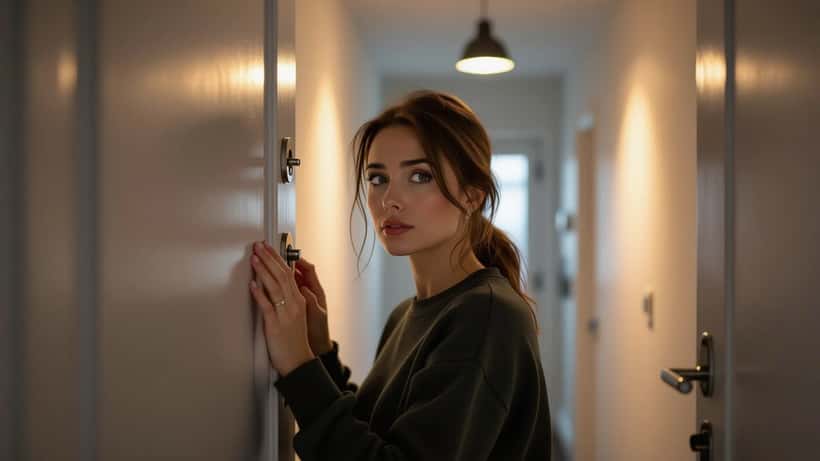
Louis Leterrier's sci-fi thriller The Last House landed on Netflix on 7 August 2026 and shot straight into the UK trending charts within hours. The film stars Greta Lee and Wagner Moura as a middle-class couple in Seattle who wake one morning to find every door and window of their home sealed from the outside by an invisible, unexplained force. Trapped with their children, with no means of escape and dwindling resources, they watch days become weeks, weeks become months, and months become years. For most UK viewers, it is a Friday-night thriller. For mental health professionals, it is something more pointed: an unusually precise on-screen dramatisation of entrapment anxiety — and a timely prompt about when the fear of being unable to leave a space crosses from discomfort into something that warrants professional support.
A Claustrophobic Premise for an Anxious Nation
The film carries a 35% Tomatometer score on Rotten Tomatoes from 26 critics, with reviewers divided on its plotting and pacing. What even its harshest critics acknowledge, however, is its atmosphere: The Hollywood Reporter described it as "claustrophobic" and "most effective while the threat remains unknown." That quality of sustained, domestic dread — the familiar home turned inescapable prison — is resonating with audiences in ways that go beyond conventional horror fandom.
Claustrophobia, the specific anxiety disorder centred on fear of enclosed or confined spaces, affects an estimated 10% of the UK population at some point in their lives, according to the NHS. More broadly, the Office for National Statistics reports that 37.1% of women and 29.9% of men in England currently report high levels of anxiety. These figures have not returned to pre-2020 levels, and The Last House arrives into a population whose baseline anxiety levels remain structurally elevated.
The film does not just use the home as a backdrop. It makes the home itself — the place most associated with safety, comfort and rest — the source of terror. For viewers carrying residual anxiety from pandemic lockdowns or other confinement experiences, that shift is not easy to shake off once the credits roll.
Why the Post-Lockdown Generation Is Particularly Susceptible
The clinical concept most relevant here is not classical claustrophobia — the fear of a physically small space — but what researchers have begun to call entrapment anxiety: a distinct anxiety response triggered by the perceived inability to exit a space, regardless of its physical size. Your home may be large. If you believe you cannot leave it, the fear response is neurologically equivalent to being trapped in a lift.
A 2020 systematic review in Frontiers in Psychiatry examined mental health outcomes across mandatory confinement periods in multiple countries during COVID-19. It found that entrapment anxiety was measurably distinct from generalised anxiety in its symptom signature. Critically, it correlated more strongly with perceived loss of control and duration of confinement than with any prior mental health diagnosis. Previously mentally healthy individuals developed it, often within two to four weeks of lockdown beginning.
Approximately 67 million people in Britain lived through mandatory confinement periods that lasted, cumulatively, more than a year. For some in that group — those who found lockdowns particularly distressing, or who carry unresolved anxiety from that period — The Last House can function as an unexpected emotional retrieval. Not every trigger announces itself clearly.
What Entrapment Anxiety Looks Like Day to Day
Claustrophobia and entrapment anxiety are classified as specific phobias under both the DSM-5 and the ICD-11. Onset can be acute — a panic attack triggered by a clearly identifiable stimulus — or gradual, with avoidance behaviour developing quietly over days or weeks before the individual recognises anything has changed.
Clinically recognised presentations include: physical symptoms during moments of perceived confinement or when merely thinking about confinement (elevated heart rate, shortness of breath, sweating, dizziness, chest tightness); avoidance of previously comfortable situations or transport options; intrusive mental imagery of being trapped or unable to leave; and disrupted sleep linked to related thoughts or dreams. A key clinical detail: the trigger does not need to be a real-world confinement situation. A film, a news story, or a vividly described scenario can initiate the same neurological response in someone primed for it.
Data from NHS Talking Therapies shows that anxiety disorders — including specific phobias — account for approximately 38% of all referrals to the service. Despite this, the Mental Health Foundation estimates the average gap between anxiety symptom onset and first professional contact in the UK remains around 18 months.
When the Credits Roll and the Anxiety Stays: A Case Study
Consider a scenario that is increasingly recognisable to therapists practising in UK cities. A 36-year-old woman in Manchester — call her Rachel — has no prior mental health diagnosis. She lived through the 2020–2022 lockdowns without what she would describe as significant difficulty. She watches The Last House on a Saturday evening in August 2026. Her palms are damp by the midpoint. She puts it down to good direction.
By Tuesday, she notices she is checking the front door is unlocked three times before leaving for work, where previously she checked it once. On Thursday, her commuter train stops in a tunnel; she experiences shortness of breath for around four minutes and counts the exits twice before the train moves. By the following week, she has chosen a different lunch spot — one with external seating — and declined an evening in a friend's basement flat, citing tiredness.
Here is the if/then that NHS clinical guidance makes explicit: if a person experiences two or more of the following for fourteen or more consecutive days — avoidance of previously comfortable spaces or transport, physical anxiety symptoms triggered by the thought of confinement rather than actual confinement, changes to daily routines specifically designed to keep an exit accessible, or sleep disruption linked to entrapment imagery — then clinical threshold for a specific phobia assessment is likely met, and professional evaluation is indicated.
In Rachel's case, early intervention with cognitive behavioural therapy (CBT) — the NICE-recommended first-line treatment for specific phobias in the UK — typically involves six to twelve structured sessions. Research consistently shows that when treatment begins within eight weeks of symptom onset, full or near-full remission rates exceed 80%. Waiting beyond six months roughly halves that figure. The intervention cost, in both time and money, is significantly lower at eight weeks than at eighteen months.
What to Do If the Film Follows You Home
For most UK viewers, The Last House will be a forgettable streaming experience. For others — particularly those who found pandemic confinement difficult, or those currently carrying high stress loads at home or at work — the film's premise may surface something that was already there.
The NHS offers self-referral to NHS Talking Therapies without requiring a GP referral for anyone in England whose anxiety symptoms are affecting daily functioning. Average initial assessment wait times currently run at four to six weeks nationally. For those who need support sooner, private consultations with psychologists and BACP-accredited therapists specialising in specific phobias and anxiety disorders are typically available within days. An initial appointment — generally 50 minutes — covers symptom history, frequency, duration, and functional impact, and results in a tailored treatment recommendation.
ExpertZoom connects people across the UK with verified health professionals and mental health specialists who can offer an initial consultation to clarify whether what they are experiencing is a subclinical response — manageable with self-help tools — or something that warrants structured therapeutic support.
The practical question The Last House leaves behind — after the Netflix logo returns and the autoplay moves to the next title — is a simple one: is the anxiety you felt during that film still present? Is it affecting a decision you are making today? If the answer is yes, that is a signal worth taking to a professional rather than waiting eighteen months to see if it resolves on its own.
This article addresses mental health topics. If you are experiencing a crisis or need immediate support, please contact the Samaritans on 116 123 (free, 24 hours a day, 7 days a week) or visit your nearest A&E department. The information in this article is provided for educational purposes only and does not substitute for professional medical, psychological, or therapeutic advice.
