 Agnes Maxwell
The Dublin Murders on Netflix: What Binge-Watching True Crime Does to Your Mental Health
The Dublin Murders has just landed on Netflix, bringing a new wave of viewers to the acclaimed BBC psychological thriller. Based on Tana French's celebrated Dublin Murder Squad novels, the eight-episode series follows two detectives through a web of violence, trauma, and psychological complexity. As millions binge-watch over this weekend, a growing body of research raises important questions: what does consuming dark, graphic crime drama do to our mental health?
What Is The Dublin Murders — and Why Is It Trending Now?
First broadcast on BBC One in October 2019, The Dublin Murders is an adaptation of Tana French's In the Woods and The Likeness. Starring Killian Scott as Detective Rob Reilly and Sarah Greene as Detective Cassie Maddox, the series earned critical praise for its atmospheric tension and psychologically complex characters.
As of March 2026, the series has newly arrived on Netflix, making it accessible to a far wider international audience. Within days, it jumped into trending charts across the UK. The timing is notable: true crime as a genre has seen explosive growth, with true crime podcasts and drama series consistently dominating streaming platforms.
The Psychology of True Crime Consumption
True crime content is uniquely compelling — and uniquely unsettling. Research published in psychological journals consistently shows that prolonged exposure to violent or disturbing content can affect viewers in several distinct ways.
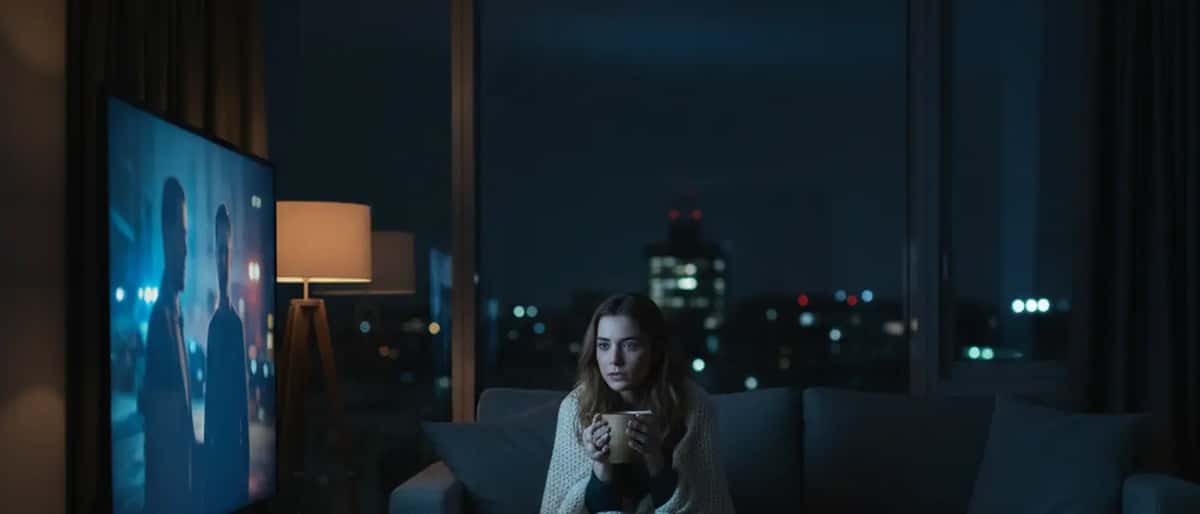
Heightened anxiety and hypervigilance are among the most commonly reported effects. Viewers describe feeling more fearful walking home alone, checking locks more frequently, or becoming hyper-aware of strangers after binge-watching crime dramas. For people already prone to anxiety disorders, this effect can be amplified significantly.
Sleep disturbances are another well-documented consequence. Graphic or disturbing imagery — especially consumed late at night — can interfere with the sleep cycle, trigger vivid dreams, or cause difficulty switching off mentally. A 2024 study from the University of Amsterdam found that viewers who watched crime drama within two hours of bedtime reported significantly worse sleep quality compared to those who watched nature documentaries or comedy.
Parasocial stress responses can also occur: viewers become emotionally invested in fictional victims and detectives, triggering genuine stress hormones as though the events were real. This is by design — good crime drama is engineered to make you feel the stakes are real.
When Does Entertainment Become a Problem?
For most people, watching The Dublin Murders is a perfectly healthy form of escapism. The issue arises when consumption patterns become compulsive or when the content begins to intrude on daily functioning.
Mental health professionals describe several warning signs to watch for:
- You feel anxious or unsafe in situations that wouldn't normally worry you
- You find yourself unable to stop watching even when you feel worse
- The content triggers intrusive thoughts that persist after the episode ends
- Your sleep is regularly disrupted by what you have watched
- You find yourself increasingly distrustful of people or situations in daily life
These signs don't mean you're experiencing a clinical disorder — but they are worth paying attention to. The key question is whether your media consumption is serving you or running counter to your wellbeing.
Why True Crime Is Particularly Psychologically Powerful
Part of what makes true crime — and psychological thrillers based on real crimes — so compelling is the way they engage our threat-detection instincts. The human brain is hard-wired to pay close attention to danger signals. Crime content hijacks this system, creating a state of sustained low-level arousal that can feel addictive.
For many viewers, particularly women who statistically make up the majority of true crime audiences, part of the appeal is practical: understanding how crimes happen and how perpetrators select victims feels like useful knowledge. Psychologists call this "morbid curiosity driven by survival instinct."
However, this can tip into what's sometimes called "crime anxiety" — a persistent, disproportionate fear of becoming a victim. If your perception of personal risk has been significantly distorted by what you watch, it's worth discussing with a mental health professional.
What to Do If You Feel Affected
If you're noticing the effects of true crime consumption on your mood, sleep, or anxiety levels, there are practical steps you can take:
- Create a buffer before bed: Switch to lighter content at least an hour before sleep
- Notice your feelings as you watch: If you feel dread rather than entertainment, pause and check in with yourself
- Balance your media diet: Alternate dark content with comedy, nature, or uplifting series
- Talk about it: Discussing fictional content with friends or a partner can help process difficult themes
If your anxiety, sleep problems, or intrusive thoughts persist, speaking with a mental health professional is a sensible step. Psychologists and therapists are trained to help with anxiety disorders, sleep disturbances, and trauma responses — including those triggered by media exposure.
Expert Zoom connects you with qualified mental health professionals who offer consultations online, at times that suit you. Whether you're dealing with anxiety, sleep issues, or simply want to understand your own reactions better, a specialist can provide evidence-based support.
Note: This article addresses the psychological impact of crime drama on general viewers. If you are experiencing severe anxiety, persistent trauma symptoms, or thoughts of self-harm, please contact a mental health professional or crisis service immediately.
