 Rebecca Shaw
Tilly the dog survived a 120-foot fall from a cliff near Peveril Point in Dorset on the evening of Sunday 25 May 2026, rescued by Swanage Coastguard and St Albans Coastguard Rescue Team after a drone operator spotted her on the rocks below. She showed no visible injuries. But veterinary professionals say that is exactly when owners must be most vigilant.
What Happened at Peveril Point
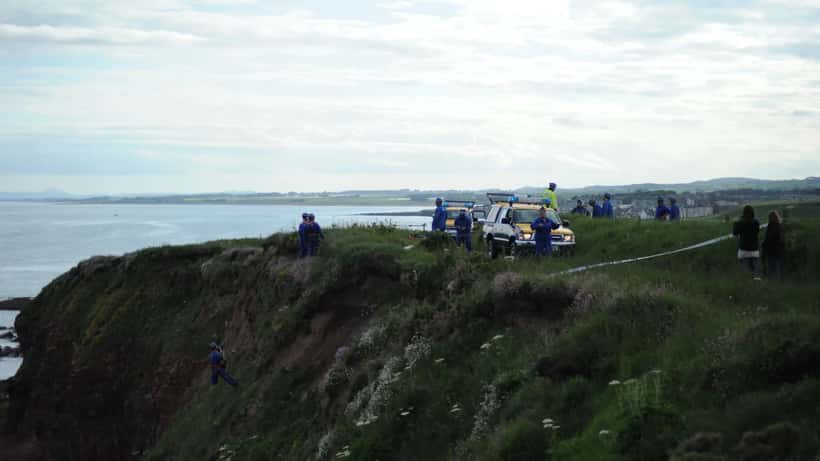
Shortly after 18:00 GMT on 25 May, Swanage Coastguard received a call about a dog that had gone over a cliff edge near Peveril Point, Swanage. Tilly had been walking with her owner along the coastal path when — most likely distracted by a sound or scent — she slipped over the edge, falling approximately 37 metres (120 feet) onto rocks and beach below.
A member of the public flying a drone in the area was able to locate both Tilly and her owner, who had made their way down to the beach below the cliffs. Rescuers from Swanage and St Albans coastguard stations safely assisted both back up the cliff face.
The incident prompted Swanage Coastguard to issue a public reminder: "Dogs are easily distracted by sounds and smells on a coastal walk and often they run off to chase a bird or animal not knowing they are near the edge of a cliff." The team urged owners to keep dogs on leads near any cliff edge.
Tilly's survival from a fall of that height is remarkable. It is also, according to vets, a reason for her owner to seek an immediate professional assessment — not to delay it.
Why "No Visible Injuries" Is Not the Same as Uninjured
The natural response after a scare like this is relief. The dog is walking, the tail is wagging, she seems herself. For many owners, that is enough.
Veterinary professionals are clear: it is not. Traumatic falls create a cascade of potential internal injuries that adrenaline, survival instinct, and pain tolerance can conceal for 24 to 72 hours. The absence of obvious signs is not a clinical assessment — it is a delay.
The most common hidden injuries following a fall from significant height include:
Pneumothorax (collapsed lung): The trauma of impact can allow air to enter the chest cavity, compressing one or both lungs. A dog may breathe relatively normally for several hours before respiratory distress develops and worsens rapidly.
Internal haemorrhage: Blunt abdominal trauma can rupture the spleen or cause hepatic (liver) lacerations. Bleeding may be slow and gradual at first, with the dog appearing stable until blood loss reaches a critical threshold.
Spinal micro-fractures: Even if a dog walks away from a fall, stress fractures along the vertebrae can be worsened by normal movement over the following 48 hours. A dog that runs after a fall may compound a fracture that would have been manageable with immediate rest.
Traumatic brain injury: A fall of 37 metres subjects the body to severe deceleration forces. Concussive injury to the brain may not manifest until hours later, presenting as unusual lethargy, disorientation, vomiting, or unequal pupil size.
Diaphragmatic hernia: The violent pressure of impact can tear the diaphragm, allowing abdominal organs to shift into the chest cavity. This condition is frequently missed without imaging and can be life-threatening.
The 48-Hour Window: What Symptoms to Watch For
Vets recommend treating any fall from more than one metre as a potential emergency, regardless of the dog's immediate presentation. For a fall of 37 metres, an emergency consultation is not a precaution — it is a clinical necessity.
Standard trauma assessment following a fall of this kind typically includes:
- Full physical examination with palpation of the chest and abdomen
- Thoracic auscultation — listening to lung and heart sounds for signs of pneumothorax or bleeding
- Radiographs of the chest and spine
- Blood panel to detect markers of internal bleeding or organ stress
- Neurological assessment checking reflexes, pain response, and pupil symmetry
If you cannot reach an emergency vet immediately after a fall, monitor your dog closely for:
- Laboured or rapid breathing
- Pale, white, or bluish gums — a sign of blood loss or circulatory shock
- Reluctance to move, or sudden stiffness after initial mobility
- Vomiting more than once
- Dilated or unequal pupils
- Confusion, circling, or inability to stand straight
Any of these symptoms require immediate emergency veterinary attention. Do not wait until the following morning.
Coastal Walks and the Risk Dog Owners Underestimate
Dorset's Jurassic Coast is one of the UK's most popular dog-walking destinations. Peveril Point, Ballard Down, and the cliffs around Old Harry Rocks attract hundreds of thousands of visitors each year, many with dogs. Sections of these paths feature sudden, unmarked drops where a dog moving at speed towards a sound or smell may reach the edge before an owner can react.
According to the Royal College of Veterinary Surgeons (RCVS), emergency trauma presentations following falls from height are among the most frequent acute cases in UK veterinary practices during summer months, particularly in coastal areas. The pattern is consistent year after year: owners are relieved when their dog appears fine, delay seeking assessment, and return to the vet 24 to 48 hours later when hidden injuries have progressed.
Keeping dogs on leads within at least 15 metres of any cliff edge — regardless of how trained or obedient they are — remains the most effective preventive measure. In an unfamiliar environment with new scents, even the most responsive dog can react faster than an owner can intervene.
Immediate Steps If Your Dog Falls From a Height
- Do not move your dog rapidly or allow jumping. Potential spinal injuries can be worsened by incorrect handling.
- In a coastal emergency, dial 999 and ask for the coastguard — they can assist with access to hard-to-reach areas and can help coordinate with emergency services on the ground.
- Contact your vet or emergency vet practice immediately, even if the dog appears calm and unhurt.
- Restrict movement — carry the dog if small enough, or keep them lying quietly until transport.
- Book a full trauma assessment before allowing normal activity to resume. Running, jumping, and climbing stairs should be restricted until a vet confirms it is safe.
If you are uncertain whether an emergency assessment is needed, or if your regular practice is closed, an online veterinary consultation can help you triage the situation and decide on the most appropriate next step.
Tilly's survival from a 120-foot fall is an extraordinary story. Her recovery should still be guided by a professional.
This article is for informational purposes only and does not replace professional veterinary advice. If your pet has suffered a fall or physical trauma, contact a qualified vet immediately.
