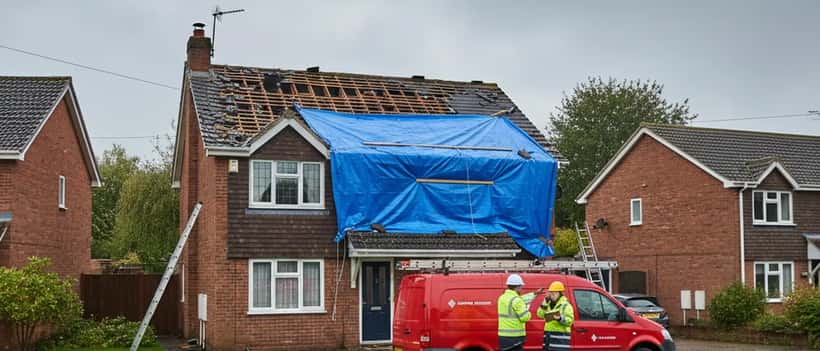
Adverse weather events pushed UK property insurance payouts to £6.1 billion in 2025, according to the Association of British Insurers (ABI), with Storm Goretti triggering red wind warnings and a major incident declaration in Somerset in January 2026. For homeowners facing storm damage, understanding what insurance covers—and when professional advice becomes essential—can mean the difference between a swift resolution and months of financial stress.
What Home Insurance Typically Covers After Storm Damage
Most standard home insurance policies in the UK cover storm damage under buildings insurance, which protects the structure of your property. This typically includes damage to roofs, walls, windows, and outbuildings caused by high winds, heavy rain, or falling debris during severe weather events.
Buildings insurance generally covers repairs to tiles blown off roofs, broken windows from wind-driven debris, structural damage from fallen trees, and water damage caused by storm-driven rain entering through damaged roofing or walls. The Met Office defines a storm as winds reaching Force 8 on the Beaufort Scale (39 mph or higher), which helps insurers determine valid claims.
Contents insurance, sold separately or as part of combined policies, protects personal belongings damaged by storms. This includes furniture ruined by rainwater leaking through storm-damaged roofs, electronics damaged by water ingress, and clothing or valuables destroyed in flooding events linked to the storm.
However, exclusions exist. Pre-existing damage, gradual deterioration, and lack of proper maintenance can void claims. Insurers expect homeowners to maintain their properties in reasonable condition, meaning neglected gutters or loose roof tiles may disqualify storm damage claims.
When Storm Damage Claims Become Complicated
Disputes frequently arise over what constitutes storm damage versus wear and tear. An insurer might argue that roof tiles fell due to age rather than Storm Goretti's winds, particularly if the property lacks recent maintenance records.
Excess payments also catch homeowners off guard. Standard home insurance policies require policyholders to pay the first £100 to £500 of any claim, with some storm-specific excesses reaching £1,000 or higher. Reading policy documents before disaster strikes prevents unpleasant surprises.
Underinsurance poses another major problem. If your buildings insurance covers £200,000 but rebuilding costs £300,000, insurers may reduce payouts proportionally. The ABI recommends reviewing coverage annually, particularly given construction cost inflation following the pandemic and supply chain disruptions.
Some policies exclude certain storm-related damage entirely. Damage to gates, fences, and hedges often requires specific cover. Flooding caused by blocked gutters might not qualify as insured storm damage. Solar panels, home offices, and recently added extensions may need separate declarations to ensure coverage.
The Role of Loss Adjusters and Independent Assessors
When storm damage exceeds £5,000, insurers typically appoint loss adjusters to assess claims. These professionals work for insurance companies and evaluate damage extent, repair costs, and policy coverage applicability.
Loss adjusters serve the insurer's interests, not yours. While many act fairly, their job involves minimizing payouts where policy terms allow. Homeowners facing complex claims or disputed assessments may benefit from hiring independent loss assessors or public adjusters who represent policyholder interests.
For structural damage assessments, find a certified tradesperson on Expert Zoom who can provide independent repair estimates. These quotes help verify whether insurer-appointed contractors are offering fair pricing and comprehensive repairs.
Chartered surveyors specializing in insurance claims can provide detailed structural reports supporting your claim. Their professional assessments carry weight in disputes, particularly when insurers underestimate repair costs or claim pre-existing damage caused the loss.
When Legal Advice Becomes Necessary
Most storm damage claims settle without legal intervention, but certain situations warrant professional guidance. If your insurer denies a claim you believe is valid, delays payment beyond reasonable timeframes, or offers settlements significantly below independent repair estimates, seeking legal advice on Expert Zoom may protect your interests.
The Financial Ombudsman Service handles insurance disputes for free, but complex cases involving substantial sums or disputed policy interpretations may require solicitor involvement before approaching the ombudsman. Insurance law specialists understand policy wording nuances and can identify whether insurers are applying terms correctly.
Legal professionals also help with landlord-tenant disputes following storm damage. Questions about who pays for temporary accommodation, whether rent reductions apply during repairs, and how deposit protection schemes interact with storm damage claims often require legal clarification.
For properties with multiple occupancy, shared buildings, or leasehold arrangements, determining liability and coverage between freeholders, leaseholders, and managing agents can become legally complex. Solicitors experienced in property law navigate these situations effectively.
Preventing Future Storm Damage and Insurance Issues
The climate crisis means extreme weather events are increasing in frequency and severity. The Met Office reported that the UK experienced more named storms in the 2020-2026 period than any previous six-year period on record.
Homeowners can reduce future storm damage risk through regular maintenance. Annual roof inspections, gutter cleaning, tree management near buildings, and securing loose items before storms minimize damage likelihood and strengthen insurance claims if disasters occur.
Some insurers offer premium discounts for storm-resistant improvements. Installing storm shutters, reinforcing roof structures, and upgrading to impact-resistant windows may qualify for reduced premiums while protecting your property.
Documenting your property's condition through photographs and maintenance records before storm season arrives creates valuable evidence for future claims. This documentation proves property condition prior to storms, making it harder for insurers to claim pre-existing damage caused losses.
Reviewing insurance policies annually ensures coverage keeps pace with property values and understands exclusions before emergencies strike. Speaking with insurance brokers rather than purchasing directly can reveal specialist providers offering better storm coverage for high-risk areas.
Taking Action After Storm Damage
When storm damage occurs, immediate action protects both your property and insurance claim. Contact your insurer within 24 hours, document all damage with photographs and videos, and make emergency repairs to prevent further damage while keeping receipts for reimbursement.
Avoid disposing of damaged items until insurers or loss adjusters inspect them, as evidence supports your claim. Keep detailed records of all communications with insurers, including phone call dates, reference numbers, and names of representatives you speak with.
For homeowners in Somerset and other areas affected by Storm Goretti in January 2026, understanding your rights and policy coverage determines whether insurance provides the protection you paid for. When disputes arise or complex damage requires assessment, connecting with qualified professionals through platforms like Expert Zoom ensures you receive expert guidance during stressful recovery periods.
Disclaimer: This article provides general information about home insurance and storm damage for educational purposes only. It does not constitute financial, legal, or insurance advice. Individual insurance policies vary significantly in terms, conditions, and exclusions. Readers should consult their specific policy documents and seek professional advice from qualified insurance advisors, solicitors, or financial professionals regarding their particular circumstances before making decisions about insurance claims or coverage.
Need help assessing storm damage or navigating insurance claims? Find certified tradespeople, legal experts, and insurance specialists on Expert Zoom to get the professional support you deserve.
