 Alistair Finch
About 1.9 million people experienced stalking in the year ending March 2026, the equivalent of 3.9% of people aged 16 and over, according to the figures published with the government's announcement of 26 November 2026. The same day, the Home Office and the Attorney General's Office set out the biggest shake-up of stalking laws since 2012: a new standalone stalking offence, and courts able to impose stalking protection orders directly from that date.
A 1.2% conviction rate sits behind the reform
The Suzy Lamplugh Trust puts the current conviction rate at only 1.2% of stalking incidents recorded by police. The trust calls that rate shockingly low and says it hopes a standalone law will reduce confusion and raise it. Paladin, another stalking charity, goes further and describes conviction rates as still willfully low.
The government's own reading of the problem is about the law itself. An independent review of stalking legislation, led by Richard Wright KC, found that the current legal framework can cause confusion and that stalking is often too difficult to distinguish from harassment. The review was commissioned after concerns were identified in the police handling of stalking, and it is published alongside the government's formal response.
Victims' Commissioner for England and Wales Claire Waxman OBE says the reform reflects concerns she first raised in her London Stalking Review more than two years ago, later reinforced by the stalking super-complaint.
The announcement also landed on the day Domestic Abuse Protection Orders came into force across England and Wales. Our guide to domestic abuse protection orders covers that separate tool, which the government describes as giving victims the strongest ever protections and law enforcement greater powers to intervene earlier.
One offence replaces two, and the test moves to the stalker's conduct
The standalone offence will replace the two offences that exist now. Ministers say a single, clearer offence will help authorities identify stalking and pursue perpetrators.
The main change concerns what has to be shown. Under the current law, stalking can be harder to prosecute where a victim does not show fear or is unaware of being stalked. The reforms aim to close that gap by shifting the focus onto the perpetrator's behaviour rather than how the victim responds. This includes consideration of a "reasonable person" test, which would judge the likely impact of the perpetrator's actions.
Alice Ruggles' parents, Clive Ruggles and Sue Hills, explain what that means in practice for victims. Their daughter was killed by her ex-boyfriend after a relentless campaign of stalking, ten years ago. Stalking became an offence in England and Wales 14 years ago. They say a single offence focused on behaviour removes the onus on police and the Crown Prosecution Service to prove the impact on the victim, so victims no longer have to admit how frightened they are, and it brings due protection for stoic victims like Alice.
The offence is not law yet. The government says it will legislate for the new standalone offence when parliamentary time allows, and the announcement gives no date. Paladin asks the government to think carefully about both the timing of any legislative amendments and the language used, so that terminology reflects the nature of stalking and can be applied consistently across all relevant agencies.
Stalking protection orders: what courts can do from 26 November
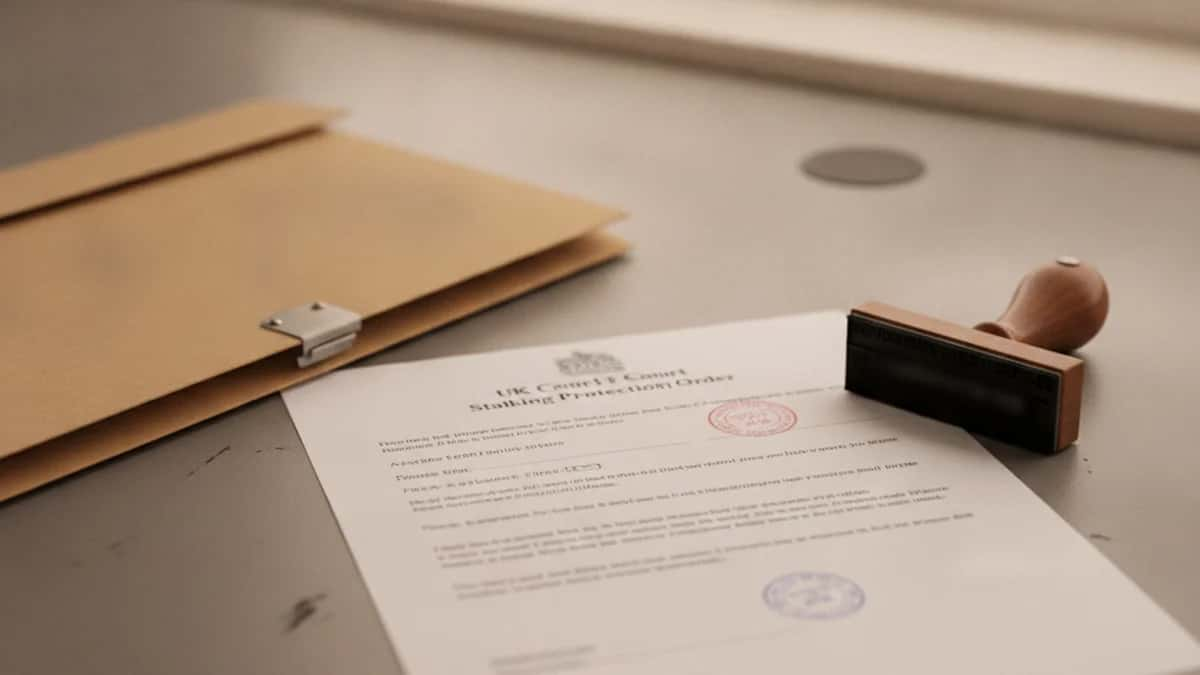
One part of the package does not wait for a bill. From 26 November 2026, courts can directly impose a stalking protection order (SPO) on perpetrators. These orders can restrict a perpetrator's behaviour and place requirements on them, even when there has been no criminal conviction.
Updated guidance on SPOs was welcomed by the leads for victims at the Association of Police and Crime Commissioners, Clare Moody (PCC for Avon and Somerset) and Matthew Scott (PCC for Kent). They say the guidance, together with wider availability of dedicated protective measures, will help build victims' trust and confidence in the justice system.
The Alice Ruggles Trust adds two points. It welcomes the commitment to strengthen the use of SPOs, and notes that for some cases a duty for courts to consider an SPO in every case on conviction or acquittal will be life-changing. It also stresses that SPOs should be applied for at the earliest possible point in an investigation, so that victims are safeguarded and perpetrators receive positive requirements as part of an early-intervention plan for risk management. The Suzy Lamplugh Trust welcomes the recommendations on SPO use, including minimising vexatious complaints by perpetrators.
Applying the numbers: a repeated-contact case
The following scenario is illustrative and is not taken from the announcement. A woman's former partner turns up outside her workplace on five evenings in one month and sends messages after each visit. She is unsettled but tells police she is not afraid.
Under the current law, as the government describes it, the answer can turn on that last point: stalking is harder to prosecute where a victim does not show fear. If the proposed offence is passed in the form announced, the question would shift to what the former partner did and how a reasonable person would be affected by it, not to how she reacted.
The SPO route works differently and already exists. If a court imposes an order from 26 November 2026, it can restrict his behaviour and add requirements even without a conviction. The scale explains why this matters: 3.9% of people aged 16 and over experienced stalking in the year ending March 2026, and only 1.2% of recorded incidents end in a conviction according to the Suzy Lamplugh Trust.
Nick Gazzard OBE, whose daughter Hollie was killed, says research shows almost every woman killed by an ex-partner will be stalked beforehand. He says the Gazzard family did not understand the danger Hollie was in, and that stalking by an ex-partner went unidentified until the behaviour escalated into violence. The charities' call for SPOs at the earliest point in an investigation answers that risk.
How much of the Wright review the government has accepted
The Wright review makes 4 recommendations. The Alice Ruggles Trust says a single standalone stalking offence sits at the centre of them and that the government has accepted it. Paladin, however, describes the Home Office as partially accepting the recommendations, and the announcement does not list which ones are not taken forward.
That matters for anyone following the legislation. The wording of the final bill is still to come, and the announcement only says the test would be considered. The Alice Ruggles Trust says it needs time with partners to understand the impact of the review's definition of stalking, and the Victims' Commissioner urges government to work at pace with victims, campaigners and specialist organisations to get the law right.
Education also features. Nick Gazzard, founder of the Hollie Gazzard Trust, says young people must be taught about the risks posed by someone who will not leave them alone. The Alice Ruggles Trust adds that they need to learn how to recognise stalking, how to help someone else and what to do if they are worried about their own behaviour.
What readers can check now
Anyone affected by stalking can ask police whether a stalking protection order is being considered, given that courts can impose one from 26 November 2026 and the trusts say the earlier it is sought, the better. A solicitor who handles protective orders can explain how an SPO would apply to a particular set of facts, and Expert Zoom lists legal experts for that purpose.
Anyone advising or supporting a victim should watch for the bill itself. Until Parliament passes it, the two current offences remain in force and the definition, the reasonable person test and the start date are all still to be settled.
Source: GOV.UK, Biggest shake-up of stalking laws in over a decade.
