 Alistair Finch
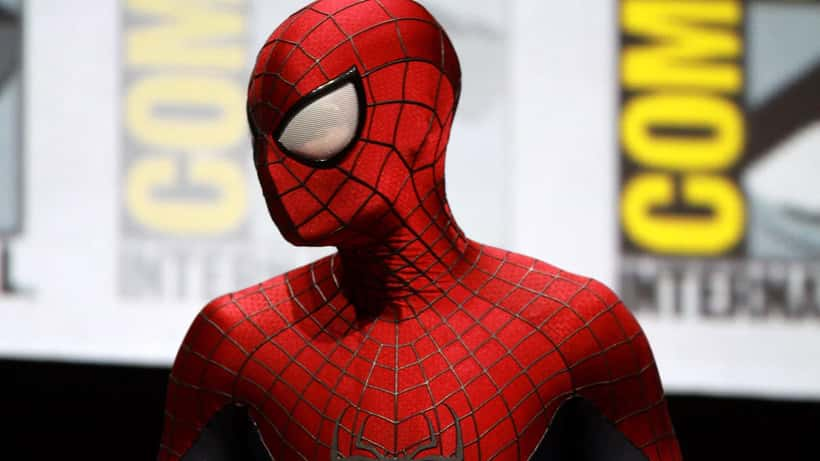
Sony Pictures filed copyright claims against dozens of social media posts within hours of Spider-Man: Brand New Day's world premiere on 27 July 2026 — and the studio's rapid-response crackdown on a leaked post-credits scene has accidentally produced the clearest recent illustration of how UK copyright enforcement actually works in practice.
What Happened: 30 Seconds That Broke the Internet
Spider-Man: Brand New Day does not release in UK cinemas until 31 July 2026, but mobile phone footage of the film's post-credits scene began circulating on X, TikTok, and Reddit within hours of early preview screenings on 27 July. By the morning of 29 July, according to reporting by Unilad Tech, Sony's enforcement team had filed copyright claims across multiple platforms, successfully removing individual clips — though new copies continued to appear as each was taken down.
The studio's response was swift and technically sophisticated: verified rights holders can file takedown notices directly with platforms, which have a legal obligation to act quickly under UK law or lose their own liability protections. IGN confirmed it saw "multiple copies" of the footage removed from X alone within a 24-hour window.
Sony has not disclosed how many individual takedown notices it filed. The film is expected to exceed £1 billion at the global box office.
Why This Matters Beyond Superhero Spoilers
The obvious story here is the spoiler — Marvel fans in the UK are now navigating social media with heightened caution before their weekend screenings. But the far more significant story is what Sony's enforcement process reveals about how copyright law functions in 2026.
Most UK residents believe copyright infringement is something that happens to large corporations or professional pirates. In reality, it is a legal risk that applies to anyone who posts, shares, or reposts creative content they do not own — and the enforcement machinery Sony is using operates the same way whether the rights holder is a film studio or a sole-trader photographer.
According to the UK Intellectual Property Office, copyright in the UK is automatic. A film is protected from the moment it is created, with no registration required, and that protection lasts for 70 years from the death of the last surviving principal creative contributor. Sony did not need to prove anything beyond ownership to begin removing content — the burden shifts immediately to the uploader.
The Legal Machinery Behind a Takedown Notice
When Sony filed its claims, it was invoking a process built on two interlocking pieces of UK legislation: the Copyright, Designs and Patents Act 1988 (CDPA), and the Electronic Commerce (EC Directive) Regulations 2002.
The mechanics work like this. A verified rights holder identifies infringing content and submits a takedown notice to the platform. The platform is legally required to act promptly — removing the content and notifying the uploader. The uploader receives a "strike" on their account. On YouTube, three strikes result in permanent channel termination. On TikTok, a single strike can restrict an account's posting ability for 90 days.
This first step is automatic and does not require a court. But the takedown notice is only the beginning of the legal exposure.
Under the CDPA 1988, the rights holder can also pursue civil damages. UK courts calculate infringement damages based on what a commercial licence for the same use would have cost, plus any additional losses caused by the infringing content. In cases where the infringement was flagrant — deliberate, high-visibility, or commercially motivated — courts can award additional uplift damages.
The Digital Economy Act 2017 went further still, raising the maximum criminal penalty for online copyright infringement from two years to ten years' imprisonment, bringing online piracy in line with physical piracy for the first time. To trigger criminal liability, the act requires that the infringer intended to make a gain or knew their actions would cause the rights holder a loss — a threshold that is easier to meet than most people assume.
Concrete Case: The Fan Who Hit Record in the Cinema
Consider a specific scenario grounded in what actually happened this week. A 22-year-old from Birmingham attended a preview screening of Spider-Man: Brand New Day on the evening of 27 July 2026. During the post-credits scene, she held up her phone and recorded approximately 50 seconds of footage. Back home, she posted it to TikTok with 83,000 followers. By the next morning, the clip had 240,000 views before Sony's takedown notice arrived.
Here is how the legal exposure actually stacks up:
- Strike on TikTok: account flagged, posting restricted for 90 days. For a creator earning £400–£600 per month through TikTok's creator fund, this is an immediate financial loss of up to £1,500.
- Civil liability — licence equivalent: Sony's standard licensing rate for 50 seconds of theatrical footage for commercial use is not publicly disclosed, but comparable industry benchmarks for major studio content run to several thousand pounds. At 240,000 views, a court considering the commercial impact would likely award damages in the range of £3,000–£10,000, depending on whether the account was monetised.
- Aggravating factor — account size: with 83,000 followers, the uploader is classed as a micro-influencer. The commercial reach of the post is far higher than an anonymous account with no following. Courts treat this as a factor when assessing damages.
- Criminal exposure: if Sony pursued a criminal referral — which for individual fans it typically does not, but legally can — the Digital Economy Act 2017 ceiling of 10 years applies. The realistic threshold for prosecution is clear commercial motivation or large-scale repeat infringement.
If/then: if you recorded, uploaded, or substantially shared the leaked post-credits footage, and your account is monetised or has meaningful reach, you face a real civil liability window — not a theoretical one. The fact that Sony's priority is clearly brand-protection rather than pursuing individual fans does not eliminate the legal exposure; it simply means enforcement is selective. An IP solicitor can advise you within a single consultation whether the specific circumstances — reach, monetisation, promptness of removal — affect your risk profile.
What UK Businesses Get Wrong About Copyright
The Spider-Man enforcement story is essentially a high-profile version of a legal scenario that IP solicitors see in UK businesses every week.
The most common misconception is the "I just shared it" defence. Under UK copyright law, re-sharing infringing content can itself constitute secondary infringement, particularly if the original infringement was known to you at the time. "I found it already posted" is not a defence.
The second misconception is the "a few seconds" defence. UK courts do not apply a strict duration threshold. What matters is whether the reproduced portion is a "substantial part" of the work — and substantial is assessed qualitatively, not by running time. The post-credits scene of a blockbuster film is, by definition, one of its most commercially significant moments. Even 10 seconds of that footage could qualify.
The third is attribution as permission. Crediting Sony or Marvel in the caption does not create a licence. It may actually worsen the civil position, because it demonstrates the uploader knew who the rights holder was.
For UK businesses, the equivalent risk surfaces most often in social media marketing: background music in product videos, film trailer clips used in promotional posts, licensed stock photography shared without checking whether the commercial licence permits redistribution. The takedown machinery Sony is using on individual fans is identical in structure to what a music publisher, stock photography agency, or software house could deploy against a business using their content without authorisation.
What You Should Do Now
If you create, manage, or share digital content professionally — whether as an independent content creator, a social media manager, a marketing team, or a small business owner — this week's events are a useful prompt to audit your exposure.
Specifically, consider:
- Whether any content currently on your channels uses music, video clips, or images you do not hold a valid commercial licence for
- Whether your product videos, Reels, or TikToks include third-party branded audio or footage
- Whether you understand the difference between personal use and commercial use under your existing licences
- Whether your business has a formal process for approving content before it is posted
A consultation with an IP or entertainment law solicitor does not require you to be in legal trouble. Many UK businesses use a one-off session to understand their risk profile, establish a content approval process, and put in place licensing agreements before an enforcement notice arrives — rather than after.
ExpertZoom connects you directly with qualified UK IP and entertainment law specialists who can advise on copyright exposure, takedown disputes, and content licensing in a single consultation.
This article contains general legal information for UK readers and does not constitute legal advice. For advice specific to your situation, please consult a qualified solicitor.
