 Sophie Robinson
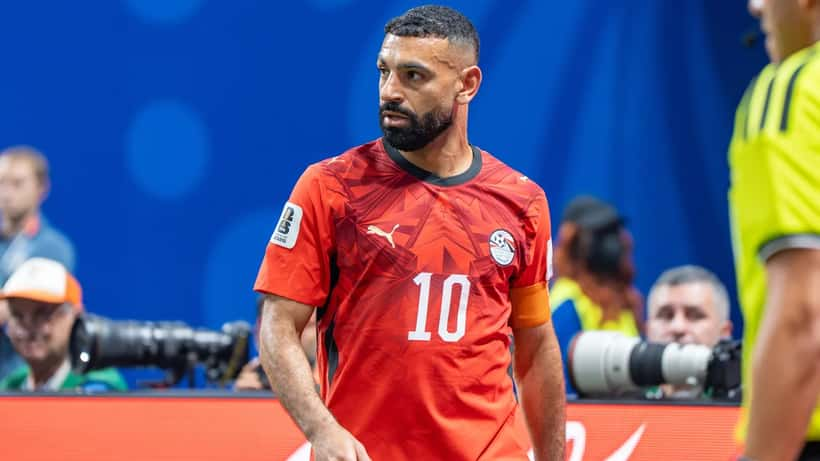
Egypt's decision to leave Mohamed Salah out of today's 2027 Africa Cup of Nations qualifier against South Sudan — citing the artificial playing surface at Juba National Stadium — has exposed a legal question that sports lawyers navigate every FIFA international window: when club interest and national duty collide, who actually holds the final say?
The Story Behind the Absence
Egypt's technical staff confirmed on 26 September 2026 that Salah would not travel to Juba for Matchday 2 of Group B in the 2027 AFCON qualifiers. The stated reason: the Juba National Stadium's artificial turf surface, assessed by Egypt's medical team as carrying elevated injury risk for a player of Salah's profile.
Egypt enter the match having drawn 0-0 with Angola in their opener, while South Sudan — who have never qualified for the AFCON main tournament since gaining independence in 2011 — lost 2-1 to Malawi. With qualification pressure mounting on both sides, Egypt's coaching staff still chose to protect their most commercially significant player from a surface that has become a recurring flashpoint in African international football.
The decision was reached consensually, with no public dispute between Liverpool and the Egyptian Football Association (EFA). But the legal architecture that made this resolution possible — and the conditions under which it could have become a protracted FIFA dispute — deserves careful examination.
What Sports Lawyers Say About Artificial Turf and FIFA Release Rules
Under FIFA's Regulations on the Status and Transfer of Players (RSTP), clubs are obligated to release players during designated international windows without compensation, subject to limited exceptions. Those exceptions include injury, illness, and documented risk to player safety. Disputes that cannot be resolved bilaterally are referred to FIFA's Players' Status Committee.
What the RSTP does not clearly address is surface-related risk: that is, whether a FIFA-certified stadium may nonetheless pose health risks sufficient to justify non-release of an otherwise fit player.
This is the legal gap the Salah case highlights. A sports lawyer advising either party would need to assess three questions:
- Whether FIFA certification of Juba National Stadium creates a presumption of safety that a club must rebut with specific medical evidence
- Whether contractual clauses between Liverpool and the EFA or FIFA create obligations above the RSTP baseline
- What level of medical documentation would be needed to support a formal objection if the national association had refused to accept Salah's absence
These questions are not abstract. With Salah's market value estimated in the hundreds of millions of pounds, Liverpool's financial exposure from a ligament injury on an artificial surface during an international window is very real — and the RSTP's compensation framework does not come close to matching it.
The Concrete Cost: A £40 Million Question
Consider a realistic scenario: a Premier League mid-table club holds a winger recently valued at £40 million who has just returned from a four-month hamstring injury. He is called up by his national association for a qualifier to be played on full artificial turf in Sub-Saharan Africa. The club's medical director flags the surface in writing as a specific risk given the player's rehabilitation history. The national association disagrees and insists on his selection.
If the player travels, trains on the artificial surface for four days, and sustains a grade-two ankle ligament sprain in the qualifier, what is the club's financial position?
Under Annex 1 of the RSTP, the national association is required to pay the player's gross daily salary during injury recovery, plus reasonable medical costs. For a player earning £100,000 per week, the daily rate is approximately £14,285. A six-week recovery period triggers FIFA compensation of roughly £86,000 — against a club cost that includes six weeks of wages (£600,000), specialist physiotherapy, potential lost transfer value if the injury recurs, and commercial obligations if the player has personal sponsorship appearances tied to his availability.
The critical threshold: if the club submitted a written medical objection before the window opened — citing the surface type, the player's injury profile, and specific risk factors — that document becomes the foundation of any subsequent FIFA dispute or civil claim. Without it, the national association's liability is capped at the RSTP daily rate. With it, the club has grounds to argue that it was overruled despite demonstrating due diligence, which shifts the compensation conversation significantly.
In the Salah case, the decision was consensual. But the scenario above — a less powerful club, a less influential player — plays out quietly across every international window without making front pages.
Practical Implications for Clubs, Agents, and Players in the UK
Build surface-risk clauses into release protocols now. Clubs with Premier League and Championship players facing upcoming qualifiers in regions where artificial surfaces are common should have a standard written process: medical team assesses the surface category; if artificial, a formal risk assessment is prepared; if elevated risk is identified, written notification is sent to the national association and copied to FIFA before the window opens. This does not override the RSTP, but it establishes the paper trail needed to support later claims.
Agents should treat the international window as a negotiation. An agent aware that their client's next qualifier will be on artificial turf can proactively request, in writing, that the national association provides its own medical surface assessment. This creates mutual accountability and reduces the likelihood of a dispute escalating to FIFA level.
Players in the lower leagues have far less informal leverage than Salah. Liverpool's commercial weight with the EFA is substantial; a League One club's leverage with the same association is minimal. For players at smaller clubs, formal written documentation is the primary protection mechanism available.
National associations have reputational incentives to cooperate. Associations that regularly force at-risk players into dangerous conditions risk damaging long-term relationships with the European clubs that develop their talent. The EFA's accommodation of Liverpool's position is consistent with a broader pattern of pragmatic cooperation — but it is not guaranteed, and it is not legally enforceable without documentation.
What This Means Across UK Professional Football
As more national associations across Africa, Asia, and North America use artificial surfaces for home qualifiers, the Salah case is likely to become a more common, rather than exceptional, story. UK clubs — from the Premier League to the lower tiers — will face this question with increasing frequency over the 2027 AFCON, 2026 World Cup, and 2028 European Championship qualifying cycles.
A sports lawyer specialising in FIFA regulations, employment law, and international player contracts can help clubs establish written protocols that protect both their contractual rights and their working relationships with national associations. The cost of that consultation is modest relative to the potential liability gap the RSTP creates for injured players on international duty.
Legal note: This article provides general information about FIFA regulations and sports law. It does not constitute legal advice. For specific disputes about player release obligations, international injury liability, or FIFA proceedings, consult a qualified sports law specialist.
What to Do Next
Whether you are a club secretary handling an unexpected release dispute, an agent managing surface-risk concerns for a client, or a player uncertain about your rights during international duty, Expert Zoom connects you with verified sports law specialists available for consultation. Obtaining clear legal advice before a formal dispute arises is considerably more effective than negotiating after an injury has already occurred.
