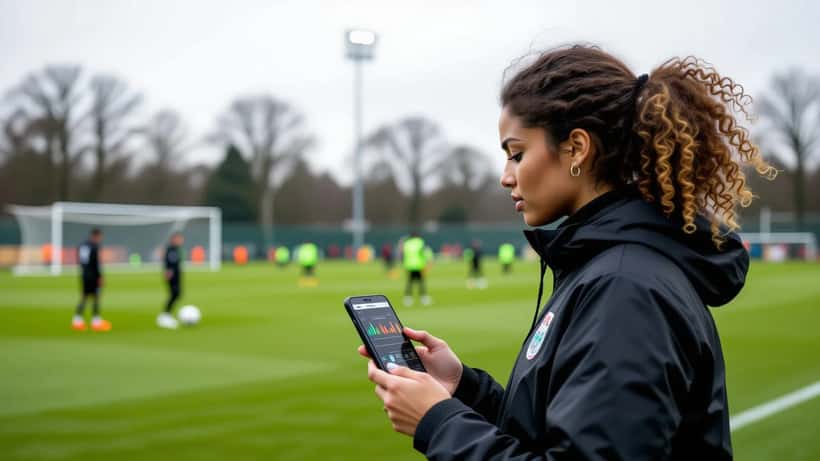
 Harriet Price
SofaScore is now one of the most-used sports apps in the United Kingdom, with millions of fans, scouts, and recruitment analysts relying on its live scores, player ratings, and advanced statistics to follow the Premier League and beyond. Yet as the platform's influence over transfer negotiations, player contracts, and club recruitment grows, a fundamental legal question is sharpening: under UK GDPR, who actually owns the performance data that SofaScore collects, processes, and publishes about athletes — and what rights do those athletes have to challenge it?
The question athletes and agents are actually asking
When a scouting report describes a centre-back as "inconsistent under aerial duels," the player's agent can dispute it. But when SofaScore's algorithm assigns the same player a 6.4 out of 10 — and that rating appears on every club's recruitment dashboard — can the player do anything legally?
The answer, as of mid-2026, is more powerful than most athletes realise. UK GDPR grants data subjects — including professional and semi-professional athletes — a specific set of rights over how their personal data is used. And player performance statistics, particularly those derived from biometric tracking, wearable sensors, or match-tracking feeds shared with third-party platforms, now fall squarely within scope.
What UK law says: the rights athletes hold right now
Under the UK GDPR (retained after Brexit and updated by the Data Protection Act 2018), athletes hold several enforceable rights against organisations processing their personal data:
Right of access — Any person can submit a Subject Access Request (SAR) to obtain a copy of their personal data held by an organisation. Data aggregators and, depending on how data was sourced, apps like SofaScore may be required to respond within one calendar month.
Right to rectification — If data is inaccurate or incomplete, athletes can request corrections. In the context of player ratings: if a statistical error inflated or deflated a performance score, a formal rectification request carries legal weight and requires a documented response.
Right to erasure — In certain circumstances, athletes can request deletion of their personal data. Organisations frequently cite a "public interest" exemption, but this is not a blanket immunity and can be challenged.
Right to restriction — Pending a disputed claim, athletes can ask an organisation to pause processing their data while a complaint is investigated.
From June 2026, a significant new obligation applies: organisations processing personal data in the UK must maintain a formal complaints-handling procedure specifically for data protection matters. This means clubs, leagues, and data aggregators operating in the UK — including platforms like SofaScore that process data on athletes competing in UK competitions — must now provide athletes with a clear, documented route to challenge how their data is used.
The Information Commissioner's Office (ICO), the UK's independent data regulator, has confirmed that health data and biometric data — including performance metrics derived from wearable sensors and GPS tracking — qualifies as special category data under Article 9 of UK GDPR. This triggers a higher standard of protection and requires explicit consent or a specific lawful basis for any processing.
When a single rating drop changes a transfer: a concrete case
Consider this scenario — one that player agents operating in the UK describe as increasingly common in 2026.
A 22-year-old attacking midfielder at a Championship club has spent the first half of the season negotiating a move to the top flight. His agent has shortlisted three Premier League clubs, each of which uses SofaScore's recruitment analytics as part of their initial screening. The player's SofaScore rating has been stable at 7.1 across the season — well into the platform's "above average" band.
Midway through the January transfer window, a data feed error from the official match-tracking provider misattributes two incidents to the player during a goalless draw. SofaScore's automated system updates his rating overnight: 7.1 drops to 6.4. On SofaScore's 0-to-10 scale, that shift represents a full reclassification — from a viable recruitment target to a borderline prospect in the eyes of analysts applying threshold filters.
If the player or agent submits a formal rectification request within 72 hours of the error appearing, citing the specific match ID and the incorrect attribution, UK GDPR obligates the platform to acknowledge the request within one month and correct demonstrably inaccurate data. Under the June 2026 complaints process rules, the player also has a formal escalation route if the response is slow or inadequate.
If the correction is made before the window closes: the rating is restored and the clubs re-evaluate the player. If the correction comes after the window closes: the player may have grounds to explore whether the uncorrected inaccuracy caused quantifiable financial harm — a transfer that didn't happen, a contract extension not offered, a renewal clause not triggered. Calculating that harm starts with a data law solicitor, not a standard employment claim.
The difference between those two outcomes is 72 hours and an understanding of UK data rights.
Does SofaScore's automated rating system trigger additional protections?
SofaScore's proprietary player rating system generates real-time performance scores for individual athletes across more than 150,000 competitions globally. From a legal standpoint, this automation is worth examining closely.
Article 22 of UK GDPR restricts the use of solely automated decision-making that produces legal or "similarly significant" effects on a person. While SofaScore positions its ratings as informational rather than decisional, the line between "informing" a recruitment decision and "making" one is paper-thin in practice — particularly when clubs use threshold filters that automatically deprioritise players below a certain score.
Clubs that rely heavily on automated data dashboards as a primary recruitment screen may themselves need to ensure they have a human review step before any consequential decision is taken on an athlete's future. That procedural safeguard is not merely good practice; in 2026 it is increasingly a legal expectation.
For further context on how UK data law applies to sports organisations, the legal analysis in the 2026 transfer window agent fees and competition law guide on ExpertZoom covers related contractual and regulatory pressure points.
What athletes, agents, and clubs should do now
For athletes: If your performance data appears on SofaScore or similar platforms and you believe it is inaccurate, you have the right to submit a formal rectification request directly. You do not require a lawyer to initiate the request — but a data law specialist reviewing your case before submission significantly improves outcomes and ensures the request is framed in terms the organisation's compliance team must address formally.
For agents: Build data monitoring into your client management workflow. In the same way you track press coverage, track how your client's platform rating moves during transfer windows. A sudden unexplained drop is now actionable, not just frustrating.
For clubs: The June 2026 complaints process requirements apply to your recruitment department too. If you are processing athlete data — whether sourced directly or via a platform — you need a formal data protection complaints procedure, and players have the right to request access to the data you hold on them.
A note on scope: UK GDPR applies where data subjects are located in the UK and where processing has effects in the UK, regardless of where the data controller is headquartered. SofaScore is a Croatian company — but UK athletes whose data it processes retain their UK GDPR rights in full.
When to consult a legal expert
Not every data discrepancy warrants formal legal action. But several situations in 2026 do warrant a conversation with a UK solicitor specialising in data protection and sports law:
- A player rating dropped sharply following an apparent data error and the transfer window is still open
- A club is processing biometric or GPS data under consent forms that pre-date the June 2026 updates
- An athlete's historical performance data continues to appear on platforms following an erasure request
- A recruitment rejection appears to have been based on inaccurate aggregated platform data, and there is a financial consequence to document
This article is for general information only and does not constitute legal advice. For advice on your specific situation, consult a qualified UK solicitor.
The sports data economy is growing rapidly — SofaScore alone now covers over 150,000 competitions and generates millions of data points on athletes at every level of the professional game in the UK. The law is catching up. Players and clubs who understand where the leverage points are in 2026 are the ones best positioned to protect their interests when data — accurate or not — starts driving decisions.
If you have concerns about how your performance data is being processed or displayed, ExpertZoom connects you with specialist UK data law solicitors who understand the intersection of sport and privacy.
