 Moses Kane
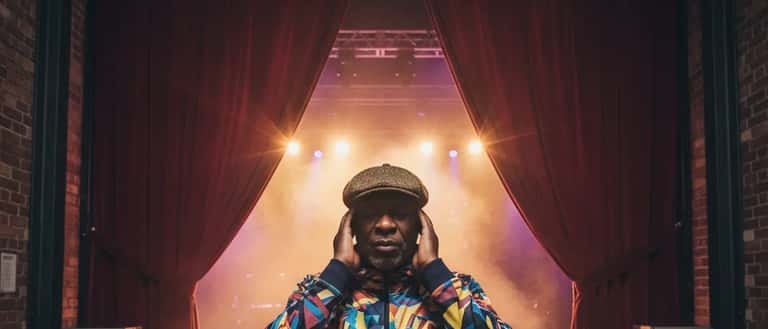
On 26 March 2026, hip-hop legend Slick Rick received the MOBO Lifetime Achievement Award at Co-Op Live Arena in Manchester — 40 years after releasing "La-Di-Da-Di" with Doug E. Fresh, the most sampled track in hip-hop history. The ceremony was a moment of cultural correction: Slick Rick, born in London before making it in New York, finally received recognition on home soil. But as fans celebrated four decades of live performances, it raised a question most artists never discuss: what does a lifetime on stage do to your hearing?
The MOBO Honour and What It Represents
Slick Rick performed at the MOBO Awards — now in their 30th anniversary year — alongside singer Estelle. His track "La-Di-Da-Di" (1985) has been interpolated over 1,000 times by artists including Beyoncé, Jay-Z, Eminem and The Notorious B.I.G. Eminem himself has credited Slick Rick as a foundational influence.
His recent comeback album "Victory," released in May 2025 through Idris Elba's 7Wallace label, reached No. 1 on Billboard's R&B/Hip-Hop chart — his first major release in 26 years. The MOBO honour caps a career that spans the full arc of hip-hop history.
The Hidden Health Cost of a Lifetime in Music
What the glittering ceremony didn't mention is the occupational health risk that musicians rarely discuss openly: noise-induced hearing loss (NIHL).
According to the NHS, sustained exposure to sound above 85 decibels can cause permanent hearing damage. A live concert typically produces between 100 and 120 decibels at the front of house. Rehearsal rooms and backstage monitors can be even louder.
For someone who has performed hundreds of shows over four decades, that cumulative exposure is significant. Research published in the International Journal of Audiology found that professional musicians are four times more likely to develop noise-induced hearing loss than the general population, and 57% more likely to experience tinnitus (persistent ringing in the ears).
Signs You May Have Concert-Induced Hearing Damage
You don't need a 40-year career to be at risk. A single night at a loud concert — without ear protection — can cause temporary threshold shift (ringing and muffled hearing after the show). But repeated exposure, even at moderate levels, leads to permanent damage.
Warning signs to watch for:
- Tinnitus — a persistent ringing, buzzing or hissing sound, especially after loud environments
- Difficulty following conversations in noisy settings (restaurants, pubs)
- Needing the TV or phone volume higher than others find comfortable
- Muffled speech — voices sound unclear even when they're loud enough
- Asking people to repeat themselves regularly
Unlike many health conditions, hearing loss is usually gradual and painless — which is precisely why it goes undetected until significant damage has already occurred.
When to See a Specialist
Many people dismiss early hearing symptoms as tiredness or background noise. But the earlier hearing damage is identified, the more options there are for managing it.
An audiologist or ENT (ear, nose and throat) specialist can perform a full audiological assessment — including pure-tone audiometry and speech discrimination testing — to establish a baseline of your hearing health. If damage is detected early, hearing protection strategies and assistive devices can slow further deterioration significantly.
The NHS recommends seeking assessment if you:
- Notice changes in your hearing lasting more than 48 hours
- Experience persistent tinnitus (more than a few days)
- Work in a loud environment without adequate ear protection
- Attend live music events regularly without using earplugs
Foam earplugs costing under £1 reduce sound by up to 30 decibels — enough to bring a concert to a safe listening level without killing the experience.
How Loud Is Too Loud? The Decibel Scale Explained
Understanding sound levels helps put the risk in context:
| Environment | Typical Decibels | Risk Level |
|---|---|---|
| Normal conversation | 60 dB | Safe |
| Heavy traffic | 80-85 dB | Borderline |
| Live concert (front rows) | 100-110 dB | High |
| Stage monitors / PA system | 110-120 dB | Very high |
| Jet engine at close range | 130+ dB | Immediate damage |
The key insight: hearing damage is not linear. Every 3 dB increase halves the "safe" exposure time. At 85 dB, the safe daily exposure is 8 hours. At 100 dB, it drops to just 15 minutes. A 2-hour concert at 110 dB far exceeds safe lifetime exposure limits.
For musicians who perform multiple nights per week across touring schedules spanning decades — as Slick Rick has — the cumulative exposure is staggering. The fact that many musicians do not develop severe hearing loss is partly due to individual genetic variation in susceptibility, and partly due to the increasing use of in-ear monitors (IEMs), which replaced the notoriously loud wedge monitors of the 1980s and 90s.
The Bigger Picture: Occupational Hearing Risk in the UK
Noise-induced hearing loss is the UK's second most common occupational disease, according to the Health and Safety Executive. Yet among musicians, DJs, nightclub workers, and regular concert-goers, ear protection remains dramatically underused.
Slick Rick's lifetime achievement is a celebration — but it's also a reminder that the body keeps score. Four decades of live music, studio sessions, and tour buses all accumulate. For artists and fans alike, protecting your hearing now is the only way to keep enjoying music for decades to come.
If you're concerned about your hearing — whether from music, work, or years of loud environments — a specialist consultation can give you a clear picture of where you stand, and what to do next.
Disclaimer: This article is for informational purposes only and does not constitute medical advice. If you have concerns about your hearing, please consult a qualified healthcare professional.
